















By Wuraola Oyedokun
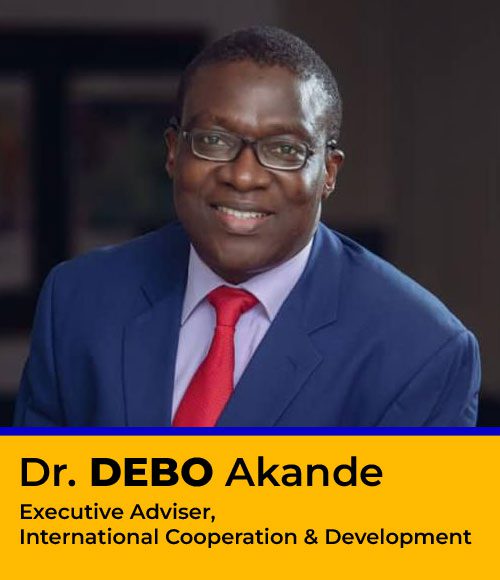
Oyo State is emerging as a transformative hub for agribusiness in Nigeria. Over the past few years, the state has moved from fragmented subsistence farming to a structured, industrialised agricultural economy. At the center of this transformation is Dr. Debo Akande, the Director General of the Oyo Agribusiness Development Agency and an advisor on international development, whose strategic vision has attracted investment, created industries, and empowered a new generation of agripreneurs. Wuraola Oyedokun reports.
Dr. Akande’s involvement in Oyo’s agribusiness sector began even before the current administration assumed office. “My entry into agribusiness with the Oyostit Government started pre-election,” he said. His first major task was drafting a comprehensive agribusiness strategy for the state, designed to transform agriculture from a largely informal sector into an engine of industrialisation and economic growth.
The Oyo Agribusiness Development Strategy, launched in 2019, became the blueprint for this transformation. It was a living document designed to guide decision-making and provide measurable targets. “We needed to know where we were coming from and where we wanted to go,” Akande explained. The strategy aimed not only to increase production but also to attract investment, improve infrastructure, and enhance human capacity.

When Akande began his work, he observed critical gaps in the state’s agricultural framework. “There was no major document guiding agriculture in Oyo. Most activities were accidental, uncoordinated, and lacked measurable objectives,” he said. To address this, he organized the first stakeholders’ meeting in August 2019, bringing together directors from ministries, agency heads, and key industry players to conduct a comprehensive gap and needs analysis.
The meeting identified several pressing issues: Lack of rural infrastructure connecting farms to markets. Insufficient processing capacity to convert raw agricultural products into value-added goods. Limited youth engagement and vocational training programmes. Inadequate investment in modern farming techniques and inputs.
By systematically identifying these gaps, Akande and his team were able to create a targeted operational plan with measurable goals, including attracting $200 million in investment and establishing 20 new industrial processing plants across the state.
One of Akande’s key insights was the critical role of rural infrastructure in agribusiness. “Anybody driving on these roads will see products moving from farms to markets and processing centers,” he said. Over 1,200 kilometers of feeder roads have been constructed or rehabilitated, ensuring farmers can deliver produce efficiently and reducing post-harvest losses, which previously reached 40%.
Beyond roads, the state has also developed aggregation centers where farmers can store and organize products before sale. These centers are designed to reduce spoilage and improve supply chain efficiency. By integrating infrastructure with processing and market access, Akande has created a system where agriculture is no longer isolated but part of a dynamic, interconnected economy.
A cornerstone of the Oyo agribusiness revolution is industrialisation. Processing factories have been established to convert raw agricultural products into value-added goods, increasing revenue for farmers and creating employment. “We are shifting from supply-driven agriculture to demand-driven agriculture,” Akande explained.
Some notable developments include: Cashew processing plants and brown sugar factories—the first of their kind in Nigeria. Rice milling facilities and cassava processing centers. Agro-processing factories in Fashola and surrounding regions to maximize geographical impact.
These industries not only provide markets for farmers but also enhance the economic multiplier effect, creating jobs, supporting ancillary businesses, and generating revenue for the state government.
Central to Akande’s vision is the development of human capital, particularly among the youth. Through training programs in modern farming techniques, business management, and technical skills, hundreds of young people have been equipped to participate in the agribusiness value chain.
He is also championing a Technical and Vocational Education and Training (TVET) system, aimed at producing artisans capable of competing globally. “Why import skilled labor when we can train our youth to meet international standards?” Akande asks. By combining education with practical exposure in agribusiness, Oyostit is creating a workforce capable of sustaining the state’s economic growth.
Dr. Akande’s success is partly rooted in his role as a technocratic advisor. His expertise enables him to design policies, evaluate projects, and guide executive decision-making based on data and best practices.
During the COVID-19 pandemic, Akande coordinated the state’s food security strategy, ensuring that agricultural supply chains remained uninterrupted. “Being a technocrat allows me to create systems that improve lives. It’s not about politics; it’s about delivering results that matter,” he said.
His technocratic approach extends to metrics-driven governance. Every initiative, from industrialization to road construction, is tracked against measurable targets, ensuring accountability and continuous improvement.
Through his advisory role in international development, Akande has successfully attracted nearly $200 million in investment into Oyo’s agribusiness sector. These investments are not limited to agriculture, they extend to ICT, education, and health, but agribusiness remains the centerpiece due to its potential to drive economic growth and create jobs.
The investment strategy focuses on public-private partnerships, encouraging local and foreign investors to participate in the state’s industrial and agricultural ecosystem. By demonstrating the potential for returns through infrastructure, processing capacity, and market access, Akande has positioned Oyo as a viable destination for long-term investment.
Akande emphasises that building rural roads is not just about transportation, it’s about creating a functional supply chain. He points out that most of the state’s new roads are designed to connect farm estates to processing centers and urban markets, enabling efficient movement of goods and reducing losses.
Complementing the roads are logistical hubs and aggregation centers, ensuring that farmers can store, consolidate, and sell products efficiently. This integrated approach has reduced wastage, increased profitability for farmers, and strengthened the state’s agribusiness ecosystem.
Environmental Sustainability and Climate Adaptation
Akande’s strategy also incorporates climate-smart agriculture. With experience in environmental development, he emphasizes the importance of sustainable practices in agriculture, including efficient water management, soil conservation, and renewable energy for processing plants.
“Climate change is a reality. Our approach is to integrate sustainability into every level of the agribusiness value chain,” he says. This ensures that Oyo’s agribusiness growth is resilient and future-proof.
The results of Akande’s strategy are tangible.
Over 20 new processing industries have been established, creating thousands of jobs. Rural infrastructure development has enhanced market access and reduced post-harvest losses. Youth empowerment programs have created a skilled workforce ready to take on leadership roles in agribusiness. Investment inflows have strengthened the state’s economic base and created opportunities for private-sector growth.
The combination of industrialisation, infrastructure, and human capital development has positioned Oyo as a model for agribusiness-driven economic transformation in Nigeria.
While much has been achieved, Dr. Akande emphasises that the work is far from complete. His priorities include: Consolidating existing initiatives to ensure sustainability. Expanding industrial capacity to meet increasing demand for processed agricultural products. Enhancing youth development programs through education, training, and entrepreneurship support. Strengthening climate-resilient practices across the agricultural sector.Increasing international investment in agribusiness and allied sectors.
“Our goal is to create a self-sustaining agribusiness ecosystem that benefits farmers, processors, and consumers alike,” he says.
Dr. Debo Akande’s work in Oyo State demonstrates the power of strategic planning, technocratic governance, and infrastructure-led development in transforming an agricultural economy. By attracting $200 million in investment, establishing 20 industrial processing facilities, and empowering youth across the state, he has laid the foundation for a thriving agribusiness economy.
The Oyo model offers lessons for other states seeking to industrialize agriculture, create jobs, and attract investment. Through a combination of infrastructure, industrialization, and human capital development, the state has transformed agriculture from a fragmented, supply-driven sector into a dynamic, demand-driven engine of growth.
For Oyo, the agribusiness revolution is not just a vision—it is a reality, with measurable impact on productivity, investment, and livelihoods. And at the centre of this transformation is Dr. Debo Akande, the architect behind the state’s agribusiness renaissance.