

















 By Joy Joseph
 By Joy Joseph
 The University of Ibadan is set to host two landmark events this year aimed at bridging the persistent gap between academic research and industry needs, with a strong call for collaboration, innovation, and investment in impactful research.
The university is partnering with the Development Agenda for Western Nigeria (DAWN Commission) to connect with industries and government stakeholders.
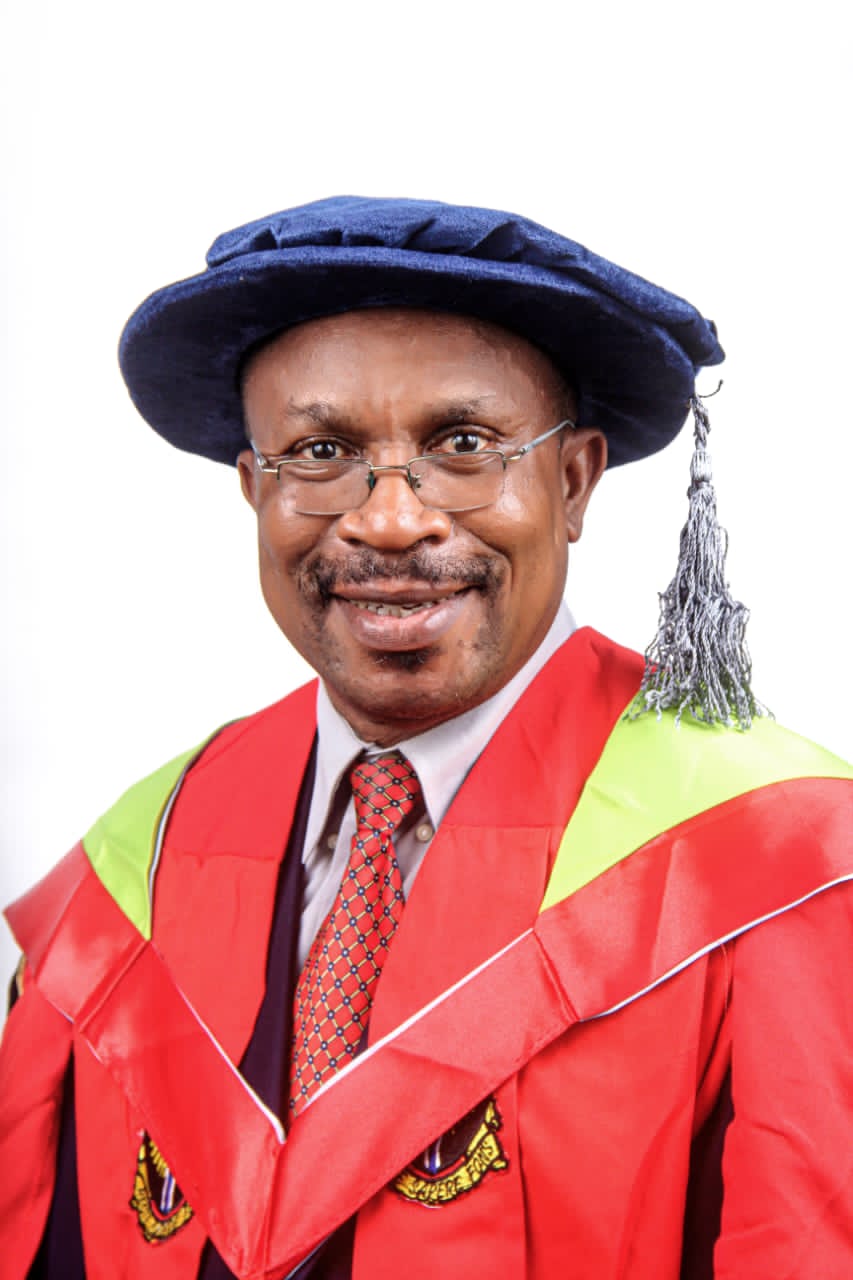
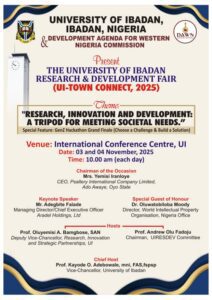
Speaking ahead of the programmes, Chairman of the UI Research and Development Fair Committee [UI-RESDEV], Professor Andrew Olu Fadoju, announced that the university will hold a Stakeholders’ Roundtable on October 15, 2025 by 10.00 a.m. at Trenchard Hall of the institution.


This will be followed by the main Research and Development Fair on November 3 and 4, 2025 at the International Conference Centre [ICC] of the university.
The Chief Executive Officer of Psaltry International Company Limited, Ado Awaye, Oyo State, Mrs. Yemisi Iranloye is the Chairman of the occasion, while the Managing Director of Aradel Holdings Ltd, Mr. Adegbite Falade will be the keynote speaker and the special guest of honour is Dr. Oluwatobiloba Moody, Director, World Intellectual Property, Nigeria Office.
The theme for this year’s town-gown round-table discussion and fair is: “Research, Innovation and Development: A Tripod for Meeting Societal Needs.”
The UI-Town Connect 2025 will gather representatives from key sectors, including industry, multinationals, government agencies, and regulatory bodies, to foster alignment between what universities teach and what industries actually require.
“Despite our efforts to update curricula, there’s still a perceived disconnect between academia and industry, largely due to infrastructural and funding constraints. We hope this engagement will encourage industries to support our research, help commercialise findings, and fund future projects for mutual benefits,” Fadoju said.
According to Prof. Fadoju, the event is driven by the conviction that research must have practical and measurable societal impact.
“If research has no practical impact, then it isn’t useful,” he stated.
Participants at the fair will include academics, industry leaders, government officials, entrepreneurs, farmers, and even market women, emphasising the university’s vision of inclusivity and real-world relevance.
To make research findings more accessible, the committee has produced simplified pamphlets, one focusing on the sciences and another on the humanities, to be distributed during the fair.
The Postgraduate College of the university will moderate sessions to align theoretical insights with practical applications.
“We want to ensure our students benefit from both the academic and industry perspectives,” Fadoju added.
One of the highlights of the fair is the GenZ Hackathon Project, an initiative dedicated to nurturing young innovators. Hundreds of ICT-based solutions aimed at solving local challenges, such as erratic power supply, were submitted for the competition.
The top six entries will be showcased during the fair’s opening ceremony, with winners receiving cash prizes and industry exposure. Previous winners have attracted investment interest, prompting the university to now focus more strongly on intellectual property protection.
Responding to the popular belief that Nigerian academics conduct research with little real-world relevance, Prof. Fadoju pushed back firmly.
“Thousands of research projects are completed monthly across Nigerian universities. The problem is not relevance but funding. Senate Research Grants used to support our work, but such support has dwindled, limiting our capacity to scale findings or drive implementation ,” he emphasised.
The professor called for greater financial support, not only from government but also from alumni and the private sector, urging stakeholders to see research funding as a critical investment in national development.
He also appealed for accountability and transparency in managing research funds, noting that the private sector will only invest where there is proven value.
“All stakeholders must commit to ensuring that every naira is well spent. Industry will only invest if we demonstrate clear, tangible value, and that’s what we’re committed to doing’’, he added.
END













 to connect with industries and government stakeholders.)