















 The National President of the Association of Communication Scholars and Professionals of Nigeria (ACSPN), Professor Rotimi Olatunji, has reiterated the association’s commitment to strengthening Nigeria’s communication and media ecosystem through innovative collaboration among academia, industry, and government.
Olatunji made the call while delivering a lecture titled: “Enhancing Capacity Building in Communication and Media through Academic–Industry–Government Partnerships in Nigeria: A Triple Helix Approach”, at the 2025 International Conference of Caleb University, Imota, Lagos.


In a statement made available to The Guardian by the General Secretary of ACSPN, Dr. Solomon Oyeleye, Olatunji urged the Federal Government to strengthen institutional frameworks that support university–industry linkages, while calling on private sector players to invest more in academic research and innovation.
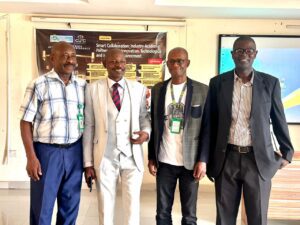
The conference, themed: “Smart Collaboration: Industry–Academic Partnership for Innovation, Technological and Industrial Advancement,” brought together experts to deliberate on how effective partnerships could drive innovation and knowledge-based development in Nigeria.
Drawing from the Triple Helix Model, which integrates universities, industries, and government agencies into a collaborative innovation framework, Olatunji underscored the need for synergy in building a resilient, future-ready media ecosystem.
“Capacity development in communication must move beyond the classroom.It must include practical engagement, policy-driven research, and technology-enabled storytelling. True innovation in media is not just about novelty but about creating value and impact through transformation,” he said.
He cited practical examples of the model’s application in Nigeria’s communication sector, including curriculum co-design, internships, innovation hubs, and research collaborations.
Olatunji listed ongoing partnerships between ACSPN and institutions such as the Centre for Journalism Innovation and Development (CJID), Dataphyte, the Ford Foundation, UNICEF, UNESCO, and the MacArthur Foundation, which have produced fellowships, digital media training, and innovation incubation programmes across Nigerian universities.
“Between November 2024 and now, ACSPN and CJID have trained nearly 100 scholars and professionals on integrating artificial intelligence into communication and media practices,” he revealed.
Since its inception, ACSPN has pursued excellence in communication research through initiatives such as the Empowerment Series, Eminent Persons’ Strategy Sessions, and Value-Added Conferences. These programmes, he said, have improved research productivity, professional competence, and youth engagement across the sector.
Olatunji, who is also a Professor of Public Relations and Advertising at Lagos State University, highlighted the unbundling of the erstwhile B.Sc. Mass Communication programme into eight distinct degrees as one of ACSPN’s landmark achievements.
He recalled that the association initiated the curriculum review with support from UNICEF and later received grants from the MacArthur Foundation through Professor Umar Pate, then of Bayero University, Kano, to drive the reform that was eventually adopted by the National Universities Commission (NUC).
According to him, ACSPN’s long-standing partnerships with international organisations such as UNESCO and the Ford Foundation have produced significant outputs, including training materials for combating fake news and promoting media literacy. He described these achievements as evidence of the transformative potential of collaborative investment in human capital.
However, the ACSPN president also identified persistent challenges facing the communication sector, including inadequate funding, weak research infrastructure, and limited access to emerging technologies. He stressed that overcoming these gaps would require sustained dialogue, trust, and transparency among universities, media organisations, and government bodies.“For Nigeria to thrive in a knowledge-driven global economy, communication and media must be recognised as strategic pillars of national development’’, he said, calling for robust policy reforms and greater emphasis on research-led innovation.
He further urged communication scholars and practitioners to embrace emerging technologies such as artificial intelligence, virtual reality, and data-driven journalism to remain relevant in a rapidly evolving media landscape.