











By Modupe Bankole
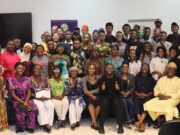
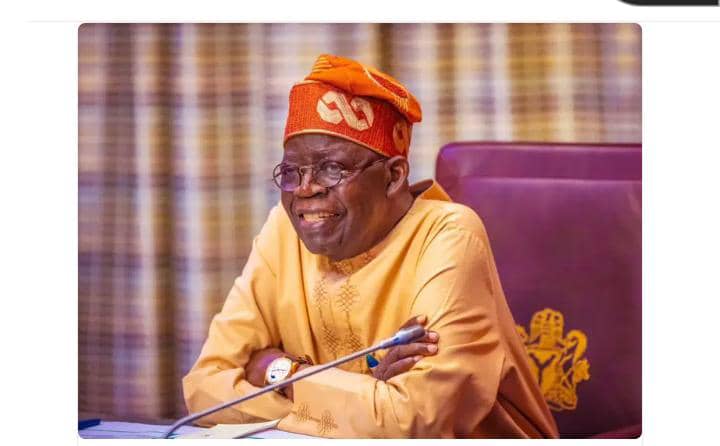
A group of Yoruba intelligentsia and prominent Yoruba socio-political group, Majeobaje, on Monday urged Nigerians to re-elect President Bola Ahmed Tinubu, citing his economic reforms, stabilising policies, and security interventions as compelling reasons for a second term in 2027 general elections.
At a press conference in Ibadan, the group argued that Tinubu’s two and a half years in office have delivered “meaningful impact across all sectors,” setting the foundation for long-term national recovery.
Speaking on behalf of the organisation, Chief Akintayo Akin-Deko said the President not only stabilised the economy but also confronted a deteriorating security situation inherited from past administrations.
‘Tinubu Pulled Nigeria Back From the Brink’
Akin-Deko traced the current security landscape to a decade-long escalation of violence, beginning with armed herdsmen attacks and widespread kidnappings around 2014, and by 2019 spiralling into “rampant killings by IPOB gunmen, bandits, and terrorists.”
Some of these groups, he claimed, had links with foreign jihadist networks, contributing to international alarm.
He said the situation demanded that Nigerians “stand firm and wholeheartedly embrace the government of President Bola Ahmed Tinubu,” whom he described as having demonstrated “bold and technocratic leadership” in tackling systemic national problems.
“Whatever the misgivings in 2023, and there were many, President Tinubu has since proven that he is the leader capable of returning Nigeria to sustainable growth and development,” he said.
Technocratic Leadership and Economic Reforms
The Yoruba intelligentsia described President Tinubu as a “trained accountant, former multinational executive, and two-term governor of Lagos State,” a background they argue has shaped his effective, problem-solving approach to governance.
Akin-Deko emphasised that Majeobaje—made up of farmers, professionals, academicians, and businessmen—had long advocated for regional development and sound governance. Tinubu’s actions in office, he said, showed clear alignment with these long-standing priorities.
The group defended the controversial removal of fuel subsidy and the floating of the naira in 2023, calling them necessary steps to prevent national bankruptcy.
Though the measures initially caused hardship, Akin-Deko said they resulted in “a huge financial windfall to government at all levels,” citing the rise in FAAC allocations from N655 billion in April 2023 to N2.1 trillion by September 2025.
He added that state and local governments were now receiving unprecedented funds for development projects, while Tinubu’s N6.9 trillion constituency project allocation in the 2025 budget represented “the most targeted public spending Nigerian legislators have ever had.”
He, however, urged citizens to hold public officers accountable to ensure the funds are used for genuine development.
Strengthening Regional Development
The group also hailed the establishment of the South-West Development Commission (SWDC), signed into law on March 24, 2025, with an initial allocation of N674 billion. Akin-Deko described the SWDC as a major step toward true federalism and faster regional progress.
He criticised opponents of Tinubu’s reforms, dismissing them as “economic saboteurs and their foreign backers” determined to undermine the administration’s gains.
Security Overhauls and Improved Coordination
On national security, Akin-Deko said the Tinubu administration inherited “a greatly compromised landscape,” referring to past lapses such as the arrest of Iskilu Wakili in 2021 and the 2022 Owo church massacre.
He condemned allegations of collusion between some security personnel and terrorists, as well as past policies that weakened community-based security efforts.
However, he stressed that Tinubu had taken decisive steps to reverse the trend by raising defence spending from N1.55 trillion in 2023 to N6.57 trillion in 2025, recruiting and training more security personnel, restructuring the security architecture, and revamping the National Forest Guards and their state equivalents.
These measures, he said, had already begun to yield improvements nationwide.
Addressing former U.S. President Donald Trump’s recent comments alleging genocide against Christians in Nigeria, the group described the claims as “prejudicial, exaggerated, and unhelpful.” Akin-Deko warned that such narratives were often tools for foreign interference disguised as humanitarian concern.
While acknowledging attacks on Christian communities in some states, he insisted that the situation was “nowhere near the extreme characterisation presented.”
Nonetheless, he said the comments offered Nigeria an opportunity to reflect on its internal challenges and pursue unity based on justice, fairness, and equity.
The group urged the federal government to intensify the crackdown on terrorists and their financiers, including individuals mentioned in the UAE-linked terrorism financing report.
“Enough of this tolerance of lawlessness,” Akin-Deko said. “The only effective response is uncompromising force through the powers of the state.”
He also raised concerns over youth radicalisation nationwide—from almajiri centres to Niger Delta militancy and the growing issue of Area boys in the South-West—calling for comprehensive rehabilitation and empowerment programmes.
Majeobaje said Tinubu had demonstrated within two years that he was “ready, willing, and able to implement radical policies that can make Nigeria great again.” The group rejected calls for coups or foreign intervention, arguing that opposition parties lacked the leadership capacity needed at this critical time.
With the right electoral outcome in 2027, Akin-Deko said Tinubu could secure the two-thirds majority necessary to implement constitutional reforms long demanded by Nigerians.
“We therefore urge all Nigerians to embrace President Bola Ahmed Tinubu and support his second-term bid in 2027,” he declared.
Advertisement