














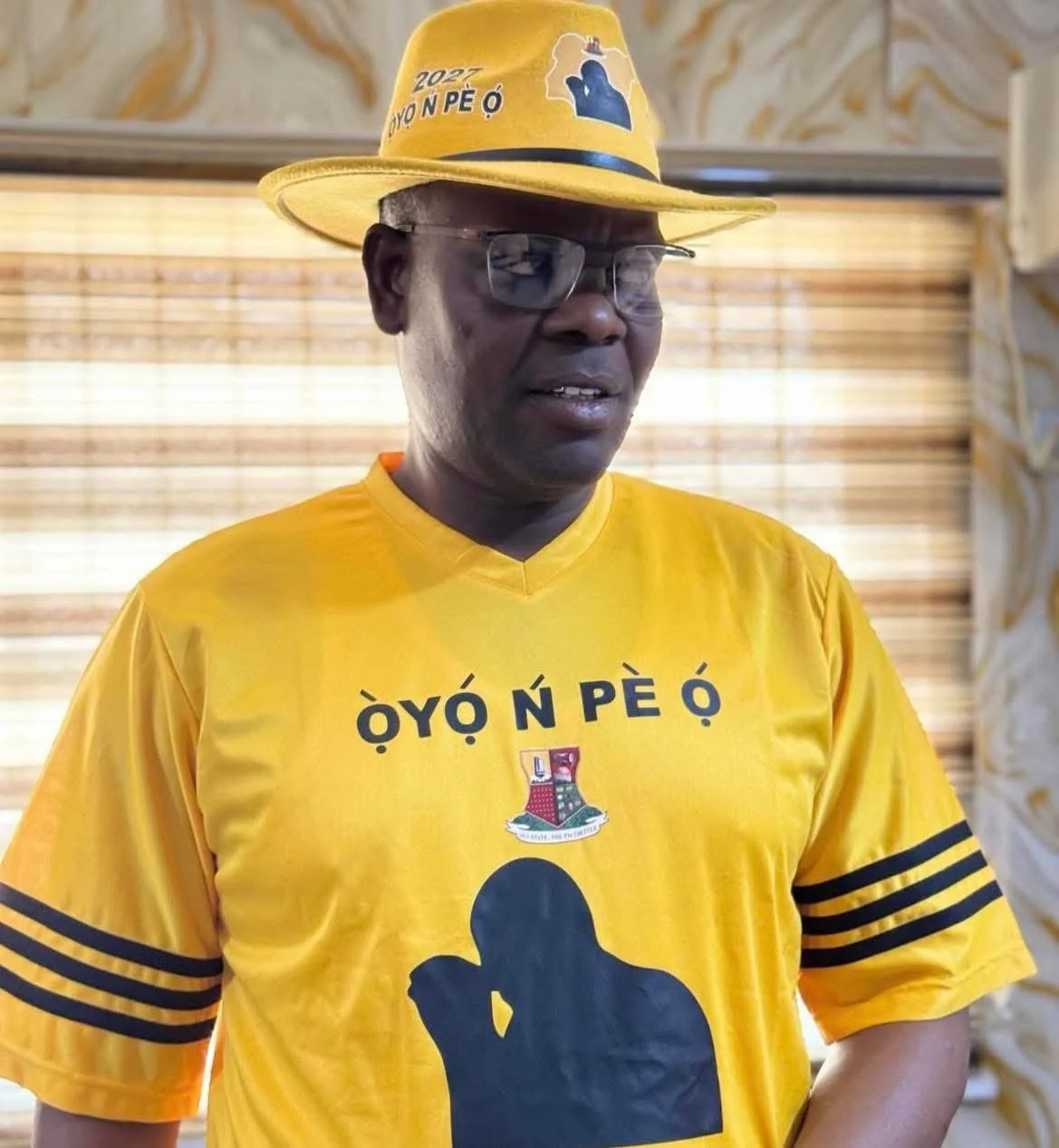
In the fluid landscape of Oyo State politics, where long-established structures often determine outcomes, the emergence of Abdulrahman Oriyomi Hamzat represents a subtle but significant disruption. Not yet a dominant political force in conventional terms, Hamzat’s growing visibility and grassroots resonance nonetheless reflect broader shifts in voter sentiment, political engagement, and the role of non-traditional actors ahead of the 2027 governorship election.
Oyo politics has historically been shaped by entrenched party machinery, elite consensus, and carefully negotiated alliances across its geopolitical zones : Ibadan, Ogbomoso, Oke Ogun, and Oyo. Yet, as the next electoral cycle approaches, there are growing indications that the old formulas may no longer be sufficient. Rising public discontent, generational change, and the expanding influence of media-driven mobilisation are altering the political equation. Within this context, Hamzat’s entry into the conversation has drawn attention not because of formal political pedigree, but because of what he represents.
Nigerian political history is replete with many professionals with media-to-politics mobility and occupational migration.


Hamzat is best known as the founder and operator of Agidigbo 88.7 FM, a radio station based in Ibadan that has, over the years, become a powerful platform for public discourse. Broadcasting largely in Yoruba, Agidigbo carved a niche by amplifying grassroots voices, traders, artisans, farmers, and ordinary citizens whose concerns often find little expression in elite political spaces. The station’s phone-in programmes, social commentary, and community-focused content have earned it a loyal listenership across Oyo State and beyond.
It is this deep penetration, rather than formal political experience, that has positioned Hamzat as a figure of interest. In a political environment where radio remains one of the most influential mediums, particularly in semi-urban and rural communities, the ability to shape narratives and frame public debate carries weight.
Analysts argue that Hamzat’s media background gives him an intuitive understanding of public mood, an asset increasingly valuable in an era of voter volatility.
However, translating media influence into political capital is neither automatic nor guaranteed. Nigerian politics is replete with examples of popular figures who struggled to convert name recognition into electoral success. Hamzat’s relevance, therefore, lies not in assumptions of inevitability, but in the questions his emergence raises about changing pathways to political relevance.
At the heart of Hamzat’s growing profile is a broader sense of voter restlessness. Across Oyo State, there is palpable fatigue with familiar political faces and recurring campaign promises. Economic pressures, rising unemployment, insecurity, and perceptions of uneven development have heightened public scrutiny of political leadership.
For many voters, particularly younger ones, traditional party loyalties are weakening. Political identity is becoming more fluid, shaped less by party symbols and more by perceived authenticity, accessibility, and responsiveness. In this climate, figures who appear relatable and grounded in everyday realities enjoy a distinct advantage.
Hamzat’s appeal, observers note, is tied to this perception. His media persona, direct, conversational, and rooted in local idioms, contrasts sharply with the formal, often distant style of mainstream politicians. To supporters, he embodies proximity to the people; to critics, he represents populism without tested governance credentials. Both views underscore the tension between old and emerging political norms.
One of the central questions surrounding Hamzat’s political future is party structure. Oyo State politics remains heavily party-driven, with established parties possessing deep organizational networks, financial muscle, and experienced operatives. These structures are particularly decisive during primaries, where internal power dynamics often determine candidacies long before voters are engaged.
Hamzat’s association with a smaller political platform has been interpreted in different ways. Some see it as a strategic attempt to bypass entrenched party hierarchies; others view it as a limitation, given the historical difficulty of smaller parties in winning statewide elections. The reality is that without broad alliances or significant defections, third-party efforts face steep odds.
Yet, the presence of alternative platforms also reflects dissatisfaction within major parties. Internal disputes, zoning controversies, and leadership struggles have created openings for outsiders to gain attention. Even if such actors do not ultimately win, they can influence agendas, reshape debates, and force dominant parties to recalibrate their strategies.
Hamzat’s case also highlights the evolving role of media in Nigerian politics. While social media has transformed political communication nationwide, radio remains uniquely influential in states like Oyo, where language, accessibility, and trust matter deeply. Unlike national television or online platforms, local radio fosters intimacy and continuity, allowing hosts to build long-term relationships with listeners.
Political communication scholars note that this dynamic can translate into a form of soft mobilization, shaping perceptions, normalizing certain ideas, and legitimising alternative political conversations. However, they also caution against overestimating its electoral impact. Media influence can amplify visibility, but elections are ultimately won through organization, coalition-building, and voter turnout mechanisms.
Hamzat’s challenge, therefore, lies in moving beyond influence to infrastructure: building credible networks across local governments, engaging traditional institutions, and navigating the complex interplay of ethnicity, religion, and regional interests that define Oyo politics.
Oyo State’s political history is deeply intertwined with regional balancing. Power rotation, though informal, has shaped expectations among the state’s zones. Any serious governorship contender must contend with these unwritten rules and the sensitivities they produce.
Hamzat’s support base is stronger in Ibadan, the state capital and political nerve centre. While Ibadan’s numerical advantage is significant, statewide success requires penetration into Oke Ogun, Ogbomoso, and Oyo zones. The extent to which Hamzat can broaden his appeal beyond urban and media-centric audiences will be a key determinant of his long-term relevance.
Whether or not Hamzat ultimately becomes a major contender, his presence is already influencing the political conversation. Established politicians are increasingly mindful of grassroots sentiment, media engagement, and the optics of accessibility. The discourse is shifting from purely elite negotiations to a more public-facing contest of narratives.
In this sense, Hamzat represents a broader trend: the gradual democratization of political visibility. As barriers to entry lower, through media, technology, and public engagement, politics becomes less predictable. This unpredictability, while unsettling for traditional actors, may also invigorate democratic participation.
Critics argue that without clear policy frameworks and administrative experience, such figures risk oversimplifying complex governance challenges. Supporters counter that technocratic credentials have not necessarily delivered better outcomes, and that leadership rooted in popular engagement deserves consideration. This debate is likely to intensify as 2027 approaches.
For now, Hamzat occupies a liminal space, neither an established heavyweight nor a marginal actor. His trajectory will depend on strategic decisions made well ahead of the election cycle: whether to consolidate within a party, pursue alliances, or redefine his role as a political influencer rather than a candidate.
What is undeniable is that Oyo politics is in a moment of transition. Economic realities, demographic shifts, and changing media ecosystems are reshaping how power is contested and legitimized. Hamzat’s rise, modest or otherwise, is part of this larger story.
As the countdown to 2027 continues, the central question may not be whether Oriyomi Hamzat will win an election, but whether the forces he symbolises, grassroots engagement, media-driven mobilisation, and voter impatience with convention, will permanently alter the rules of political engagement in Oyo State.
In that sense, his significance lies less in personal ambition and more in the shifting currents he illuminates. For a political system long accustomed to continuity, even subtle disruptions can signal profound change.