















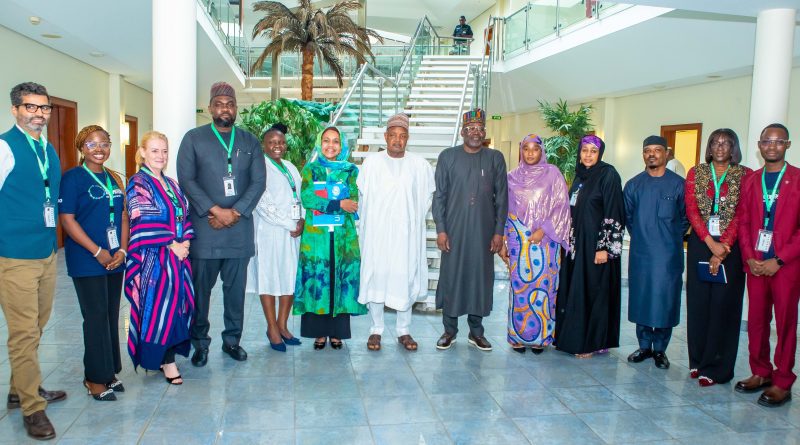
The United Nations Children’s Fund (UNICEF) has partnered with the Federal Government to launch the Generation Unlimited Nigeria (GenU 9JA) National Secretariat, in a move aimed at expanding access to skills, employment and economic opportunities for young people across the country.
The Secretariat, formally inaugurated on March 31, 2026, is domiciled in the Office of the Vice President, signalling what stakeholders described as a renewed commitment to placing youth at the centre of Nigeria’s development agenda.


UNICEF, in a statement, described the development as a “significant milestone” in ongoing efforts to equip millions of Nigerian youths with digital skills, learning opportunities and pathways to employment.
The initiative, launched in 2021, has already reached over 11 million young Nigerians across the 36 states and the Federal Capital Territory, focusing particularly on young women and those from under-served communities.
With a target to impact 20 million youths by 2030, stakeholders said the establishment of the Secretariat represents a critical step toward scaling interventions and strengthening coordination among partners.
Co-led by the Office of the Vice President and UNICEF under a Public-Private-Youth Partnership framework, the Secretariat is expected to serve as a central coordination hub, bringing together government ministries, the private sector, development partners and youth groups.
The platform will focus on improving policies and programmes around skills development, entrepreneurship, employment and digital inclusion, while ensuring interventions are delivered at scale.
UNICEF reiterated its commitment to supporting the initiative, noting that it would continue to provide technical expertise in designing and expanding “learning-to-earning” pathways.
According to the organisation, these efforts will span education, digital skills, employability and entrepreneurship, with a strong emphasis on data-driven implementation and measurable outcomes.
“UNICEF remains committed to working closely with government, private sector partners and young Nigerians to ensure that the Secretariat delivers a meaningful and lasting impact,” the statement added.
Stakeholders expressed optimism that the new structure would accelerate youth empowerment efforts and contribute to addressing unemployment and skills gaps, which remain major challenges in Nigeria’s development landscape.