














Oyo State may be on the brink of increased exposure to severe thunderstorms following extensive loss of tree cover, environmental experts have warned, calling for urgent and sustained afforestation efforts to mitigate looming climate risks.


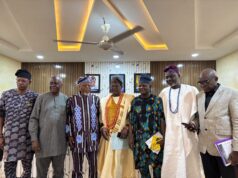
The President of the Geo-information Society of Nigeria and Rector of the Federal School of Surveying, Oyo, Dr Olayinka-Dosunmu Nihinlola, raised the alarm in Ibadan during an event marking the International Day of Forests. She disclosed that recent geospatial mapping has placed the state within a “danger zone” for storms, largely due to environmental degradation and declining forest cover.
According to her, trees play a critical role in reducing the intensity of storms by acting as natural windbreakers, while also absorbing carbon emissions and improving atmospheric balance.
“Our findings show that Oyo State falls within the red line on storm risk maps, which indicates a danger zone. This is a direct consequence of the widespread loss of trees. We must act quickly because trees are natural storm breakers and essential for carbon sequestration,” she said.
Nihinlola warned that the situation could worsen if urgent intervention is not undertaken, describing the current outlook as a “worst-case scenario.” She urged residents, institutions, and government agencies to prioritise the planting of indigenous and fruit-bearing trees, noting that such efforts would not only restore ecological balance but also support economic growth.
Also speaking, the Director of Technical Programmes at the Nigerian Conservation Foundation, Adedamola Ogunsesan, underscored the growing environmental challenges linked to deforestation, rising temperatures, and urban expansion. He stressed that forests and green spaces remain critical to climate stability, ecosystem health, and human well-being.
“Forests are under unprecedented threat, and this calls for collaborative action. We must move beyond conservation rhetoric to practical steps that restore biodiversity and strengthen environmental resilience,” he said.
Ogunsesan further advocated the integration of geospatial science, research, and community-driven initiatives in tackling environmental degradation, adding that coordinated efforts among stakeholders would be key to achieving sustainable outcomes.
On the government’s response, the Commissioner for Environment and Natural Resources, Dr Ademola Aderinto, said efforts were ongoing to address biodiversity loss, though he acknowledged the limitations of government intervention without stronger legal frameworks.
“As much as we are working to restore biodiversity, stronger legislation will go a long way in enforcing environmental protection. We are engaging stakeholders and exploring ways to improve outcomes within the time available,” he said.
Aderinto revealed that the state is exploring partnerships and drawing lessons from countries such as Rwanda and Kenya in the areas of environmental preservation and biodiversity management. He added that plans are underway to revitalise existing conservation assets, including the state’s national park.
Similarly, the Vice Chancellor of Dominican University, Prof. Jacinta Opara, emphasised the importance of planting indigenous tree species to maintain ecological balance, noting that trees are indispensable to human survival and environmental sustainability.
The Forestry Research Institute of Nigeria (FRIN) also highlighted its ongoing contributions to afforestation. Represented by its Director of Research, Dr Osikabor Benson, the institute disclosed that it produces no fewer than one million tree seedlings annually for distribution across the country.
However, Benson identified insecurity as a major challenge to forest conservation, warning that threats to human safety often extend to forest resources.
“As humans are insecure, so are the trees. Addressing insecurity is critical to protecting our forests,” he said, adding that recent discussions around the establishment of forest guards could help safeguard forest reserves.
In his remarks, Chairman of the Geo-information Society of Nigeria, Oyo State chapter, David Afolayan, said the group is shifting from advocacy to action by mobilising institutions to support tree planting initiatives. He noted that commitments had been secured to provide seedlings, which would be distributed to schools and communities, while technology would be deployed to monitor their growth.
“We are taking practical steps by planting trees in schools and using geospatial tools to track their development. This is about ensuring sustainability and measurable impact,” he said.