















Joy Joseph
In Jos, today, families are burying loved ones. Mothers are mourning sons. Children are left without parents. Communities are living in fear.
Residents of Jos are once again counting their losses after a deadly gunmen attack on Sunday, March 29, 2026, in Angwan Rukuba, where at least 28 people were killed in a night of gunfire that has left families shattered and a nation asking questions.
The attack, which occurred around 7:45 pm to 8:00 pm, saw gunmen storm the community, opening fire on residents in the streets, in shops, and inside their homes. Witnesses said the attackers were armed with guns and machetes, and some reportedly wore military style uniforms. The shooting lasted for about 30 minutes to one hour before the attackers fled.
By the time security forces arrived, many residents were already dead and several others were injured.
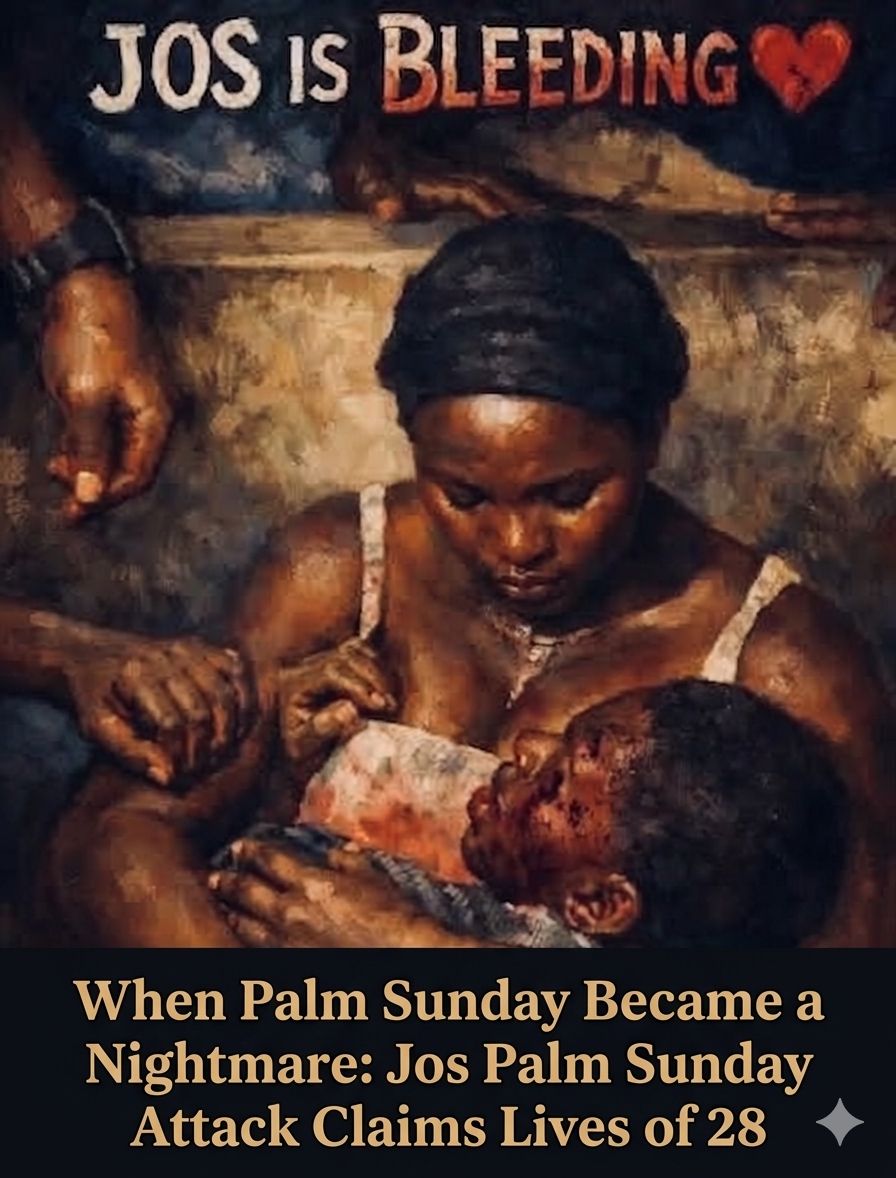
In the hours after the attack, a video began circulating online showing a mother carrying the body of her son, crying and calling on him to wake up. The young man had been killed in the attack and was reportedly his mother’s only son.
The video has since become a symbol of the tragedy in Jos a painful reminder that beyond the numbers are real people: sons, daughters, pregnant women, unborn children, brothers, sisters, husbands, and wives whose lives were cut short that night.
Immediately after the attack, there were conflicting casualty figures,Police initially confirmed 14 deaths,Community leaders reported over 20 deaths.The Plateau State Government later confirmed 28 deaths as the official figure.Among the dead were men, women, youths, and pregnant women, according to local reports.
Residents said there was a nearby police post, but witnesses claimed some officers fled when the shooting started. Security forces, including soldiers, reportedly arrived after the attackers had already fled the area.
Security operatives later secured the area, evacuated the injured to hospitals, and began patrols and search operations. However, many residents believe the response came too late.
Nigeria’s President, Bola Ahmed Tinubu, condemned the killings and described the attackers as “heartless cowards.” He ordered security agencies to find and arrest those responsible and directed increased security operations in Plateau State.
He also promised that the perpetrators would be brought to justice. However, as of the time of reporting, no major arrests had been publicly announced, and residents continue to question why attacks keep happening despite repeated promises of improved security.
Following the attack, the Plateau State Government imposed a 24-hour curfew in Jos North to prevent further violence and possible revenge attacks.The curfew was later relaxed to allow limited movement during the day.Importantly, the curfew was imposed after the attack to control the situation, not to prevent the attack itself.
The Jos crisis is not new. Plateau State has experienced repeated violent attacks for over two decades, often linked to land disputes, ethnic tensions, farmer herder conflicts, political issues, and religion.
Many Nigerians still remember the December 23–25, 2023 Plateau Christmas massacres, where about 200 people were killed in attacks across several communities in Plateau State.
Now, in 2026, the violence has struck again.
For many residents, the question is no longer just about condolences it is about protection, security, and accountability.
How many more people must die before the killings stop?
Advertisement