














For millions of the average Nigerians, the economy is no longer discussed through graphs, fiscal projections, or the many boring government briefings. For them, It is measured at the market stall, at petrol stations, in transport fares, and in the shrinking quantity of food families can afford. Now, from rising inflation and naira instability to increasing unemployment and business closures, economic hardship has become one of the defining realities of life in Nigeria today.
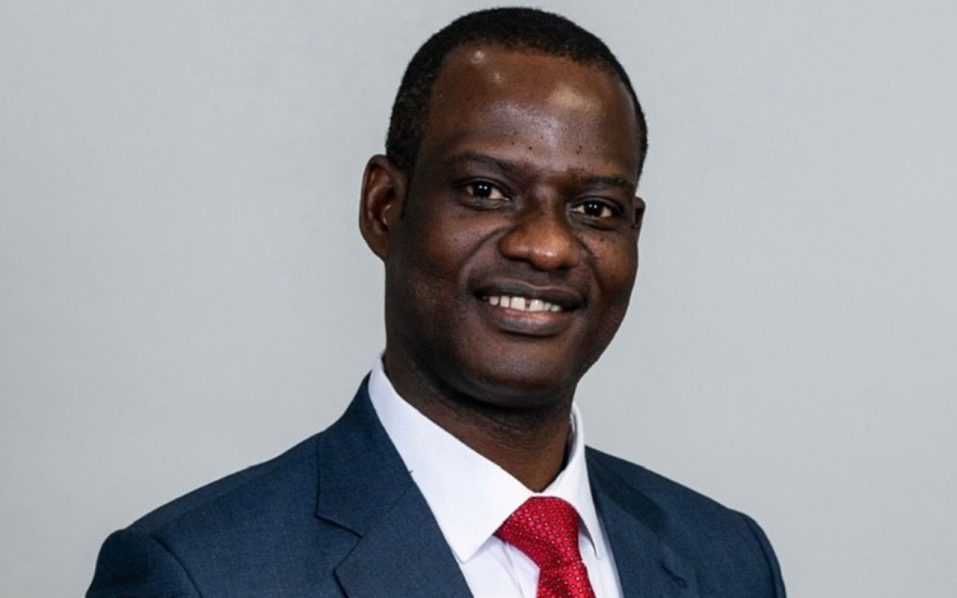
It is into this difficult atmosphere that Taiwo Oyedele steps as Nigeria’s new Minister of Finance and Coordinating Minister of the Economy. His appointment by President Tinubu following a “cabinet reshuffle” has immediately generated nationwide conversations, not simply because of the office he now occupies, but because of what many Nigerians believe his emergence represents, a shift toward deeper technocratic management of the country’s troubled economy. At a time when citizens are demanding visible economic relief rather than policy promises, Oyedele now carries one of the heaviest responsibilities in the Tinubu administration.


Unlike many previous occupants of the finance ministry whose influence emerged mainly through politics, Oyedele built his reputation in taxation, fiscal policy, and economic advisory. Before entering government, he spent more than two decades at PwC, rising to become Africa Tax Leader and Fiscal Policy Partner, where he advised governments, multinational organisations, and financial institutions across Africa on taxation, public finance, and economic reforms. His experience in both the private and policy sectors earned him recognition as one of Nigeria’s most respected fiscal experts.
Yes, his national prominence expanded significantly in 2023 when Tinubu appointed him chairman of the Presidential Committee on Fiscal Policy and Tax Reforms. Under his leadership, the committee became one of the major drivers of Nigeria’s ongoing tax reform agenda. The reforms aimed to simplify Nigeria’s complex tax structure, reduce multiple taxation, improve compliance, attract investments, and significantly raise Nigeria’s tax-to-GDP ratio from around 10 per cent, one of the lowest in Africa, to nearly 18 per cent over the coming years.
For familiar faces who knew Oyedele, they often describe him as intelligent, reform-minded, and data-driven. Many economists believe his appointment signals the administration’s intention to focus more aggressively on domestic revenue generation and fiscal discipline rather than relying excessively on borrowing. For years, Nigeria has struggled with mounting debt obligations, weak revenue mobilisation, and overdependence on oil earnings. Analysts argue that Oyedele’s technical background may help reposition the country’s fiscal architecture if reforms are implemented effectively.
However, despite the optimism surrounding his appointment, the realities before him remain daunting. Nigeria’s inflation rate has remained painfully unstable, with food prices reaching levels many households can barely sustain. The naira continues to face pressure despite reforms in the foreign and local exchange market. Transportation costs have risen sharply since the removal of fuel subsidy, while electricity tariff adjustments and broader economic reforms have worsened the burden on citizens and businesses alike. Small and medium-scale enterprises, often described as the backbone of the economy, continue to struggle under rising operating costs and weak consumer purchasing power.
Now, these are the realities Nigerians expect the new finance minister to confront. Although government officials frequently point to improvements in macroeconomic indicators such as GDP growth, increased external reserves, and improved investor confidence, many citizens insist that such gains remain disconnected from everyday realities. To ordinary Nigerians, the economy is judged less by official statistics and more by survival. A worker whose salary no longer lasts two weeks or a trader battling daily price fluctuations is unlikely to be comforted by abstract fiscal projections. This disconnect between economic theory and public reality may become one of Oyedele’s greatest tests.
One of the reasons many within the organised private sector welcomed his appointment is his previous advocacy for tax fairness and economic inclusiveness. During his leadership of the tax reform committee, Oyedele repeatedly argued that low-income earners and small businesses should not be overburdened by taxation. He pushed for reforms that would exempt many small businesses from certain taxes while proposing relief measures around essential sectors such as food, healthcare, transportation, housing, and education.
That position earned him goodwill among entrepreneurs and investors who have long complained about Nigeria’s chaotic tax environment. For decades, businesses operating in Nigeria have battled multiple taxes and levies imposed by federal, state, and local authorities. Many investors consider the system unpredictable, discouraging, and hostile to growth. Oyedele’s supporters believe simplifying the tax structure could improve compliance, reduce corruption, and make Nigeria more attractive to investors.
However, skepticism remains strong in many quarters. Some Nigerians fear that aggressive revenue generation under the current administration may ultimately translate into stricter taxation and enforcement at a time when citizens are already overwhelmed economically. Others argue that no finance minister, regardless of competence, can fully transform the economy without broader structural reforms involving power supply, insecurity, industrial productivity, governance efficiency, and corruption.
Even more, there is also the political dimension of the office he now occupies. Managing Nigeria’s economy is not merely a technical responsibility; it is political. Policies involving taxation, exchange rates, fuel pricing, public spending, and borrowing often trigger emotional and nationwide reactions. Several highly respected technocrats before Oyedele entered government with strong reputations but eventually became symbols of public frustration once economic hardship intensified.
This reality explains why many Nigerians believe Oyedele’s greatest challenge may not simply be designing reforms, but ensuring that Nigerians can actually feel the benefits of those reforms in their daily lives.
Since assuming office, the new minister has emphasised implementation, fiscal discipline, efficient public spending, and sustainable revenue mobilisation. However, expectations remain enormous. Nigerians want more than policy papers and technical explanations. They want practical results. They want inflation to ease. They want the naira to stabilise. They want businesses to survive. They want jobs to increase. They want food prices to become manageable. Above all, they want an economy that offers hope rather than daily anxiety.
His rapid rise within government also highlights the growing confidence the Tinubu administration appears to have in him. Within a short period, Oyedele moved from Minister of State for Finance to the substantive Minister of Finance and Coordinating Minister of the Economy, replacing Wale Edun in a significant cabinet reshuffle. That promotion not only signals presidential trust but also increases public expectations around his ability to deliver meaningful economic outcomes.
Still, the bigger question remains whether technocratic expertise alone is enough to solve Nigeria’s deeply rooted economic problems.
Nigeria’s economic crisis is not simply about revenue collection or fiscal policy. It is tied to structural inefficiencies, political interests, weak institutions, insecurity, overdependence on imports, and decades of inconsistent governance. Even the best economic reforms can struggle in an environment where implementation remains weak and public trust in government is fragile.
For now, Taiwo Oyedele enters office carrying both hope and pressure. To some, he represents competence and fresh thinking. To others, he is another brilliant technocrat entering a system that has consumed many reformers before him. But beyond the politics, beyond the policy debates, and beyond the public relations surrounding his appointment, one truth remains unavoidable: Nigerians are tired of promises without visible improvement.
The real test of Taiwo Oyedele’s leadership may therefore not lie in the sophistication of his reforms, but in whether ordinary Nigerians can eventually feel that the economy is working for them again.