















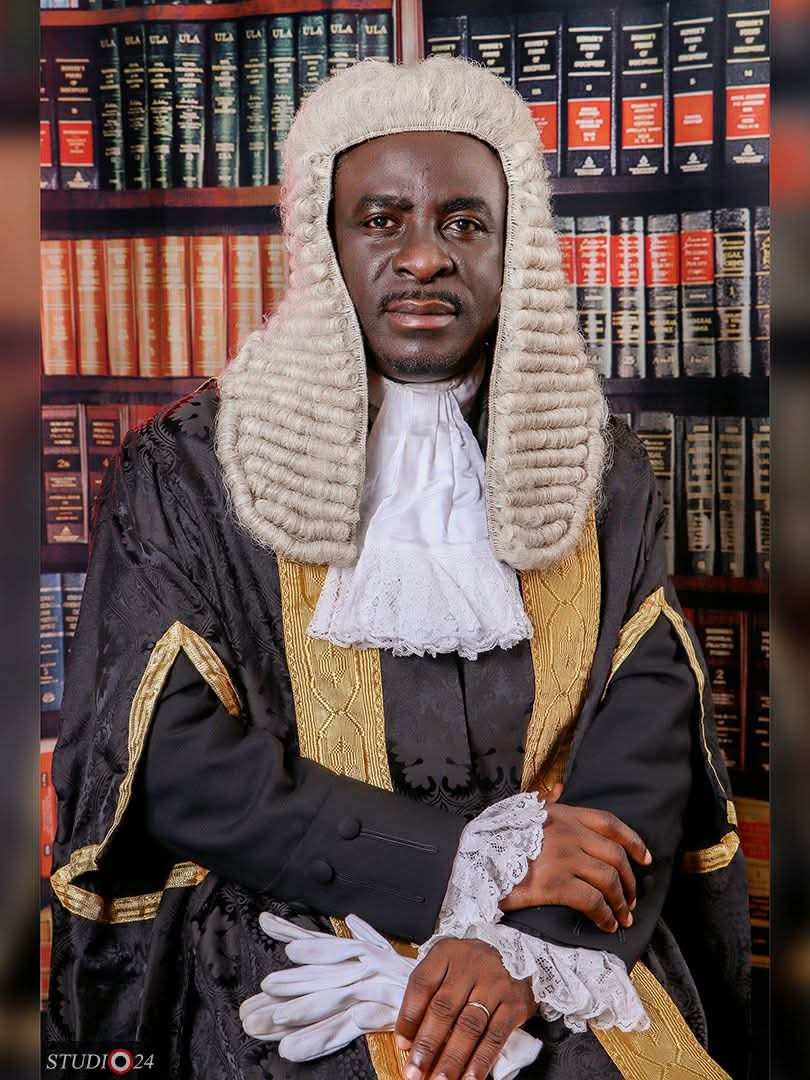
Professor Adebambo Adewopo SAN is Nigeria’s leading Intellectual Property (IP) expert. His professional career has spanned academic, public and practice space since his call to the Bar 37 years ago. This track record has seen him pioneer teaching and research in IP at the Lagos State University, holding fellowship positions in global institutions. He is former Director-General of Nigerian Copyright Commission (NCC). Currently, he is Ademola Edu Professor of IP at the Nigerian Institute of Advanced Legal Studies (NIALS) and Partner, L & A Legal. In 2019, he was the nominee of the Federal Government of Nigeria for the Office of Director-General, World Intellectual Property Organisation (WIPO).


You pioneered the teaching and research of Intellectual Property (IP) law in Nigeria. What was the state of IP scholarship when you began, and how has it evolved?
For a long time, there were just a handful IP scholars in the country. In recent times, the situation has rapidly changed. In the age of specialities, we now have an impressive pool of scholars and practitioners in the field contributing to IP scholarship and policy making and delivering specialised services across public and private sectors.
In your view, has Nigeria fully embraced intellectual property as a driver of economic growth and sufficiently leveraged IP — particularly Patents and Trademarks — as tools for industrialisation and economic competitiveness?
IP is the foundation of knowledge economy as we know it today. Anywhere you see creativity and innovation, IP is right there, creating wealth, boosting innovation, generating revenue and jobs, leading to economic growth. This is because creativity and innovation respond to incentive and IP provides the incentive system. That is why current trends have witnessed the optimisation of IP legal and policy infrastructure among countries to spur economic growth and align with development imperatives. Nigeria cannot be an exception especially given the abundant potential across both creative and innovation divides in the country and the need to harness them for development.
Nigeria is undergoing one of the most defining phases in its IP law and policy landscape. The IP ecosystem has long required major reform but this has been for the most part lacking, or at least protracted due largely to lack of prioritisation or recognition of the strategic role of IP as an instrument of development. There has been a compelling need to mainstream IP in successive national development policies. Recently, the enactment of the new Copyright Act 2022 followed by the Nigerian Intellectual Property Policy and Strategy 2025 (NIPPS) are two important developments for IP in Nigeria. Current momentum towards economic expansion and diversification is best reinforced by a comprehensive reform of IP regimes. While we have recognised this imperative, we have yet to carry it to its logical conclusion in a holistic legal, regulatory and institutional reform.
Many innovative ideas in Nigeria never translate into protected patents. What structural bottlenecks are responsible for this?
Translating innovative ideas and protecting them are two different things, nonetheless related. Businesses, especially startups and SMEs are just gradually awakened to the hidden wealth in their IP. Poor innovation environment. Dearth of technical and specialised IP expertise. Weak enforcement. Lax industry practices such as underplays developing robust IP asset management system and protocols. Weak institutional and regulatory capacity. Those sum up some of the structural bottlenecks. The entire IP system, comprising a network of key stakeholders and institutions, must be well organised and work efficiently to deliver optimally. For example, IP offices are not to be neglected because around the world, they are critical national institutions at the centre of economic growth and development, not just registries or depositories. They are important repositories of valuable information of social, cultural, economic and technological significance. Patent offices are custodians of patent information that speaks to the country’s inventiveness and determines national innovation indexes to gauge the depth of development.
Nigeria’s creative industries —music, film, publishing, software — continue to battle piracy. What sustainable enforcement models should be adopted?
Not just in the creative industries but beyond, piracy is a big elephant in the house. It has always been and will always be. It is a hydra-headed monster that continues to transform as markets and technologies change and erodes the gains of creativity, innovation and economic growth, requiring enforcement, and we quite recognise that, regardless of the challenges. From all indications, piracy has reached an alarming proportion and has remained one of the biggest saboteurs of the economy. Pirates have become lords of the marketplace.
I recall years ago at the NCC, realising that the high level of piracy requires a high level of enforcement, our job was cut out. We embarked on one of the most comprehensive and ambitious antipiracy campaigns nationwide under the umbrella of Strategic Action Against Piracy (STRAP). The high level of piracy was matched by intensive enforcement across all the creative sectors – music, audiovisual, books, including software. Name them, we were there, conducting raids on pirated CDs, DVDs, books, and more at notorious flashpoints all over the country to support the creative industry, which was then already experiencing promising growth dynamics and constant references in economic conversations. We are in the final vestiges of physical piracy save for counterfeiting and other forms of IP violations. We complemented enforcement with regulatory instruments.
Today, with digital technologies, the rise of online streaming platforms and AI, it is a different ball game and the new enforcement model remains mainly digital. A more nuanced digital antipiracy enforcement strategy and inter-agency collaboration. A strict application of the regulatory regime for digital content and technologies under the Copyright Act 2022 reflects global standards for confronting the new waves of digital and online piracy, and in this case with the Cybercrime Act and Nigerian Data Protection Act, providing additional layer of legal and regulatory tool to combat this evil.
What structural reforms are still needed to strengthen Nigeria’s IP framework?
Complete the reform with new Patents and Trademarks laws. Build institutional infrastructures and capacities to effectively and efficiently administer IP. Streamline IP agencies. Integrate IP in national development policies. Institutionalise and define the modalities for interagency collaboration because of the cross-cutting nature of IP spanning different development areas – law, trade, economy, health, science, technology, culture, agriculture, environment and more. IP drives creativity and innovation and it is the singular legal and policy framework for their regulation. Beyond the well-known narratives – the rise of Nollywood and tech hubs, Afrobeat renaissance, net contribution of creative and innovation sectors, and the urgency of reforms, more practical and strategic tools such as developing innovation and IP asset management systems, IP commercialisation frameworks and financing instruments, and others at individual, corporate and organisational levels are gradually shaping existing IP architecture and leveraging IP to support economic growth. These things need deliberate and focused action to define the Nigerian IP governance as an integral part of economic and development policies, and to ensure that IP is no longer at the fringes if we are to be an active participant in the global knowledge economy, meaning not just always speaking of having the potential but actually reaping from IP.
How can Nigeria better integrate IP policy into its broader economic and industrial strategies?
Beyond treating IP as a legal right, IP needs leveraging and aligning with broader national development strategies as a strategic instrument for innovation, investment and economic growth. We have one crucial element on the ground now, which is the NIPPS, requiring implementation. As a national resource, the implementation itself further requires maintaining a suitable innovation ecosystem and aligning its sector-specific objectives and priorities. For example, what type or scope of IP rights are appropriate for different sectors, such as the creative, digital economy, health and pharmaceutical, food and agriculture, energy, etc as critical arms of development. Developing a purpose-built framework of IP commercialisation for IP assets and portfolios to provide access to IP-backed financing, especially in the creative sector. Then again, our IP system must be supportive of SMEs, Research And Development, Research Institutions and Universities. Our IP Offices must be modernised and world-class. All these require political will and institutional capacity building.
As former Director-General of Nigerian Copyright Commission (NCC), what were your most significant reforms?
Building on existing foundation, we embarked on quite a number of reform initiatives across the three broad areas of the Commission’s statutory mandate which are the promotion, administration and enforcement, inclusive of regulation and prosecution of Copyright in Nigeria. Each of those was fully packed and significant to the development of the largest creative and copyright-based industries in sub-Sahara. With the new Copyright Act, the mandate is even more extensive. The Commission itself as an agency of Government needed repositioning for the renewed journey at the time. We embarked on reorganisation; so, for example, separate from the Enforcement Department, we created the Regulatory Department and Prosecution Department. We established our knowledge arm, the Copyright Institute (Copyright Academy, I believe it is now called), among other institutional changes. We took pride in our manpower and training, which formed critical parts of some of the successes recorded.
Our mission was clear, constructed under the strategic drive of the famous STRAP which was anchored on three pillars; enhanced public awareness, regulatory interventions and enforcement action in line with the mandate of the Commission. STRAP was the face of our policy, regulatory, institutional and public engagement. For example, in the Collective Management Organisations (CMO) space, we revised the CMO Regulations. We commenced the review of the Copyright Act itself. As we were busy building capacities, we were equally engaged in deploying resources to advance the Commission’s mandate with the goal of making the Commission one of the well-respected agencies of Government, even with lean resources because of the well-known funding challenges and in an area that was not that visible. We took copyright and piracy to the public arena. We gathered momentum with refreshing dynamism, as some would often say, a golden copyright era, laying the building blocks for future development of this important national resource. I honestly believe that Public Service ought to have the best manpower obtainable anywhere. We are talking about advancing public interest and serving the country. There is nothing more fulfilling and impacting than being a part of that.
How can Regulatory Agencies balance Enforcement with the need to encourage Creativity and Innovation?
IP enforcement is key. I have made allusions to this fact. First, enforcing the law is an important goal of the law for public order, public interest and the protection of private rights. Second, the dominant logic in IP protection is in enforcing IP rights. Third, with enforcement powers as a critical element of the Commission’s mandate and, by that, the Commission is actually a law enforcement agency of Government. Lastly, though, enforcing IP rights is the primary duty of the right owner, Government retains the power as a matter of public interest, to enforce piracy and other forms of copyright violations, especially large-scale piracy such that impacts the industry, public revenue or the economy.
What role should Universities and Research Institutions play in building a stronger IP culture?
As a primary hub for knowledge creation and diffusion, Universities and Research Institutions are important knowledge centres and seats of literary and technological innovation and patent information. From the laboratory to the marketplace, research products and outputs require protection and adequate attention in building IP infrastructure and building an innovation system. That role is best discharged with the key IP infrastructure in place such as IP strategies and policies, IP offices and technology transfer offices, integrating entrepreneurship and innovation curriculum and culture, providing research-industry and technology commercialisation linkages, promoting collaboration and indigenous knowledge. These are vital elements of building IP culture.
Having been educated in Nigeria, Europe and the United States, how has comparative legal exposure shaped your philosophy of IP governance?
IP is no longer the arcane discipline it used to be. Although a field of law, it is multidisciplinary. Many IP experts are not necessarily lawyers. I don’t think any other field of law would have taken me to a vast array of disciplines that I have traversed over the years – liberal arts, economics and other social sciences, life sciences, technology, health, agriculture, energy, environment and climate change, the whole gamut of development. I have found this enriching and one that only IP can do. My IP journey has opened me to vistas of knowledge and global education and exposure have been a vital part of that journey. IP as a discipline is grounded in epistemic diversity and complexity, and this has shaped my worldview of development, especially from the developing country perspective. Certainly, most countries have now been awakened to the strategic role of IP in the development equation, depending on how you deploy it to suit your local conditions. This is why the IP debate has continued to dominate the global development narrative, showing the development imperative of IP and that some of the key areas of differences in the IP regimes in the developed vis-a-vis developing countries focus on developing an IP system that best optimises existing creative and innovation industries through appropriate type, standard and institutions of protection for sustainable growth.
How can Nigeria and other African countries better position themselves within the global IP system?
This essentially entails maintaining a pro-development approach, which involves striking a delicate balance between the adoption or adaptation of international and global norms and standards, on the one hand, and the need to protect local industries, foster innovation, and secure access to essential technologies and goods, on the other. Fortunately, that is the thrust of my Inaugural Lecture in 2012. That debate has not come to a full circle. Recent continental developments with AfCFTA and the IPRs Protocol, among others, bear eloquent testimony to the growing profile of IP as a key driver of trade and development.
Artificial Intelligence (AI) is redefining creativity and invention. Who should own AI-generated works under Copyright law?
It is digital technology that has had by far the most transformative impact ever faced on the question of dissemination of knowledge and information in human history. And now, AI, its present manifestation is fundamentally redefining creativity, innovation and IP and challenging traditional legal definitions of authorship and ownership, even so the foundational principles of IP law, which were originally designed for human creators. Whether as AI-generated or AI-assisted for creating outputs and inventing new products, it has transitioned from a tool to an active collaborator and co-creator. Today, AI is everything and all around us with currency of IP as the dominant legal framework for the governance of knowledge products.
How should the law respond to Digital Streaming, Cross-border Infringement and Online Piracy?
Current Copyright regime for the first time has addressed those issues and, given the rise of online streaming, this has been long coming. The Copyright Act devotes a whole two Parts and other provisions dealing with online piracy and online content and establishing the regulation of liability of intermediaries. Nigerian copyright is a late entrant in this legal solution and it becomes an acid test for Nigerian Copyright law and jurisprudence on the entire Internet economy and the adequacy or otherwise of the law governing the content industry and digital networks.
Are Nigeria’s IP laws sufficiently future-ready for the Digital Economy and what Reforms would you prioritise to modernise Nigeria’s IP legislation?
It is safe to say that we are just in the middle of the process. We have come a long way and I think we are gradually getting ready, although it has been rather slow due largely to systemic challenges and lack of prioritisation of IP. Next steps should focus on completing the legal and institutional reform and building on the current momentum.
What advice would you give to young lawyers seeking to specialise in IP law?
Young lawyers are progressively being sensitised to the imperative of specialised practice. In the age of specialisation actively promoted by the Bar Association and the profession itself, this will bring greater value, depth and efficiency to law practice and jurisprudence would be further enriched. For hardworking lawyers, the environment is promising.