















Culled from The Guardian
…DAWN DG urges youth to embrace History,innovation for better future
By Rotimi Agboluaje, Ibadan
A professor of History at the University of Ibadan, Prof. Olutayo Adesina, on Wednesday called on the elites of Western Nigeria to stop standing aloof while the region faces increasing socio-economic challenges, urging them instead to take decisive, home-grown actions to secure a prosperous future for the Yoruba people.
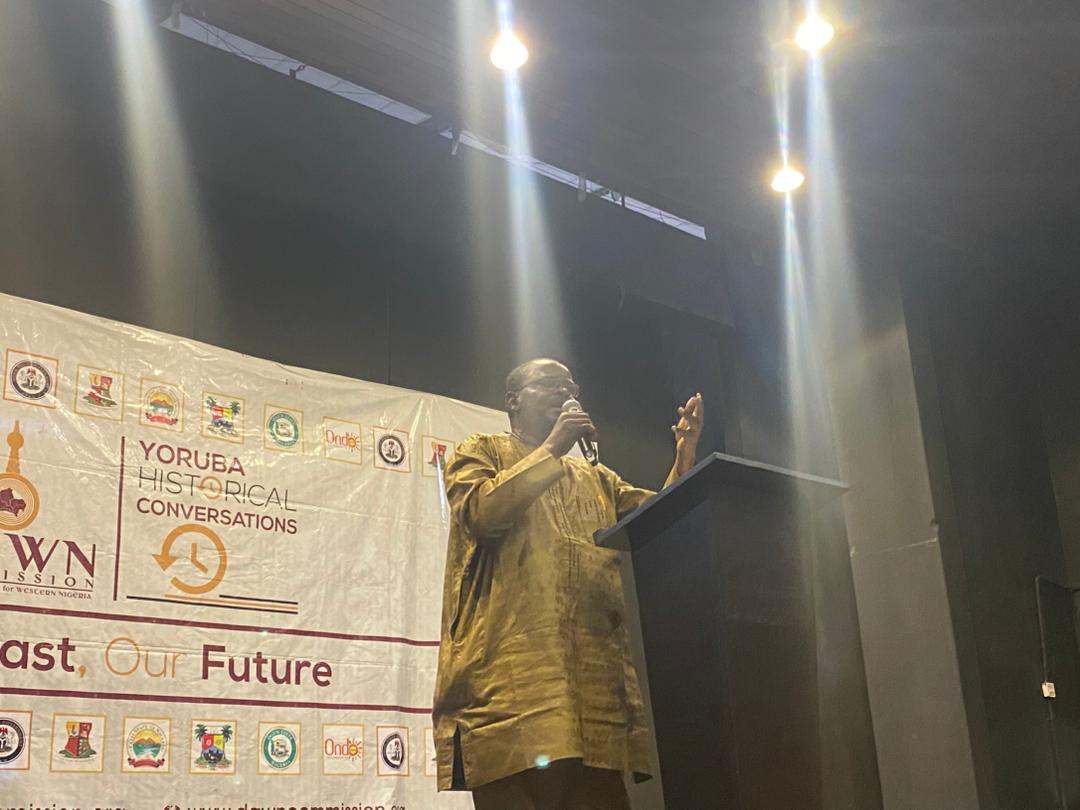
Delivering a lecture titled “Contemporary Yoruba Elites and the Bystander Effect”, Prof. Adesina made the charge at a public event organised by the Development Agenda for Western Nigeria (DAWN) Commission in partnership with the Institute of African Studies, University of Ibadan, as part of the Yoruba Historical Conversation series.
Held at the Wole Soyinka Theatre, the event drew scholars, students, policymakers, and cultural stakeholders, all gathered to reflect on Yoruba heritage and its role in shaping the region’s future.
In his address, Prof. Adesina lamented Nigeria’s deepening economic hardship, the mass migration of young people, and the erosion of public trust in leadership. He warned that continued inaction by the region’s elite risks compounding an already fragile national condition.
“We thought our salvation lay at sea, but now the sea is boiling,” he said, referencing the closing immigration doors in Western nations.
Adesina stressed the need for a clear strategic vision for Western Nigeria, built on indigenous values, sustainability, and youth empowerment. While commending DAWN’s existing development blueprint, he urged the Commission to translate it into a simplified, accessible plan for ordinary citizens.
“Every Yoruba person should have access to this document. It should be easy to understand, practical, and targeted at real change,” he said.
The historian expressed concern over the destruction of sacred and natural landmarks, citing the pollution of the Osun River as a tragic example. He contrasted this with Brazil, where Yoruba spiritual traditions are being honoured and preserved.
“We must begin to protect our natural and cultural resources before they are completely lost,” he warned.
Describing Nigeria’s youth as intelligent, resilient, and globally competitive, Prof. Adesina called for urgent investment in job creation and a knowledge-based economy.
“We must wake up and redirect our youth toward sustainable development. At this stage of our national journey, we need a self-sustaining economy that provides opportunities for our children.”
He also raised concern about political malpractice, particularly the alleged use of forged credentials by some public office holders.
“We should no longer allow those who attain high office through forged documents to dictate the future of our youth,” he declared.
Drawing inspiration from nations like Israel and China, where young people return from studies abroad to contribute to national development, he questioned the disconnect between Nigerian universities and national growth.
“What do our universities teach? What becomes of the knowledge we produce?” he asked. “We have the resilience and can-do spirit; all we need now is the will to act.
“We must reinvent our society. Let us boost innovation, enhance productivity, and build a future that works for everyone. The time to act is now’’, he added.
Also speaking at the event, the Director-General of DAWN Commission, Dr. Seye Oyeleye, emphasised the need to reconnect the younger generation with their cultural heritage while preparing them for a digital future.
“The Yoruba were once a proud people and race. Government made a grave mistake by removing History from the school curriculum. There is no future without history,” Oyeleye stated.
He said the programme was designed to “connect the past with the present and the future” and help young Nigerians understand their identity, heritage, and role in nation-building.
Oyeleye highlighted the need for educational reforms that blend historical consciousness with technology-driven learning, urging a shift from outdated teaching methods.
“The way we teach our children must change. To get ahead today, they must be tech-savvy. We must remove obstacles and create opportunities for them,” he said.
Citing the rapidly changing influence of Artificial Intelligence, Oyeleye stressed that foundational subjects like Mathematics should be made less intimidating, and curriculum content must evolve.
“AI is already changing the way we think. Our education system must catch up,” he added.
He reaffirmed DAWN’s commitment to policies that bridge tradition with transformation, saying: “Our mission is to help the next generation understand who they are, where they come from, and where they are going.”
Advertisement