
















Africa’s rapidly expanding cities are on the brink of a climate-driven public health emergency, the Vice-Chancellor of the University of Lagos, Prof. Folasade Ogunsola, has warned.
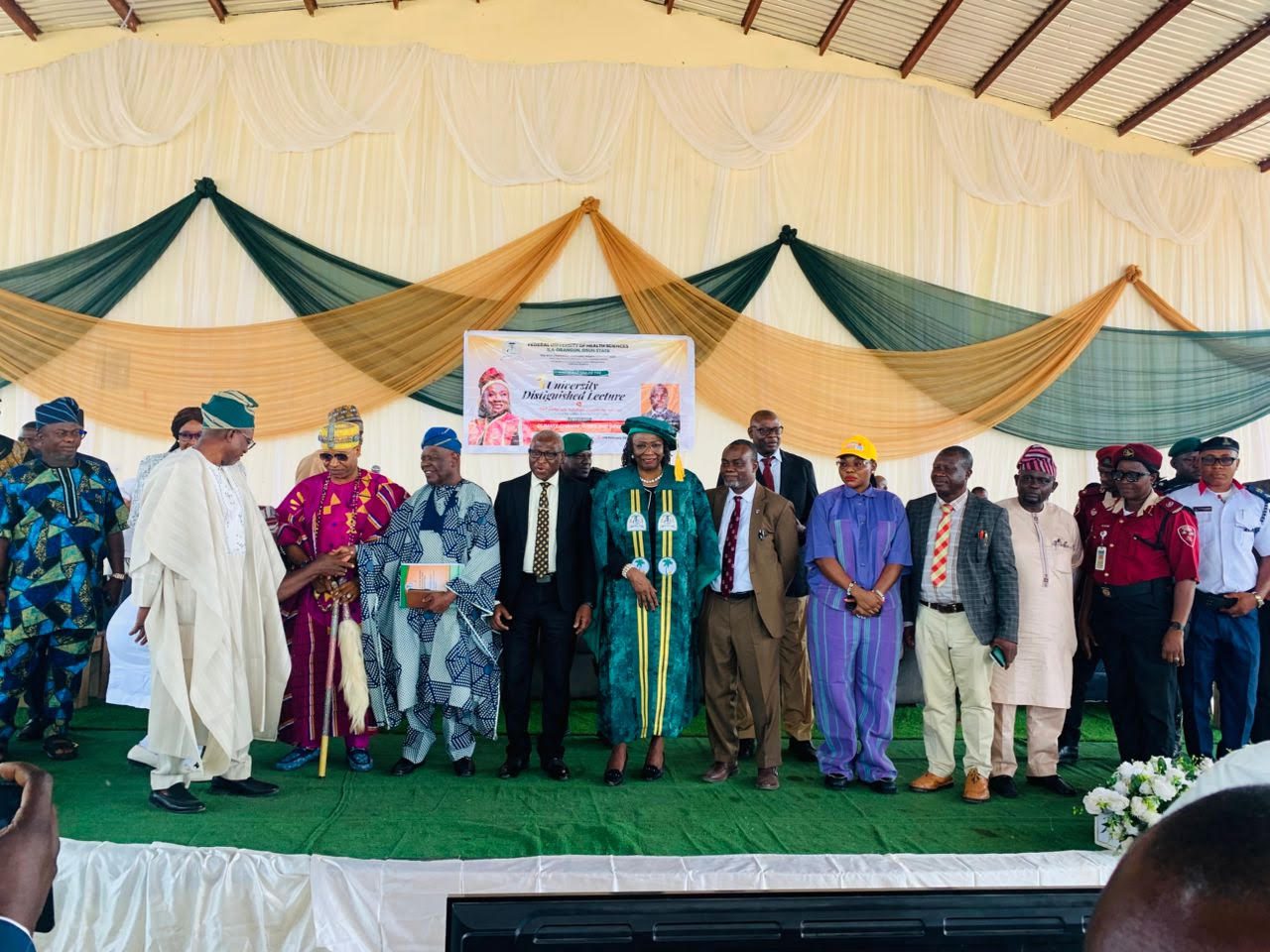
Delivering the maiden Distinguished Lecture at the Federal University of Health Sciences,Ila-Orangun, Osun State, Ogunsola said the convergence of climate change, rapid urbanisation and infectious diseases is creating a “perfect storm” that threatens Africa’s urban future. The lecture was titled: ‘’Climate Change,Cities and Infections’’.

Speaking in Ila-Orangun, Osun State, the microbiologist and public health expert said climate change is no longer a distant environmental concern but a present and escalating health crisis.
“Climate change does not create most pathogens,” she said, “but it changes the environmental conditions that determine transmission, exposure and vulnerability.”
Ogunsola noted that although Africa contributes the least to global greenhouse gas emissions, it bears a disproportionate share of climate-related disease risk due to fragile health systems, widespread poverty and heavy reliance on climate-sensitive livelihoods such as agriculture.
Citing global health projections, she warned that climate change could cause an additional 250,000 deaths annually between 2030 and 2050 from malaria, diarrhoea, malnutrition and heat stress alone. Urban areas, she stressed, are particularly vulnerable. African cities are expanding at unprecedented rates, often without adequate infrastructure. Informal settlements lacking drainage, sanitation and waste management systems are multiplying, creating ideal conditions for infectious disease outbreaks.
According to Ogunsola, African cities are experiencing intensified “urban heat island” effects, where concrete structures, paved surfaces and vehicle emissions trap heat, pushing temperatures significantly higher than surrounding rural areas.These rising temperatures, combined with erratic rainfall, flooding and drought, are reshaping disease patterns.
Mosquito-borne diseases such as malaria, dengue and chikungunya are expanding into new urban zones as warmer and wetter conditions lengthen breeding seasons. Flooding contaminates water sources and damages sanitation systems, triggering outbreaks of cholera and other diarrhoeal illnesses. Drought, she added, concentrates pathogens in limited water supplies, further increasing infection risks.
“Cities are both contributors to and victims of climate change,” she said. “The density that drives economic productivity also heightens exposure to climate hazards and infectious disease transmission.”
The Vice-Chancellor also highlighted the growing intersection between climate-related disasters and antimicrobial resistance (AMR). Extreme weather events that displace populations and damage health facilities often lead to spikes in infections and increased antibiotic use, accelerating the development of drug-resistant strains.
More than half of Africa’s public health emergencies between 2001 and 2021 were climate-related, she noted, many involving diseases already complicated by rising resistance.
“AMR reduces treatment options and increases mortality, complicating responses to climate-linked disease outbreaks,” she warned. While cities offer proximity to healthcare and economic opportunities, Ogunsola stressed that deep social inequalities limit access to services for millions living in informal settlements.
Air pollution, driven by fossil fuels, diesel generators and unregulated transport, is increasing respiratory illnesses, while extreme heat is disproportionately affecting the elderly, children and other vulnerable groups.
“If urban challenges are not addressed at their source,” she cautioned, “their consequences will reverberate far beyond city boundaries, affecting national stability, regional health security and global sustainability.”
Ogunsola called for integrated climate and health policies anchored in a “One Health” approach, strengthening disease surveillance systems, investing in climate-resilient infrastructure, and empowering local governments and communities. She urged African leaders to prioritise green urban planning, including improved drainage, expanded green spaces, resilient housing and cleaner public transport, to reduce emissions and build healthier cities.
“Cities are climate frontlines,” she concluded, “but they are also hubs of innovation. The choices we make now will determine whether Africa’s urban future becomes a story of resilience, or catastrophe.”
Registrar of the Joint Admissions and Matriculation Board [JAMB], Prof. Isiaq Oloyede, who was the chairman of the event, called for holistic measures to preserve human health by controlling rising climate change in Nigeria. Prof. Oloyede noted that climate change is not only dangerous to the environment but also to human health stressing that human and environmental health has become inseparable. Represented by the vice chancellor, Obafemi Awolowo University, Prof. Simeon Bamire, called for a collective effort to tackle the effects of climate change. The JAMB boss described the lecture as apt and timely urging stakeholders to accelerate implementation of the paper.
The Vice Chancellor of the Ila university, Prof. Akeem Lasisi, lauded the lecturer and the chairman for their insights.