

















By Eniola Philip
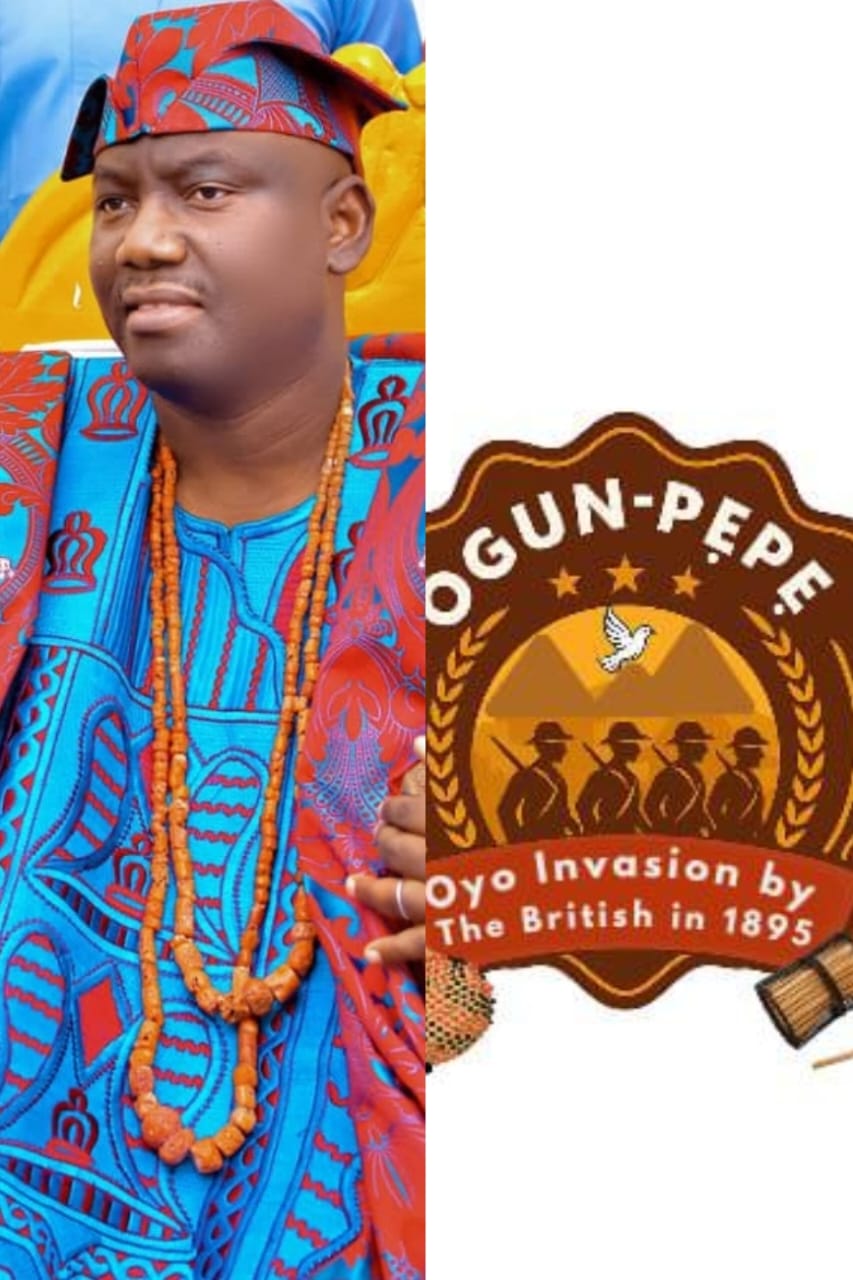
One hundred and thirty years after the British imperial forces invaded the palace of the Alaafin of Oyo in what became known as “Ogun Pepe” (the Pepe War), the people of Oyo are set to commemorate the historic event that symbolised the Yoruba resistance against colonial domination.

The commemorative programme, slated for November 2025, will feature a week-long series of activities showcasing the cultural heritage, traditions, and resilience of the ancient Oyo Empire. It will also celebrate the defiant spirit of the then Alaafin, Oba Adeyemi Alowolodu I, whose courageous stand against British interference on November 12, 1895, sparked the war.
The current Alaafin of Oyo, His Imperial Majesty, Oba Abimbola Akeem Owoade I, announced that the memorial will not only highlight the heroism of Oyo’s forebears but will also give global relevance to one of the most defining resistance struggles in Yoruba history.
“The Pepe War was not just a local conflict; it was a bold statement of defiance against imperial aggression and an affirmation of our people’s right to self-determination,” the monarch said. “We must continue to draw lessons from that moment of courage and resilience.”
Historical accounts reveal that the crisis erupted after a royal messenger, Bakare, an Ilari (eunuch) in the court of the Aseyin of Iseyin, Oba Adeyeri I, was accused of adultery with one of the king’s wives. In accordance with Yoruba tradition, the matter was referred to the Alaafin of Oyo, the paramount ruler of the Oyo Empire, who ordered Bakare’s castration — a punishment rooted in royal custom.
However, Captain Robert Lister Bower, the British Resident Commissioner in Ibadan, deemed the act an affront to British authority. He demanded that Alaafin Adeyemi hand over Bakare and the messenger who carried out the punishment, Kudeefu, but the Alaafin refused. Instead, he ordered Bakare’s execution and shielded Kudeefu — a move that infuriated the British.
In retaliation, Bower led a troop of sixty armed soldiers to invade Oyo. The people of Oyo, loyal to their monarch, resisted fiercely. The sharp, staccato sound of British gunfire during the battle — “pepe! pepe! pepe!” — gave the conflict its enduring name, “Ogun Pepe.”
Despite being wounded, the Alaafin reportedly escaped to Oke-Owinni, where he sought the intervention of the Catholic Bishop of Oyo. After six days of intense fighting, the Bishop mediated a truce, and the Alaafin was allowed to return triumphantly to his palace amid great celebration.
According to palace sources, the forthcoming commemoration will include a dramatic re-enactment of the war, cultural displays, academic symposia, exhibitions, and a heritage project focused on repatriating royal artifacts taken from the Oyo Palace by British forces during the 1895 invasion.
The artifacts, including crowns, gold, beads, and other royal regalia, are among the cultural treasures the Alaafin is seeking to recover through diplomatic and heritage advocacy.
The palace stated that the “Ogun Pepe Memorial” will serve as both a historical reflection and a cultural renaissance, reinforcing the identity and pride of the Oyo people while educating future generations on the sacrifices made in defense of sovereignty.
“This commemoration is not merely about the past,” the Alaafin added, “but about preserving our dignity, our heritage, and our right to tell our own story , the Oyo story, with pride and truth.”








)