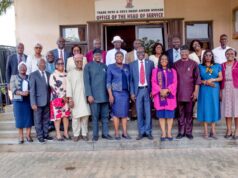

















The Vice-Chancellor of Lead City University, Professor Kabiru Aderemi Adeyemo, has said meaningful private sector participation remains critical to building a sustainable and globally competitive higher education system in Nigeria.

Adeyemo made the declaration at the first Colloquium held in honour of Professor Jide Owoeye at 70, stressing that expansion in tertiary education must be matched with quality assurance, financial prudence and strong governance frameworks.
Speaking on the theme, “Nigeria’s Higher Education and Private Sector Involvement: Navigating the Path, Confronting the Challenges, Exploring Opportunities for the Future,” the Vice-Chancellor noted that while access to university education continues to expand rapidly, sustainability remains a pressing concern.
According to him, growth without standards could weaken the credibility of institutions, while expansion without clear national development objectives may undermine long-term impact.
“The future of higher education in Nigeria depends on innovation, partnership and responsible private sector engagement,” Adeyemo said. “Private participation must not only complement government efforts but must be guided by national development goals and anchored on quality, transparency and accountability.”
He warned against allowing universities to become isolated ivory towers disconnected from societal needs, urging stronger collaboration between academia, industry, policymakers and technology hubs to ensure that graduates are employable, innovative and globally competitive.
Adeyemo emphasised that private universities and investors have a strategic role to play in bridging infrastructure gaps, funding research, promoting entrepreneurship and supporting technological advancement. However, he maintained that such involvement must be regulated within a framework that safeguards academic standards and institutional integrity.
The Vice-Chancellor also highlighted the importance of sound governance structures, noting that universities thrive when leadership is principled and systems are credible.
He described Professor Owoeye, the Pro-Chancellor and Chairman of Council, as a model of disciplined academic leadership who has consistently championed quality assurance, strategic planning and due process in university administration.
“Universities are not merely physical structures; they are communities built on standards, intellectual courage and integrity,” Adeyemo said. “Sustainability must therefore be driven by clear vision, financial responsibility and commitment to excellence.”
He added that the increasing demand for tertiary education in Nigeria requires innovative funding mechanisms, diversified revenue streams and structured engagement with the private sector to reduce pressure on public resources.
Adeyemo further noted that responsible private sector involvement could stimulate research commercialisation, foster industry-relevant curricula and create opportunities for students to gain practical experience before graduation.
He called on stakeholders to prioritise policies that encourage partnerships while strengthening regulatory oversight to prevent compromise of standards.
The colloquium, which attracted vice-chancellors, scholars and members of the academic community, served as a platform to examine the evolving relationship between higher education institutions and private sector actors in Nigeria.
Adeyemo added that the sustainability of Nigeria’s higher education system would depend not only on expansion, but on deliberate collaboration, accountability and long-term strategic thinking.