














At a time when Nigeria grapples with a widening health-worker deficit and rising medical tourism, the Federal Government’s investment in medical education is beginning to take visible form.
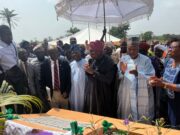
On Friday, the Federal University of Health Sciences, Ila-Orangun (FUHSI), became a symbol of that effort as the Minister of Education, Dr. Maruf Tunji Alausa, commissioned 11 major infrastructure projects, signaling what officials describe as a deliberate push to strengthen Nigeria’s health-training pipeline.

Addressing stakeholders at the ceremony, Alausa said President Bola Ahmed Tinubu views human capital development,particularly in the health sciences, as a strategic national priority rather than a policy afterthought.
“Medical education is directly linked to productivity, economic resilience, and national survival,” the minister said, noting that the administration’s investments are designed to produce professionals capable of competing globally.
The projects, ranging from a multidisciplinary teaching hospital and research laboratories to modern academic buildings and campus electrification, represent a significant leap for the university, which was established only in 2021 and began full academic operations in 2023.
For FUHSI Vice-Chancellor, Prof. Akeem Olawale Lasisi, the infrastructure expansion is already translating into measurable growth. The university now runs 13 academic programmes with nearly 3,500 students, more than half of them female, and has secured accreditation for most of its programmes.
“This is how institutions are built, through sustained investment, accountability, and vision,” Lasisi said, while warning that the rising cost of diesel poses a threat to operational sustainability unless alternative power solutions are provided.
TETFund Board Chairman, Rt. Hon. Aminu Bello Masari, said the projects reflect a broader national strategy to reposition Nigerian universities for relevance in a fast-changing global knowledge economy increasingly shaped by technology and artificial intelligence.
Political leaders, traditional rulers, and education stakeholders at the event agreed that FUHSI’s growth could help reduce Nigeria’s dependence on foreign medical training and healthcare services.
As Nigeria searches for solutions to brain drain and systemic weaknesses in healthcare delivery, the developments at FUHSI offer a glimpse into what targeted investment and policy alignment can achieve, if sustained beyond ceremonies and speeches.