

















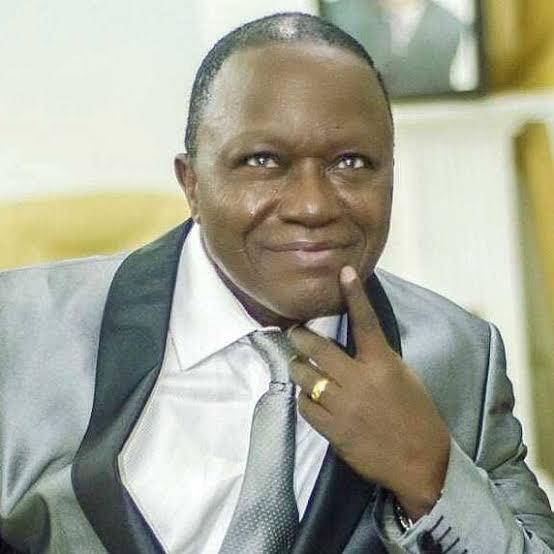
In the wake of growing concerns over Nigeria’s security architecture, Senior Advocate of Nigeria (SAN), Chief Niyi Akintola, has called for urgent constitutional and legal reforms to enable decentralised policing. In this interview with ROTIMI AGBOLUAJE, the All Progressives Congress (APC) chieftain and former Deputy Speaker of the Oyo State House of Assembly argues that Nigeria can no longer sustain a centralised policing system and explains why amendments to the Constitution and the Police Act are critical to the creation of state police.

The Federal Government has given a nod for the creation of state police. In your view, is Nigeria ready for such a system?
Yes, Nigeria is very much ready for state police. In fact, this is something that should have been implemented long ago. The security challenges confronting the country today clearly show that the present centralised policing structure is no longer adequate. To make it work, however, certain legal reforms must first be undertaken. We need to amend the Constitution, and we also need to amend the Police Act. These two legal frameworks form the foundation of the country’s policing structure, and if we are serious about introducing state police, then they must be reviewed carefully and urgently.
The Inspector-General of Police has already set up a committee to examine the issue, which shows that the conversation is already ongoing within the security establishment. But beyond that, the executive arm of government also has a major role to play in ensuring that the necessary reforms are carried out. The situation in Nigeria today is extremely precarious in terms of security. We cannot continue to deceive ourselves or pretend that everything is working perfectly. For too long, we have been playing the ostrich, ignoring the obvious realities around us. The truth is that our current security architecture needs serious restructuring.
What realities do you believe justify the establishment of state police?
If you look closely at the current security landscape in Nigeria, you will realise that we already have several layers of security arrangements operating at different levels. Apart from the Nigeria Police Force, we have the military deployed across several states to maintain internal security. We also have vigilante groups in many communities, and in the South-West we have the Amotekun Corps, which was created by the regional governments to support security operations.
The interesting thing is that many of these security initiatives are largely financed by state governments. Take Oyo State as an example. If you look at the number of operational vehicles provided for Amotekun, you will realise that the state government has invested heavily in supporting security operations.Even many of the vehicles currently used by the Nigeria Police in the state are provided by the state government. These vehicles are not supplied by the Federal Government. So when you examine the situation closely, you will see that states are already playing a major role in funding security infrastructure.
That is why I say we should stop deceiving ourselves. If states are already financing security operations, then it is only logical that they should also have the constitutional authority to run their own police structures.
Critics often express fears that state police may lead to abuse of power by state governments. How do you respond to that concern?
That concern is understandable, and people often refer to experiences from the past when local police were allegedly used for political purposes, especially during elections.But we must not allow past abuses to prevent us from making necessary reforms. Every system in the world can be abused if there are no safeguards. What is important is to create a structure that includes strong checks and balances to prevent misuse.
The idea that state police will automatically lead to abuse is not entirely convincing. Many federal countries operate decentralised policing structures successfully without descending into chaos.
In fact, the problem we have today is partly because our policing system is too centralised. Decisions affecting security at the grassroots are often taken far away from the communities where those security challenges exist.
If states are given the responsibility to manage their own police structures, they will be able to respond more quickly and effectively to local security threats.
Some people worry about possible conflict between federal police and state police. Is that a valid concern?
Not really. There will be no conflict if the roles of each level of policing are clearly defined. Federal police will enforce federal laws, while state police will enforce state laws. That is the standard practice in federal systems around the world.
Most criminal offences committed within states are violations of state laws, not federal laws. Therefore, it makes sense for states to have policing institutions that can address those issues directly.
If you look around the world, you will discover that Nigeria’s current system is quite unusual. Show me any federal country where there is only one centralised police force controlling the entire country.
Even the United Kingdom, which is not strictly a federal state, has about 44 different police formations. That tells you that decentralised policing is not an unusual idea.
Could you explain how state police might be structured if it is eventually adopted?
The details of the structure should largely be determined by individual states. State assemblies and state governments should have the authority to design the operational framework that works best for their circumstances. Every state has its own unique security challenges. What works in Lagos, for instance, may not necessarily work in another state. Security strategies must reflect the realities of each locality.
Therefore, there should not necessarily be complete uniformity across the country. States should be allowed some flexibility to develop systems that suit their specific needs. What is important is that there must be clear constitutional guidelines defining the relationship between federal police and state police.
You stated earlier that Nigeria once operated a more decentralised policing system. Could you elaborate?
Yes, Nigeria’s founding fathers established the country on the principles of true federalism. At that time, policing structures were not as centralised as they are today. There were regional police formations, and even local governments had their own policing arrangements. Over time, however, those structures were dismantled, and policing became centralised under the Federal Government.That centralisation may have been driven by political considerations at the time, but today it has created serious operational limitations.
Nigeria is a very large and complex country with diverse security challenges across different regions. It is unrealistic to expect one centralised police structure to effectively manage security in every part of the country.
Aside from security, there have also been debates about the Electoral Act 2026. What is your assessment of the law?
The Electoral Act has generated a lot of discussions, particularly regarding provisions such as direct primaries for political parties.
In my opinion, direct primaries can help reduce corruption within party structures. When a small number of delegates determine the outcome of party primaries, it becomes easier for aspirants to manipulate the process through inducements.
However, if every registered party member participates in the primary election, it becomes extremely difficult to influence the outcome through bribery. Imagine trying to bribe one million party members. It would be practically impossible.
So direct primaries, in many cases, can strengthen internal democracy within political parties.
Another controversial issue has been electronic transmission of election results. What is your position on that?
The idea of electronic transmission is attractive in theory, but we must also consider Nigeria’s current technological realities. Our country does not yet have the infrastructure needed to guarantee reliable electronic transmission across every polling unit. There are many communities where mobile network coverage is extremely poor. In some places, only one network provider operates, while in others there is no coverage at all.
Nigeria is a very large country with significant infrastructural gaps. We must be realistic about these challenges.Technology itself is not perfect anywhere in the world. Even in advanced countries, technological systems sometimes fail.
Therefore, whenever technology is introduced into electoral processes, there must always be alternative mechanisms to ensure that the process can continue if technical problems arise.
So you believe the National Assembly was right to include alternative provisions in the Electoral Act?
Yes, I believe the National Assembly acted wisely in that regard. It is always important to have contingency arrangements. In other words, there must always be a Plan B. If technology fails for any reason, there should be an alternative method that ensures that the electoral process continues smoothly. That is simply a matter of practical governance.
Some critics argue that the Electoral Act still has weaknesses. Do you share that view?
Every law has its limitations. There is no perfect law anywhere in the world.What many people may not realise is that Nigeria’s electoral framework has evolved significantly through judicial decisions. Several important provisions in our electoral process today emerged from court judgments rather than legislative amendments.
For example, the famous Amaechi vs INEC case established important principles about the role of political parties in candidate nominations. That judgment clarified that votes are cast for political parties rather than individual candidates. There have been many other cases that have contributed to shaping electoral law in Nigeria.
What do you believe is the most important lesson for Nigeria’s democracy going forward?
The most important lesson is that institutions must be strengthened. Democracy cannot function effectively without strong institutions that operate independently and transparently. We must continue to reform our laws, improve our institutions, and build a system that reflects the realities of our society. At the same time, we must also accept that reforms take time. Democracy is an evolving process. The important thing is to keep improving the system and ensure that it serves the interests of the Nigerian people.