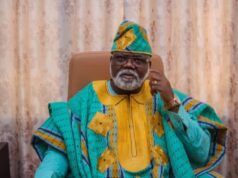

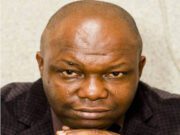




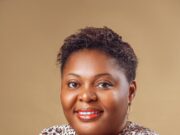







A United Kingdom-based human rights lawyer, Chief Niyi Aborisade, has said endemic corruption, poor governance and deepening poverty were responsible for Nigeria’s inclusion among 24 countries hit by fresh United States visa restrictions.
Aborisade spoke while reacting to the announcement by US President Donald Trump on December 16, 2025, imposing new visa curbs on several countries, mostly from the developing world.

He dismissed claims that the decision was motivated by religion or race, insisting that the policy was in line with Trump’s long-standing immigration stance aimed at protecting American interests.
According to him, the Trump administration has consistently maintained that only migrants who can add value to the US economy and society would be admitted, while those perceived as potential burdens would be restricted.
“President Trump is not known for political correctness or diplomatic language. His guiding principle is ‘Make America Great Again’. From his point of view, he is simply protecting his country,” Aborisade said.
The new restrictions affect nationals of 24 countries over what the US government described as persistent deficiencies in screening, vetting and information sharing, which it said posed risks to national security and public safety.
African countries dominate the list, including Nigeria, Burkina Faso, Mali, Niger, Sierra Leone, South Sudan, Angola, Benin, Côte d’Ivoire, Gabon, The Gambia, Malawi, Senegal, Mauritania, Zimbabwe, Zambia and Tanzania.
Others affected are Antigua and Barbuda, Dominica and Tonga; holders of Palestinian Authority-issued travel documents; as well as Turkmenistan, Laos and Syria.
Aborisade said the dominance of African countries on the list showed that the policy was not religiously motivated, noting that no Arab nation was affected.
“This is about poverty and governance failure. Many of these countries are poor or have made themselves poor through bad leadership. Nigeria’s inclusion is a painful reminder of our self-inflicted problems,” he said.
He accused Nigerian political leaders and senior public officials of looting public funds and stashing them in foreign banks, including in the United States.
“The US knows how much Nigerian money is hidden abroad. Some of it has been frozen, some repatriated after long negotiations, yet less than one per cent of those who looted the treasury have gone to jail,” Aborisade added.
The lawyer lamented Nigeria’s declining global image, recalling a period when Nigerians travelled abroad for studies and returned home, unlike the current trend of mass emigration and rising visa denials.
He said the situation had deteriorated to the point where even top government officials and traditional rulers now struggle to secure foreign visas.
While urging Nigerians not to demonise Trump over the policy, Aborisade called for national introspection and urgent reforms.
“It is never too late to redeem our image. With good governance, accountability and a change in mindset, respect will return, and even policies like this can be reversed,” he said.
He urged Nigerians to focus on rebuilding the country rather than investing heavily in foreign assets, stressing that national renewal remained the only sustainable path to restoring global confidence.