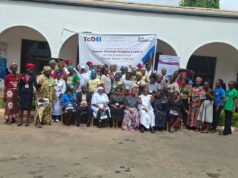









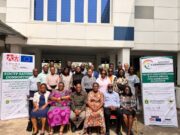
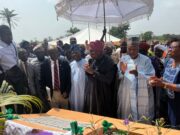
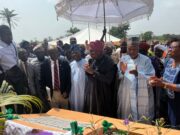





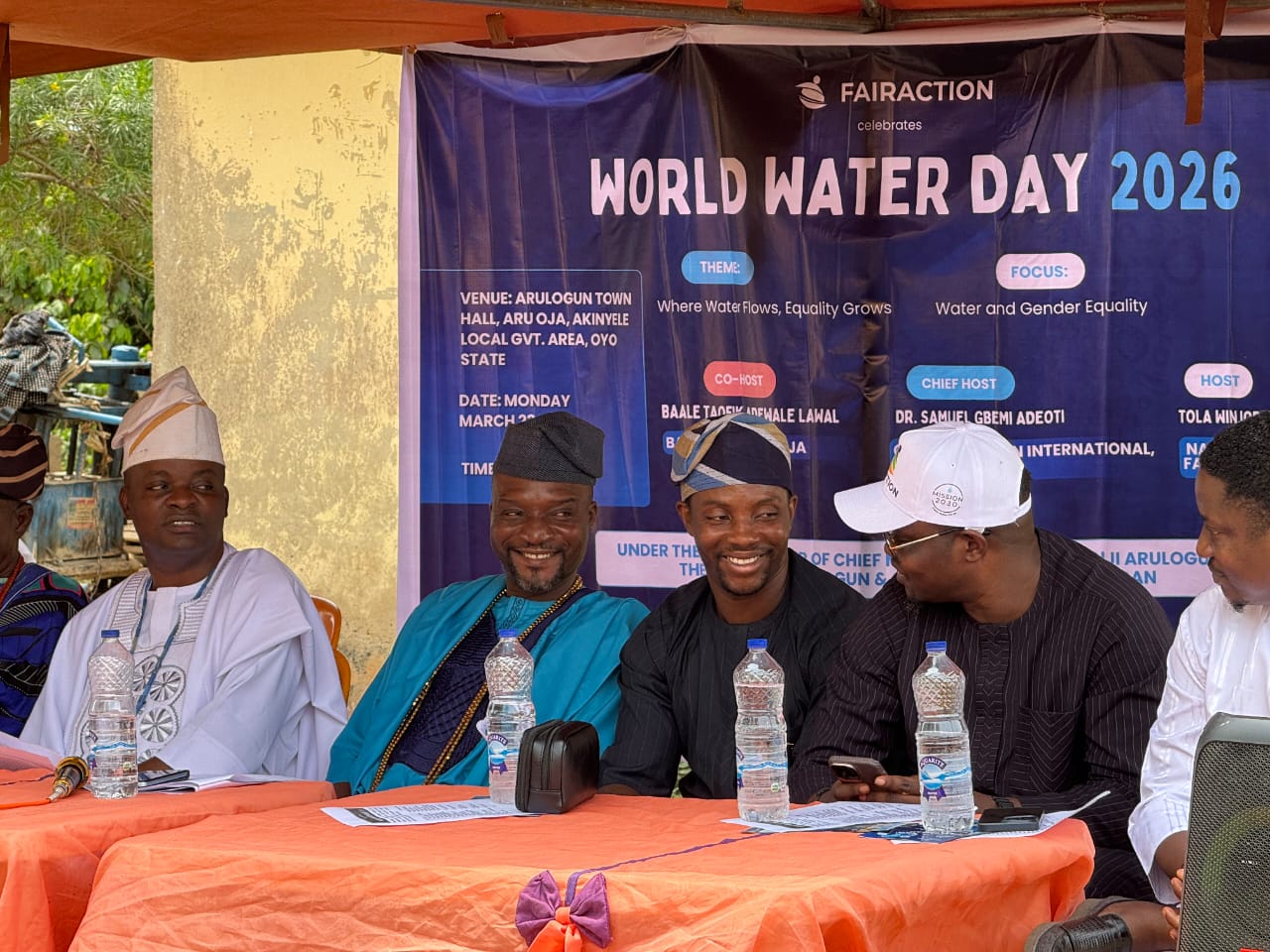
Winjobi, who is the National Coordinator of Fairaction Nigeria, spoke during the 2026 World Water Day commemoration held at Arulogun, in Akinyele Local Government Area of the state.
He described the lack of access to safe and affordable drinking water as a major driver of poverty, poor health outcomes, and educational setbacks, particularly in rural communities. According to him, the situation in Akinyele and other parts of the state reflects a broader national challenge that requires immediate attention.

Citing statistics, the expert noted that millions of Nigerians lack access to clean water and basic sanitation, while a significant proportion of rural households depend on unsafe sources such as rivers, streams, and unprotected wells. In Oyo State, he said over 70 per cent of rural residents rely on unsafe water sources, exposing them to serious health risks.
He added that the consequences of water poverty are far-reaching, linking it to the prevalence of water-borne diseases such as typhoid, cholera, and dysentery, as well as increased school absenteeism among children. He stressed that women and girls bear the greatest burden, often trekking long distances to fetch water, thereby losing productive hours and facing increased vulnerability.
“Water poverty is not just an infrastructure problem; it is a development crisis that affects health, education, and economic productivity,” Winjobi said. “Without urgent intervention, communities will continue to suffer avoidable diseases and deepening inequality.”
He further highlighted the poor state of infrastructure in Akinyele communities, lamenting the absence of potable water, functional health facilities, electricity, and motorable roads. According to him, these challenges have compounded the hardship faced by residents, particularly farmers who struggle to transport produce due to bad roads.
Winjobi called on governments at all levels to prioritise investment in the water sector, stressing that achieving the Sustainable Development Goal 6 on clean water and sanitation would remain elusive without strong political will. He urged the Oyo State Government to increase budgetary allocation to water infrastructure, rehabilitate existing dams, and establish a dedicated ministry to drive water sector reforms.
The expert also advocated community participation and partnerships with non-governmental organisations to provide sustainable solutions, including solar-powered water systems capable of delivering clean and reliable water supply in remote areas.
He encouraged residents to adopt better hygiene practices, protect water sources from contamination, and support initiatives aimed at improving access to clean water.
Winjobi maintained that tackling water poverty requires a collective effort involving government, communities, development partners, and the private sector, warning that failure to act urgently could undermine public health, education, and economic development in the state.