















No fewer than 80 journalists in Oyo State have been trained in specialised automotive reporting, with experts calling for a shift towards data-driven journalism to enhance the quality and impact of reportage in the sector.
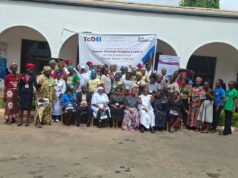
The training, organised by the Nigeria Union of Journalists (NUJ), Oyo State Council, in partnership with AutoClinicNG, held at the NUJ Press Centre, Iyaganku, Ibadan.

Participants drawn from various chapels across the state were exposed to practical sessions and hands-on training designed to deepen their understanding of the automotive sector and improve their reporting skills.
Facilitating the session, Chief Executive Officer of AutoClinicNG, Tunde Onakoya, described automotive journalism as a critical tool for national development, urging journalists to go beyond routine reporting.
“Automotive reporting should not be seen merely as a beat, but as a critical lens for driving national development,” he said.
Onakoya decried what he termed widespread under-reporting in the sector, stressing the need for journalists to adopt data-driven approaches in their work. He noted that despite challenges associated with data availability in Nigeria, credible sources such as the National Bureau of Statistics and international organisations could be leveraged to strengthen reports.
He also encouraged journalists to adopt grassroots reporting techniques, including vox pops and engagement with key stakeholders such as mechanics, spare parts dealers and regulatory bodies, to bridge data gaps and ensure balanced reporting.
Highlighting challenges within the sector, the facilitator pointed to the proliferation of fake spare parts and poor maintenance culture, attributing the trend to economic pressures and weak regulatory enforcement.
Earlier, Chairman of the NUJ in the state, Akeem Abas, represented by the Vice Chairman, Abiodun Atilola, reiterated the union’s commitment to continuous capacity building for journalists.
He described training as central to improving professional standards and pledged sustained efforts to equip members with relevant skills for specialised reporting.
Abas added that the impressive turnout at the training indicated that the current leadership had already surpassed its benchmark of training at least 300 journalists within three years.