

















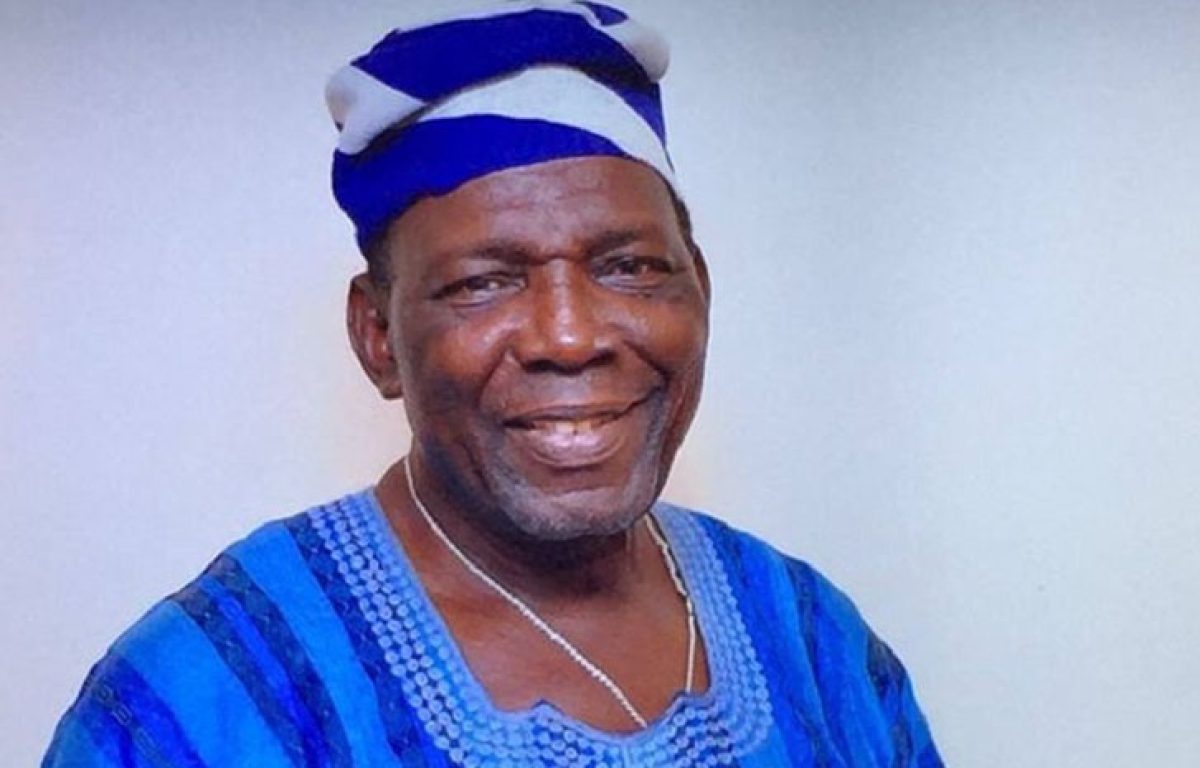
In Honour of Festus Adegboye Onigbinde
In the theatre of Nigerian football, where passion flows as freely as sweat on the pitch and where legends are measured not merely by trophies but by character, few figures stood as resolutely as Festus Adegboye Onigbine—whom many of us fondly called FAO. His name may not always echo as loudly as the glamorous superstars of the round leather game, yet among those who understood the deeper currents of football—discipline, conviction, and the stubborn pursuit of excellence—FAO occupied a pedestal of rare distinction.

Football, after all, is more than ninety minutes of athletic contest. It is philosophy in motion, a battlefield of tactics and temperament. In that arena, FAO was not merely a coach; he was a man of principle. Rugged in conviction and uncompromising in standards, he belonged to that generation of Nigerian football minds who believed that the game demanded not only skill but character.
To some, his approach appeared rigid. To others, he was the very embodiment of discipline—a no-nonsense man who refused to bend the rules of the game for convenience or popularity. But beneath that stern exterior lay something deeper: an unwavering commitment to integrity.
FAO did not believe in shortcuts.
In an era where many were tempted by the seductions of compromise, he remained upright. Honesty of purpose was not merely a slogan for him; it was the compass by which he navigated the turbulent waters of Nigerian football administration and coaching. Those who worked closely with him knew that his standards were not negotiable. Training sessions were rigorous. Tactical expectations were precise. Professional conduct was demanded, not requested.
Yet it was precisely this firmness that defined his legacy.
Great coaches are not always those who seek applause. Often they are the men who insist on discipline when others demand comfort, who demand effort when others prefer excuses. FAO belonged to that school of leadership. He was never interested in the theatre of popularity. What mattered to him was the integrity of the game and the development of players who understood that talent without discipline is merely wasted potential.
Many of the young men who passed through his hands as players discovered this truth early. To play under FAO meant embracing a philosophy that valued hard work above reputation. No player, however gifted, was above the collective discipline of the team. Football, in his understanding, was a symphony—each player an instrument whose role must align with the rhythm of the whole.
But FAO was more than a tactician on the sidelines. He was also a custodian of values in a football environment often buffeted by administrative storms. Nigerian football has, over the decades, experienced its share of turbulence—disputes over management, political interference, and the perennial struggle to align talent with structure. Through those shifting tides, FAO remained a figure of remarkable steadiness.
His colleagues sometimes described him as stubborn. He preferred the word principled.
And perhaps that stubbornness was precisely what Nigerian football needed. In a system where compromise often appeared easier than confrontation, FAO’s refusal to bend became a quiet act of resistance. He stood for the belief that football, like life, must be governed by fairness and professionalism.
Those who watched him closely would have noticed another dimension to his character: beneath the steel was a deep love for the game. Football was not merely his profession; it was his language, his passion, his lifelong conversation with the beautiful game. He understood its rhythms, its anxieties, and its capacity to inspire unity among people who otherwise shared little in common.
The players knew it. Even when his instructions were stern, they recognized the sincerity behind them.
There is a particular kind of leadership that commands respect not through flamboyance but through consistency. FAO practiced that quiet authority. He did not need grand speeches to assert himself. His presence alone communicated expectation. When he spoke, players listened—not out of fear, but out of recognition that he meant exactly what he said.
And he always did.
Today, as Nigerian football continues its endless search for structure and direction, the memory of figures like Festus Adegboye Onigbine becomes even more significant. They remind us that the game is not sustained merely by talent but by the character of those who guide it. Coaches shape not only tactics but the moral climate of the teams they lead.
FAO’s life offers a lesson that extends beyond football. It speaks to the enduring value of uprightness in public life. In a society where flexibility is sometimes mistaken for wisdom, he demonstrated that firmness of principle can be a form of strength.
Of course, no life is without its critics. Some believed he was too strict, too unwilling to accommodate the politics that often surround sport. But even those critics would concede one point: FAO never pretended to be anything other than what he was.
And what he was, above all, was authentic.
Authenticity is a rare currency in any profession, and perhaps rarer still in the emotionally charged world of football. Coaches often become performers, tailoring their personalities to the demands of public expectation. FAO refused such theatrics. His authenticity was both his shield and his signature.
In remembering him today, we celebrate more than a coach. We celebrate a man who approached football as a discipline of character. A man who believed that the true victory of sport lies not merely in the scoreboard but in the integrity with which the game is played.
The stadium lights eventually dim for every generation of athletes and coaches. But the values they embody remain long after the final whistle. Festus Adegboye Onigbine leaves behind that kind of legacy—a reminder that the game of football, like life itself, rewards those who pursue it with courage, honesty, and unwavering conviction.
In the long chronicle of Nigerian football, FAO will be remembered not simply for the teams he coached but for the principles he carried onto every field he touched.
And in that sense, his whistle may have fallen silent, but his influence continues to echo across the pitch.
Ogundipe is a Public Affairs Analyst and former President, Nigeria and Africa Union of Journalists, writes from Abuja.