

















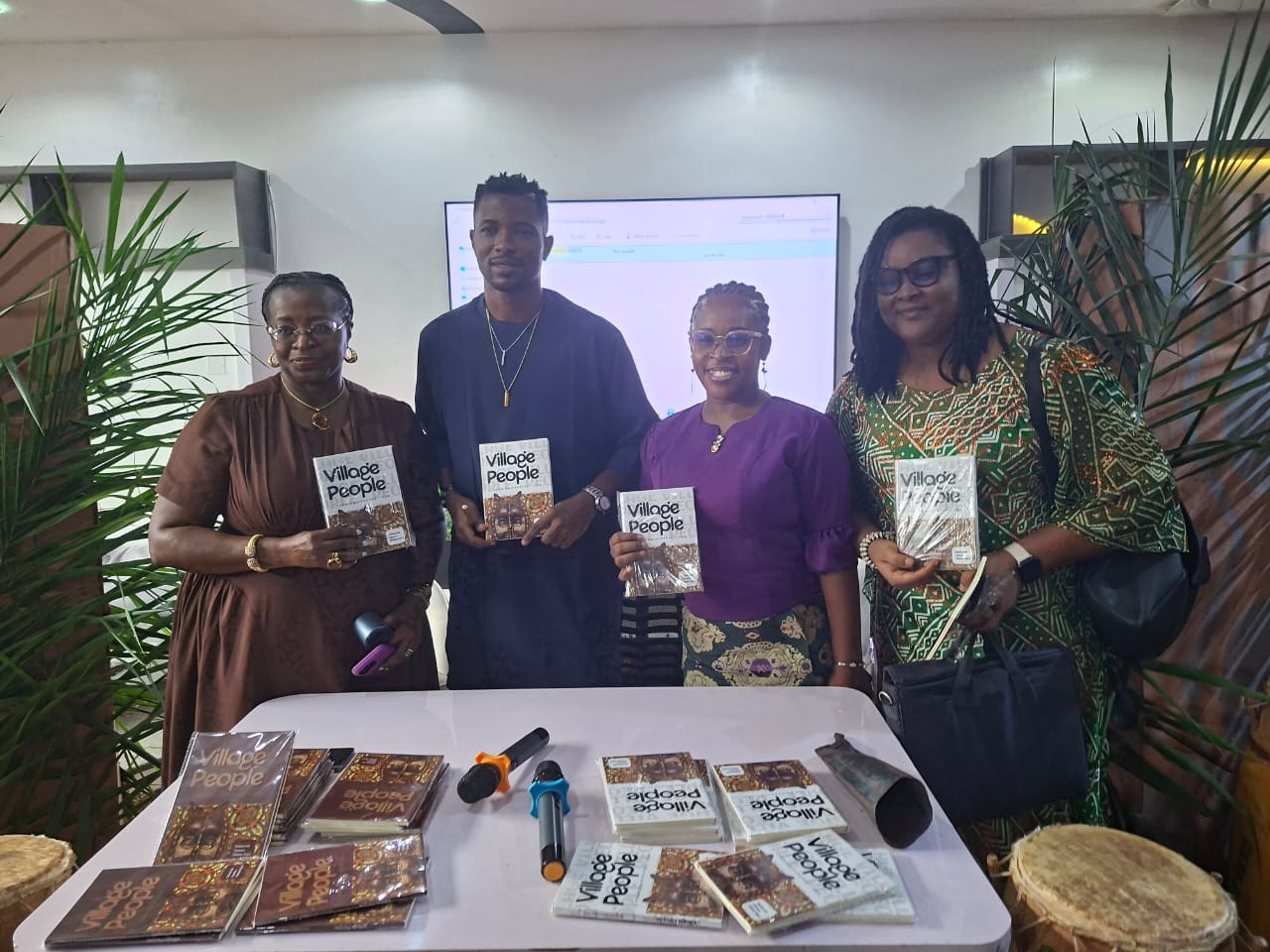
Stakeholders in Nigeria’s education and literary sectors converged on Ibadan for the unveiling of Village People, a new book by Babatunde Ojobaro, popularly known as Mr. Rain, with renewed calls for urgent action to revive the nation’s declining reading culture.
The event, which attracted educationists, authors, and literary advocates, featured notable personalities including founder of Vale College, Funso Adegbola, and literary critic, Josephine Olojede. Discussions at the gathering centred on the growing disconnect between young Nigerians and the culture of reading.

Speakers at the launch expressed concern that the steady decline in reading habits, if left unchecked, could undermine the intellectual capacity and global competitiveness of the nation’s youth.
Adegbola challenged political and institutional leaders to take deliberate steps in reversing the trend, stressing that leadership must go beyond policy pronouncements.
“Leadership must go beyond policy statements. When leaders are seen reading and valuing knowledge, they set a standard that young people can emulate,” she said.
She warned against an education system driven largely by certification rather than competence, questioning the depth of knowledge among many graduates.
“Are we truly educated, or are we merely certified? We must return to a system that prioritises knowledge, critical thinking, and continuous learning,” she added.
According to her, building a strong reading culture requires mentorship, exposure, and consistent engagement, urging parents, educators, and policymakers to work together in making reading a daily habit.
Reflecting on the event, Adegbola described the participation of young attendees as encouraging, noting that platforms that bring students closer to authors can significantly shape their intellectual development.
Author of the book, Ojobaro, also raised concerns about the increasing dominance of visual media such as films, television, and social media, which he said has contributed to the erosion of reading habits.

“Reading used to be the foundation of learning, but today it is being replaced by fast, visual alternatives. This shift has consequences, as many challenges people face stem from a lack of knowledge that reading could have addressed,” he said.
Despite the challenges, he expressed optimism that the decline can be reversed through innovation and deliberate engagement.
“We must make books more appealing, through relatable storytelling, engaging presentation, and relevant themes. When reading becomes enjoyable and accessible, people will naturally return to it,” Ojobaro added.
He emphasised that restoring reading culture requires a collective effort involving writers, publishers, educators, and librarians, noting that content must evolve to meet the expectations of modern audiences without sacrificing depth.
In her review of the book, Olojede highlighted accessibility and engagement as key elements in promoting reading culture. She described Village People as an easy-to-read work with a conversational style that appeals to a wide audience.
“From teenagers to professionals, everyone can connect with its message. This is the kind of writing that encourages people to read,” she said.
She further advocated structured interventions such as book clubs, mentorship initiatives, and interactive reading platforms to help nurture sustainable reading habits among young people.
“Introducing the right books at the right time, with proper guidance, can transform attitudes toward reading and build a generation grounded in knowledge,” she added.
Participants at the event agreed that reversing the decline in reading culture is critical to national development, warning that a society that neglects reading risks producing a generation lacking in critical thinking, innovation, and leadership capacity.
One of the highpoints of the event was a performance by Oluwafunmilayo Ayedogbon popularly known as ‘Odere’.