



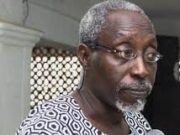









A retired Professor of Sociology at the University of Lagos and former National Commissioner with the Independent National Electoral Commission (INEC), Prof. Lai Olurode, has described the recent threat by former U.S. President Donald Trump to launch military action against Nigeria over alleged genocide against Christians as “a smokescreen” concealing racial, economic, and political motives.
In a statement titled “Genocide of Christians: A Smokescreen,” Olurode argued that Trump’s posture is not about religion or human rights but reflects long-standing patterns of Western dominance and hypocrisy toward Africa. He said Nigeria, though battling terrorist attacks, has not been engaged in targeted persecution of any faith group.

“Over the past few years, Nigeria has been under indiscriminate terrorist attacks targeting military formations, public institutions, and religious centers, churches, mosques, and even foreign offices. There’s hardly any state that has not suffered from such violence. Yet, statistically, acts of terrorism appear to be declining under the current administration,” he said.
Olurode suggested that Trump’s threats stem from deeper frustrations over Nigeria’s growing self-reliance, particularly in the oil sector. He pointed to the emergence of the Dangote Refinery, which has begun refining crude oil locally, as a major shift in the global energy balance.
“For the first time in our history, Nigeria is refining its oil. This shift inevitably affects American oil interests. The ‘Dangote phenomenon’ is reshaping the global market, and America’s oil producers are not happy. As Walter Rodney once said in How Europe Underdeveloped Africa, the West prefers Africa to remain dependent forever,” he stated.
He also noted that Trump’s attitude toward Nigeria fits into a broader pattern of racial intolerance and isolationism that defined his presidency. “Since his campaign days, Trump’s rhetoric has consistently targeted black and colored peoples. His immigration policies were steeped in racial bigotry and a rejection of the melting-pot ideals America once championed,” Olurode observed.
Socially, he said, the Nigerian diaspora continues to project the country’s culture and excellence across major global cities, a phenomenon that Trump and his “co-travellers” find unsettling. “They are no friends of multiculturalism, which the world is inevitably becoming. A military strike on Nigeria would not only harm bilateral relations but also disrupt the natural evolution of cultural interconnectedness,” he added.
On the political front, Olurode claimed that America’s global dominance often thrives on instability in developing democracies. “Many powerful nations never imagined that Nigeria’s democracy would survive uninterrupted for a quarter of a century. Fueling internal tension serves their interests,” he said.
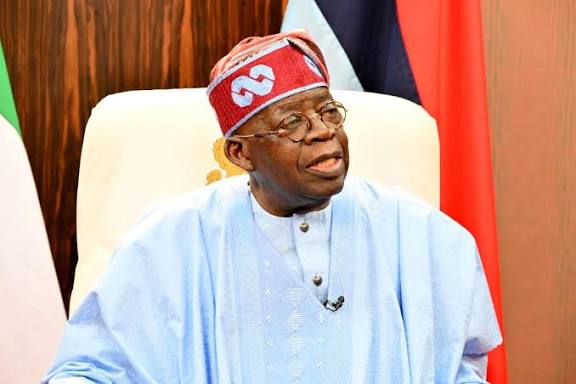
He urged President Bola Ahmed Tinubu and his administration to respond to Trump’s provocation with restraint and diplomacy rather than emotion.
“Our government must continue to act with caution, mindful that America can crush Nigeria like a fly with a sledgehammer. Yet, we must rally national unity behind the President. If Nigeria collapses, there will be no country left for the pursuit of our diverse aspirations,” Olurode warned.
The professor called on Nigeria’s elite and citizens to close ranks in defence of the country’s sovereignty, insisting that the real battle lies not in rhetoric but in strengthening domestic institutions and sustaining national cohesion.