
















By Eniola Akinsipe
Stakeholders in Nigerian higher education have called for urgent reforms in the country’s postgraduate system, stressing its critical role in national development, research innovation, and global competitiveness.

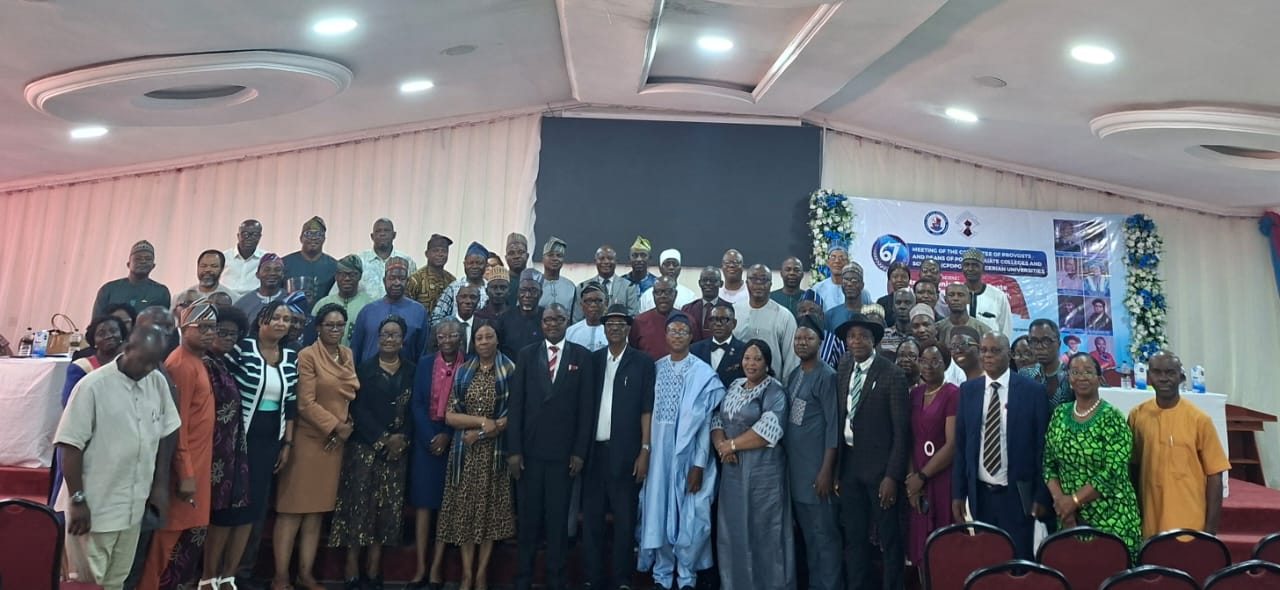
The call was made during the 67th Meeting of the Committee of Provosts and Deans of Postgraduate Colleges and Schools (CPDPGCS), held at the Conference Centre of Lead City University, Ibadan, with the theme: “Strengthening Postgraduate Education in Nigeria: Research, Innovation and Excellence.”
Keynote speaker and former Vice-Chancellor of the University of Ibadan, Professor Olufemi Bamiro, emphasised that a high-quality postgraduate system is pivotal for national transformation. He said, “Nigerian universities must transform from mere degree-awarding institutions to knowledge-producing systems with measurable impact on socio-economic development. Postgraduate studies require strong partnerships between government, universities, and the private sector. Together, these three pillars can drive meaningful change.”
Professor Bamiro also highlighted the importance of leveraging technology and youth engagement, noting that “Nigeria should not waste its human capital. With the adoption of AI and robotics, we must encourage young innovators, challenge universities, and foster collaborations that translate academic research into solutions for national problems.”
The Chairman of CPDPGCS, Professor Victor Samson Dugga, reiterated the responsibility of provosts and deans in managing postgraduate research. He said the committee meets biannually to coordinate activities, address challenges, and explore global best practices in research administration.
Professor Dugga praised the establishment of the National Research Fund, noting that postgraduate colleges play a vital role in planning and implementing initiatives linked to the fund. He added, “Students are not merely clients; they are the driving force of knowledge. Our deliberations focus on empowering them through mentorship, joint research, and access to resources that make them globally competitive.”
In his welcome address, Professor Kabiru Aderemi Adeyemo, Vice-Chancellor of Lead City University, expressed the institution’s commitment to advancing postgraduate education. He said, “Postgraduate education is the engine room of knowledge creation, the breeding ground for innovation, and the foundation of sustainable development. Our universities must produce solution-driven research, foster entrepreneurial thinking, and nurture scholars who can compete globally.”
Professor Adeyemo urged stakeholders to address challenges such as funding gaps, research infrastructure deficiencies, curriculum relevance, quality assurance, and international collaboration. He stressed that “without strong postgraduate systems, the quest for national transformation will remain elusive.”
The host Provost, Professor Afolakemi Oredein, highlighted the conference’s objective of bringing together deans from across Nigeria to discuss strategies for advancing postgraduate education. She noted that education plays a significant role in national development, but requires strengthening to achieve its intended purpose.
Goodwill messages from government representatives reinforced the importance of postgraduate education in national development. Professor Solihu Abdulwaheed Adelabu, Oyo State Commissioner for Establishments and Training, called for the establishment of a Centre for Research Commercialisation to translate academic research into practical solutions.
Representing the Oyo State Commissioner for Education, Science and Technology, Rauf Olatunbosun emphasised that “postgraduate education is the engine of advancing knowledge and ensuring global competitiveness. Research must respond to societal needs, as education remains the cornerstone of national policy.”
The meeting, attended by a distinguished assembly of provosts, deans, and scholars, also featured discussions on mentorship, research capacity building, and strategic collaborations. It provided a platform for stakeholders to chart a path toward a more dynamic, innovative, and globally competitive postgraduate education system in Nigeria.