














Macroeconomic modellers have renewed the call for Nigeria to develop home-grown analytical tools capable of capturing the country’s complex structural realities, warning that reliance on external models continues to distort policy outcomes and undermine development planning.
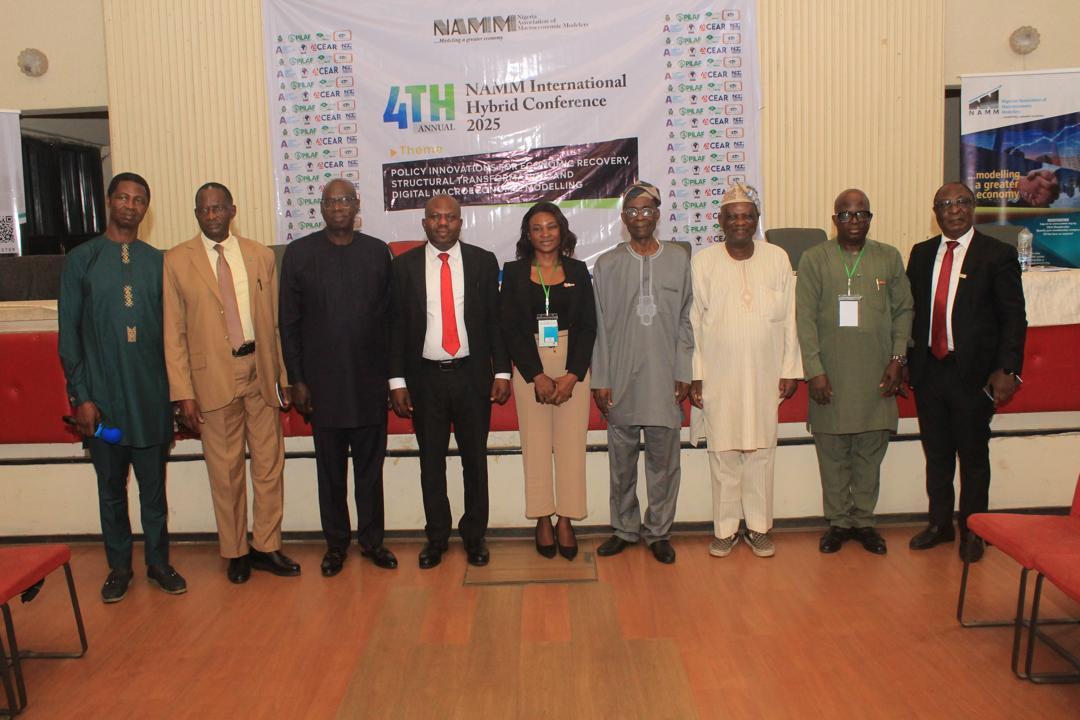
Speaking on Wednesday at the fourth Annual Nigeria Association of Macroeconomic Modellers (NAMM) International Hybrid Conference held at the University of Ibadan, a former Director of Statistics/Monetary Policy at the Central Bank of Nigeria (CBN), Dr. Mohammed Tumala, said Nigeria’s persistent economic fragility reflects deep structural imbalances that cannot be corrected without data-driven, locally relevant modelling frameworks.

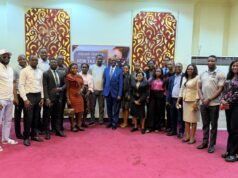
The conference brought together scholars, policymakers and practitioners to explore modelling innovations suited to Nigeria’s evolving economic landscape, with participants calling for stronger investment in data systems, digital assets and institutional capacity to support sustainable economic transformation.
Tumala, a seasoned economist with over two decades of experience in policy formulation and economic research, stressed that Nigeria must urgently align policy with robust data, digital innovation and domestic research.
“Nigeria’s persistent macroeconomic vulnerabilities are symptoms of an underlying structural imbalance. Our fragile, commodity-driven recoveries falter because we have not engineered the fundamental transformation required for enduring prosperity,” he said.
He described structural transformation as “an indispensable macroeconomic imperative for Nigeria’s survival and flourishing in the 21st century,” insisting that such transformation must be underpinned by evidence-based policy and digitally enabled modelling systems tailored to Nigeria’s realities.
Tumala recalled his experience leading innovative data analytics at the CBN, including developing an Economic Policy Uncertainty Index and using text-mining techniques for analysing monetary policy communication. He noted that policymakers failed to detect early signals of the 2008 global financial crisis not because data was absent, but because there was no standardised tool for measuring the global economy’s structural transition.
He warned that the world has moved decisively into a digital economy where wealth is being redistributed in favour of intangible assets, adding that Nigeria risks lagging further behind unless it invests heavily in statistical infrastructure, technology and human capital.
“The global economy has been transitioning mainly because of digitisation… Wealth is being redistributed, and the world’s first trillionaire will likely emerge from tech. Nigeria must adapt or risk being left behind,” he said.
President of NAMM, Prof. Phillip Alege, also underscored the need for Nigeria to rethink how macroeconomic models reflect real-world dynamics, especially in a period of unprecedented global uncertainty.
“Macroeconomic models guide our understanding of growth, stability and policy design. Nigeria and Africa cannot escape modern approaches in the face of evolving development challenges,” he said.
Alege noted that global uncertainty has risen to “exceptionally high levels” and is unlikely to recede soon, making it imperative for countries like Nigeria to adopt dynamic, inclusive and flexible modelling systems. He said NAMM aims to develop a flagship Nigerian structural transformation model that integrates behavioural, institutional and political economy perspectives, as well as the informal sector and social variables.
“This conference is not about lamenting the past; it is about building tools for the next 65 years,” Alege added.
The economists agreed that without indigenous models capable of capturing Nigeria’s socio-economic structure, policy will continue to lag behind reality, leaving development challenges unresolved and growth trajectories unstable.