











 Renowned Nigerian historian and gender equality advocate, Professor Bolanle Awe, has renewed the call for history to be made a compulsory subject in Nigeria’s educational system, warning that a nation that neglects its past risks losing its identity, values and sense of direction.
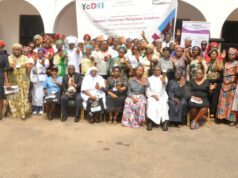
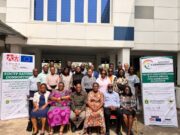
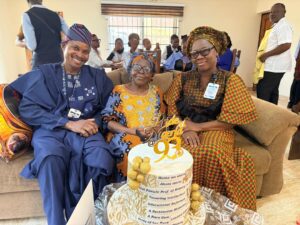
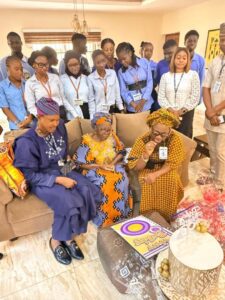
Professor Awe made the assertion on Wednesday, during a courtesy visit by the Department of History and International Studies, University of Ilesa, Osun State, to her Ibadan residence to celebrate her 93rd birthday.
The visit, which brought together academics and students, became both a tribute to her lifetime of scholarship and a platform for a broader reflection on the place of history in national development.
The delegation was led by the Head of Department, Dr . Adebukola Ayoola, alongside lecturers Dr Francis Ademiluyi, Dr Oreoluwa Oguntomisin, Dr Andre Akuchi, Mr George Ajewole, Miss Olubukunmi Adedoyin, and a number of undergraduate students.
Addressing the visitors, Professor Awe spoke passionately about the critical role of history in education, recalling the public outcry that followed the removal of history from the basic school curriculum some years ago. According to her, understanding the past is essential to appreciating a people’s traditions, institutions and collective experiences.
“We will continue to talk about this. It is very important,” she said. “If you do not know the facts, you cannot really fully understand the tradition. And I think that is something that has to be hammered into the minds and ears and brains of our people.”
She stressed that history is not merely about dates and events, but about cultivating informed citizens who can interpret present realities through the lens of past experiences. In her view, nations that take history seriously are better positioned to foster unity, accountability and sustainable development.
Professor Awe lauded the Department of History and International Studies at the University of Ilesa for sustaining interest in historical scholarship, despite challenges facing the humanities in contemporary academia. She applauded the department’s commitment to teaching and learning history, describing it as both encouraging and necessary.
“I’m so happy that there are people that are teaching history and learning history. And I don’t think we should take them lightly at all,” she said.
The scholar expressed satisfaction that history has regained recognition as a subject in Nigerian schools. However, she urged scholars, students and the wider public not to be complacent, noting that historical knowledge is always evolving and incomplete.
“We don’t have all the information. Even those of us who are senior historians know that,” she said.
Earlier, in her remarks, Dr Adebukola Ayoola described the moment as historic, expressing gratitude for the opportunity to engage personally with one of Nigeria’s most iconic historians.
“It is a great privilege, Mama, and it is a very great privilege for all of us. We thank you for providing us this real opportunity. We are here today to capture this moment,” she said.
Advertisement