















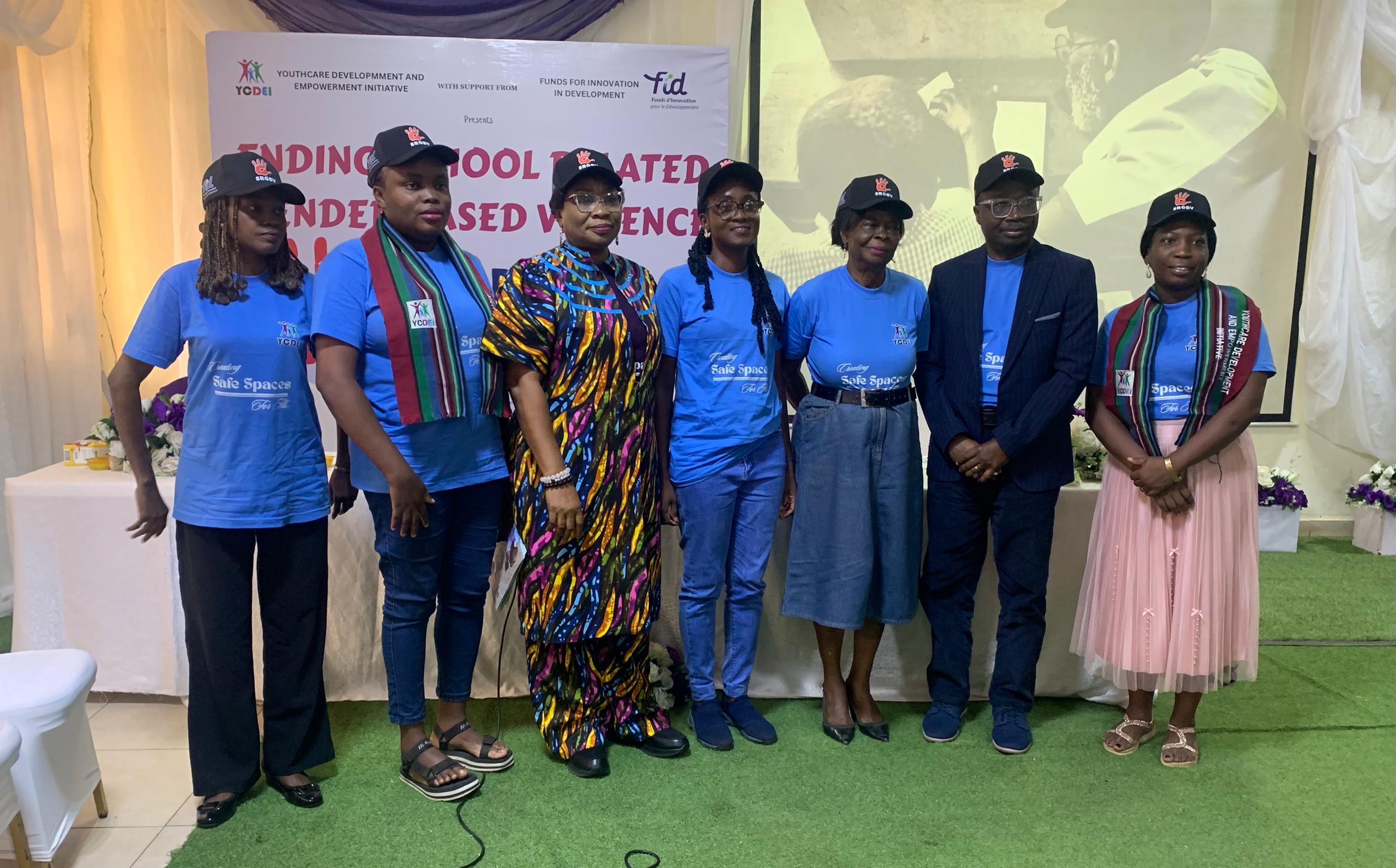
A civil society organisation, Youthcare Development and Empowerment Initiative (YcDEI), has raised alarm that nearly half of pupils in Nigerian primary schools have experienced one form of school-related violence, warning that the trend threatens children’s safety and undermines learning outcomes.
The group disclosed that findings from a multi-state study revealed that about 47 per cent of primary school pupils had been exposed to School-Related Gender-Based Violence (SRGBV), including bullying, harassment, emotional abuse and other harmful practices within and around school environments.

Speaking during a press conference, on Thursday which took at the International Conference Centre, University of Ibadan, the Executive Director of YcDEI, Prof. Adefunke Ekine, said the statistics highlight the urgent need for stronger interventions to protect children and create safer learning environments across the country.
According to Ekine , the study, funded by the Ford Foundation, was conducted in public primary schools across several states, including Lagos, Oyo, Ogun, Edo, Kwara and the Federal Capital Territory.
The professor explained that the research adopted both quantitative and qualitative methods to gather information from pupils, teachers and parents on the prevalence and perception of school-related gender-based violence.
A follow-up study supported by the Tertiary Education Trust Fund (TETFund) in 2023 further examined the prevalence and predisposing factors of SRGBV in public and private primary schools in Osun, Ekiti, Delta, Rivers, Kogi and Benue states.
She noted that the findings underscore the reality that many children face unsafe conditions in schools, which negatively affect academic performance, school attendance, mental health and long-term development.
“School-related gender-based violence is not just a disciplinary issue; it is a child protection and education quality issue. When children do not feel safe in school, their ability to learn is significantly compromised,” the professor said.
The executive director said it recently implemented a pilot intervention in Ibadan involving over 1,800 pupils and 200 teachers across 45 public primary schools to test strategies aimed at reducing violence in schools.
The initiative focused on a two-pronged strategy targeting both teachers and pupils. Teachers were trained on child protection principles, positive discipline approaches and reporting procedures, while pupils were educated on recognising abuse, understanding their rights and using safe reporting mechanisms.
‘’The organisation also introduced structured reporting registers to improve documentation and accountability in handling cases of school-related violence’’, Ekine said.
She lauded the education reforms introduced by the administration of Seyi Makinde, noting that improvements in school infrastructure, teacher recruitment and policies aimed at expanding access to education provide a strong foundation for strengthening child protection systems in schools.
However, the professor stressed that addressing the problem requires sustained training for teachers, stronger reporting channels and active collaboration between schools, government agencies, parents and communities.
She called for the institutionalisation of SRGBV prevention programmes in schools nationwide and the scaling up of evidence-based interventions to ensure that pupils can learn in safe and inclusive environments free from violence.