











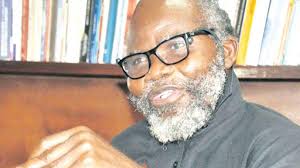
Former Commandant of the Nigerian Army Training and Doctrine Command, Retired Major General Ishola Williams, on Tuesday described Nigeria’s worsening insecurity not as terrorism or external aggression, but fundamentally as a public safety crisis driven by governance failures, systemic corruption, and intelligence breakdown.
Williams made this assertion during a wide-ranging interview on Frontline, a current affairs programme on Eagle 102.5 FM, Ilese Ijebu,, where he made a critique of Nigeria’s security architecture, military spending, policing structure, and political leadership, while calling for urgent institutional reforms.

According to the security consultant, the persistent framing of Nigeria’s security challenge as terrorism or foreign invasion has distracted policymakers from confronting the real internal drivers of violence, which include political manipulation, economic desperation, arms proliferation, and deep institutional rot.
General Williams drew a firm distinction between defence, security, and public safety, arguing that Nigeria currently faces none of the first two. His words: “Let us start from the basics. There is a difference between defence, security, and public safety. Nigeria today does not have a defence problem, because no external force is attacking us. We also do not have a security problem, because none of our neighbours has the capacity or intention to invade Nigeria. What we have is a public safety crisis caused by our own citizens, due to governance failure and institutional collapse.”
He also said that terrorism is a tactical method, not the strategic problem. Suicide bombing, mass attacks, these are tactics. What we have in Nigeria today is banditry, kidnapping, illegal mining, cattle rustling, and violent organized crime. These are public safety threats, not wars.
Williams dismissed widespread claims that armed groups are infiltrating Nigeria from neighbouring countries, saying, “People keep saying fighters are coming from Mali, Niger, or Chad. Do they understand the distance involved? I have travelled across West Africa by road. How many Malians have we caught? Those coming into Nigeria are mostly illegal miners; Senegalese, Lebanese, and others, not terrorists. The violence is being driven mainly by Nigerians, not foreigners.”
He traced the roots of the violence in the country to political manipulation and broken promises, particularly in Northern Nigeria, saying that such sowed the seeds of insurgency and criminality. “Politicians recruited youths as vigilantes, armed them, and used them for elections. After winning, they abandoned them. That betrayal, combined with poverty and unemployment, created resentment. Religion then became a rallying point, not the cause. Extremism did not start this crisis, bad governance did.”
Speaking against the Federal Government’s claim that Boko Haram and Islamic State West Africa Province (ISWAP) are foreign creations, the expert said that they are domestic offshoots of socio-political breakdown, stressing that “Most Boko Haram fighters are Kanuri youths from Borno. They are Nigerians. They are not interested in conquering Nigeria; they want to establish a caliphate within Borno. That alone shows this is a domestic problem requiring domestic solutions.”
Speaking further on the worsening nature of insecurity in the country, the retired General accused Nigeria’s military and security institutions of deep-seated corruption, lack of accountability, and operational decay.
To him, “Trillions of naira have been spent on defence and security. Trillions. Yet insecurity keeps worsening. Where is the accountability? Why is nobody asking how this money is being spent? The truth is that corruption has eaten deep into the system. In serious countries, if 100 civilians are massacred, commanders are sacked immediately. In Nigeria, nothing happens. No resignation. No dismissal. No investigation. That culture of impunity is why insecurity persists.”
He insisted that military might and hardware alone cannot win the insurgency war or criminal violence, going by global examples. To him, “Equipment does not win wars. If it did, America would not have lost in Vietnam and Afghanistan. Russia would not be struggling in Ukraine. What wins is intelligence, doctrine, discipline, and motivation. We keep buying weapons without developing operational doctrine. Soldiers are not trained adequately. Equipment is not properly maintained. This is a waste, not a strategy.”
To find lasting solutions to the endemic problem, Williams advocated decentralised policing, describing it as the cornerstone of sustainable public safety. “The decision to establish state policing is fundamentally a political one. The President has shown leadership by repeatedly advocating it. Most governors are ready. What is delaying it now is the leadership of the National Assembly, especially the Senate President and the Speaker of the House of Representatives. They must take a hasty but reasonable decision in the national interest.
“Now, I am happy that President Tinubu has realized that public safety must start from the bottom. Community policing, community intelligence, and state policing are the only way forward. The federal police system we operate today is outdated”, he emphasized. The Nigeria Police Force needs to be restructured into two federal agencies: Crime Intelligence and Criminal Investigation Agency which will be responsible for nationwide intelligence coordination, while the Federal Paramilitary Force will support states in tackling violent crime.
“Let states handle everyday policing. Let the federal government focus on intelligence coordination and paramilitary response. That is how modern nations do it. So every state already has a policing system, okay? Which empowers the state governor and the Chief Security Officer of that state. In fact, I prefer calling them Chief Public Safety Officer for each state in terms of security. Because they are not protecting themselves against anything coming from outside.”
General Williams specifically cited the Western Nigeria Security Network, codenamed Amotekun, as a practical demonstration of how community policing should function, describing it as Nigeria’s most structured and culturally grounded internal security model, despite facing severe funding and operational limitations.
“Amotekun has set a standard for Nigeria. They may be weak in terms of funding, logistics and equipment, but structurally, they have demonstrated how community policing should work. They understand the terrain, the people, the language, the culture, and the community dynamics. That is the essence of intelligence-driven policing.”
“Security cannot be imported into a community. It must grow from within. When policing is done by people who understand the social fabric, intelligence flows naturally. That is why Amotekun, despite its limitations, has performed better in intelligence gathering and early threat detection than many federal agencies.”
Worried about the underfunding of the outfit, he however said, “You cannot expect miracles when you starve such an institution of funds. They are doing well with almost nothing. Imagine what they could achieve if properly funded, trained, and technologically supported.”
Emphasising that Amotekun’s framework should be replicated nationwide, not politicised or undermined, Williams said, “Instead of fighting state policing, the federal government should study Amotekun, improve upon it, standardise training, ensure accountability, and replicate the model across Nigeria. That is how public safety can be rebuilt from the ground up.”
Williams however rejected calls for foreign military intervention, including growing United States of America’s involvement, questioning, “Which insurgency has the United States defeated anywhere in the world? Vietnam? Afghanistan? Iraq? They always withdraw eventually. Their presence does not solve problems; it prolongs dependency. If Chad and Cameroon can manage Boko Haram effectively, why can’t Nigeria? Boko Haram fears Chad more than Nigeria. That alone should tell us something is fundamentally wrong with our system”.