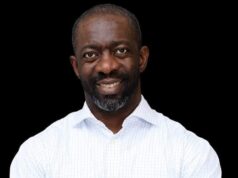

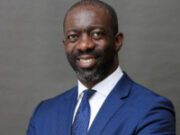













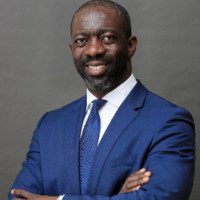
As Oyo State edges closer to the 2027 governorship election, political discourse is beginning to shift. The era when ambition alone could dominate headlines is fading. The conversation is increasingly about competence, capacity, and continuity, leaders who can navigate complex governance challenges while sustaining developmental gains. In this evolving context, the name of Abimbola Adekanmbi has gained notable attention.
Adekanmbi represents a blend of technocratic expertise and public sector experience. His career spans over two decades across banking, consulting, and government, both in Nigeria and internationally. From managing complex financial systems to consulting on high-level institutional reforms in the United Kingdom, he has consistently engaged with structures, efficiency, and accountability, qualities essential for a state seeking to consolidate its gains and accelerate development.

Educated at Obafemi Awolowo University, Oxford Brookes University, and Liverpool John Moores University, Adekanmbi holds degrees in accounting, finance, and strategy, alongside professional certifications across multiple sectors. As a Fellow of the Association of Chartered Certified Accountants (FCCA), he is equipped with the technical expertise required for prudent financial management in the public sector.
Yet governance is not defined by credentials alone. It is ultimately measured by outcomes, the ability to translate knowledge into tangible results. Adekanmbi’s professional engagements, from corporate and investment banking in Nigeria to consulting for multinational organisations, including Fortune 500 firms, reflect experience in managing large-scale projects, coordinating stakeholders, and delivering measurable impact.
This background is particularly relevant in the context of Oyo State’s recent trajectory. Under Governor Seyi Makinde, the state has recorded progress in infrastructure, agribusiness, digital transformation, and fiscal stability. Sustaining and deepening these gains will require leadership that combines continuity with innovation, building on existing foundations while strengthening institutions and improving efficiency.
Digital governance has also become central to modern administration. As a member of the National Economic Summit Group’s Digital Economy Policy Commission, Adekanmbi contributed to frameworks aimed at promoting digital government, inclusive trade, and socio-economic development. In a rapidly changing global environment, such exposure offers a perspective on how technology can enhance governance outcomes.
Equally significant is his grounding in public service. His experience in financial administration provides insight into policy implementation, procurement processes, and institutional coordination, areas critical in a resource-constrained environment. Effective leadership in this context requires not only vision but also the discipline to ensure systems function transparently and efficiently.
At the same time, governance is about people as much as systems. Adekanmbi’s roots in Ibadan and his involvement in community development reflect an awareness of grassroots realities. From engaging with local economic actors to supporting empowerment initiatives, he brings a perspective that combines global exposure with local understanding.
His professional trajectory also highlights experience in managing diverse teams and leading organisational change across sectors. In a governance environment often challenged by inefficiencies and fragmented processes, such experience can be valuable in driving reforms and improving service delivery.
Within the Peoples Democratic Party (PDP), the 2027 contest is expected to attract a range of aspirants with varying strengths. This competitive landscape underscores the importance of evaluating candidates on preparedness, experience, and capacity to govern effectively. Adekanmbi’s profile places him among those with a demonstrable background in both technical and administrative leadership.
Economic stewardship will remain a central issue for the next administration. Adekanmbi’s experience in financial management, risk assessment, and regulatory compliance suggests familiarity with the demands of managing public resources. His exposure to international best practices also points to potential approaches for strengthening revenue systems, enhancing transparency, and attracting investment.
However, translating technocratic experience into political leadership is not without challenges. The realities of electoral competition, party dynamics, and public expectations require not only expertise but also political skill, coalition-building, and broad-based engagement. Like other aspirants, Adekanmbi will need to navigate these complexities while connecting his vision to the everyday concerns of citizens.
Ultimately, the 2027 election presents Oyo State with an opportunity to reflect on its development trajectory and leadership needs. The choice will not simply be about personalities, but about the capacity to sustain progress, strengthen institutions, and respond to emerging challenges.
The Adekanmbi proposition, therefore, lies in the convergence of competence, continuity, and capacity. It is an argument for leadership grounded in preparation, informed by experience, and oriented toward results. Whether this proposition resonates with the electorate will depend on how effectively it aligns with the expectations and aspirations of the people of Oyo State.
Akinsipe is an Ibadan-based journalist and public affairs analyst.