













In the heart of Oyo State, where rural communities have long grappled with inadequate infrastructure, a quiet revolution has unfolded over the past two years.

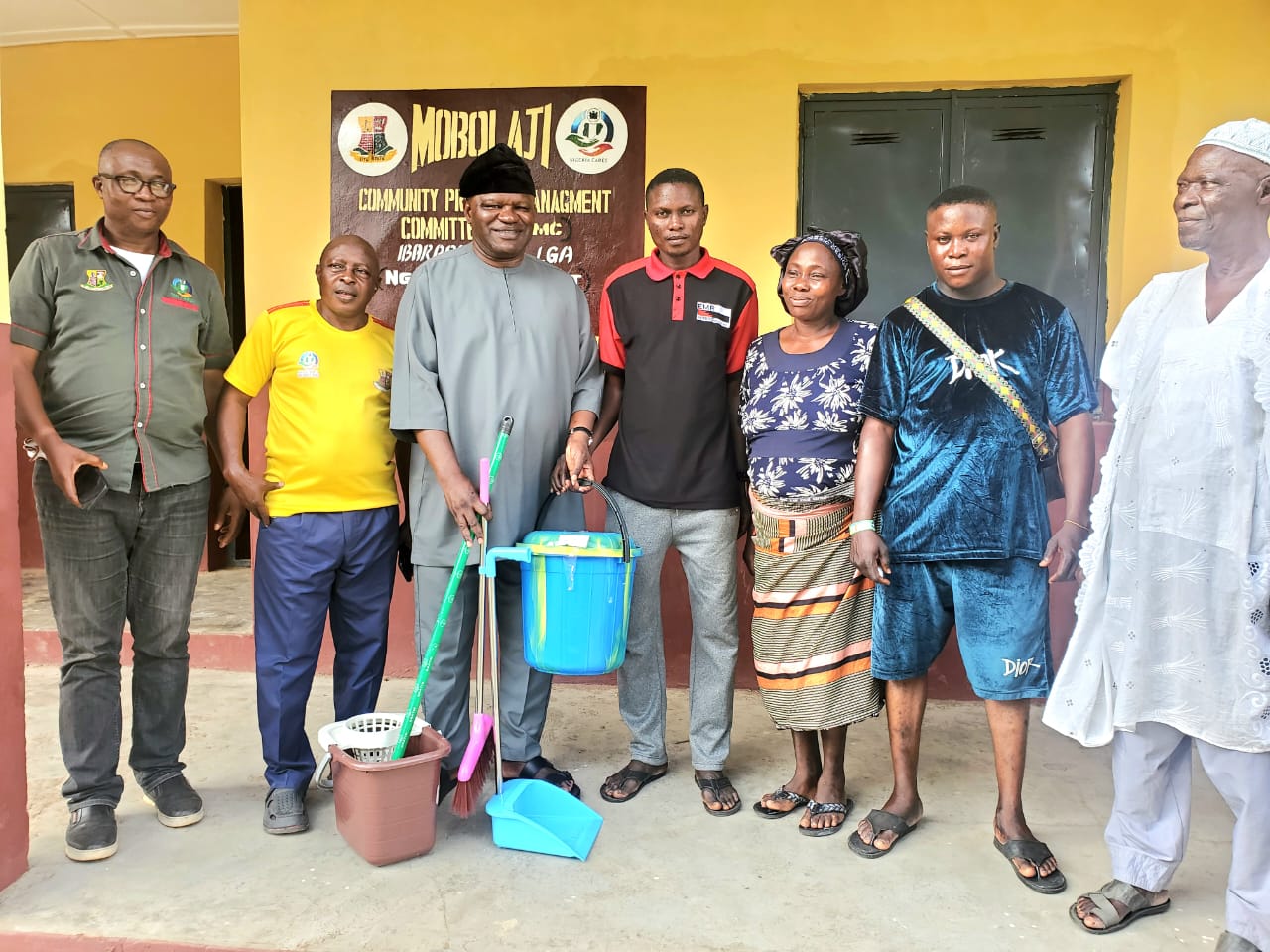
The Oyo State Community and Social Development Agency (OYCSDA), under the visionary leadership of Governor Seyi Makinde, has delivered 316 micro-projects to 144 communities across all 33 local government areas.
Funded through the Nigeria Community Action for Resilience and Economic Stimulus (NG-CARES) 1.0 programme, these initiatives—spanning education, healthcare, water supply, erosion control, and rural roads—represent far more than mere construction. They embody a commitment to sustainable development, community ownership, and poverty alleviation, aligning seamlessly with the state’s Omituntun 2.0 Roadmap for Sustainable Development (2023-2027).
A Community-Driven Approach to Development
Established in 2009 as a poverty reduction intervention, OYCSDA operates on the Community Driven Development (CDD) model. This participatory framework empowers local communities to identify, plan, and manage projects, ensuring they address genuine needs while fostering accountability and ownership. With a focus on the poor—particularly women and vulnerable groups—the agency has leveraged unprecedented funding from Governor Makinde to execute these micro-projects at scale.
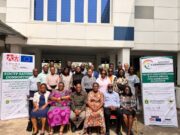
Hon. Abideen Adetokunbo Adeaga, Chairman of OYCSDA, captured the essence during a recent stakeholders’ workshop at the House of Chiefs in Ibadan: “As captured in the ‘Roadmap to Sustainable Development 2023-2027,’ Omituntun 2.0, His Excellency is determined not only to ameliorate the situation of the people of the state but to take us from poverty to abundant prosperity. It is in the quest to achieve this lofty goal that the governor approved the release of enormous funds that are unprecedented in the history of the agency.”
The projects, now fully completed and in active use, have touched every corner of Oyo State—from the bustling outskirts of Ibadan to remote villages in Oke-Ogun and Ibarapa regions.
The 316 projects are a testament to targeted, multi-sectoral intervention:
Education: New and renovated classrooms, examination halls, furniture, and toilets have boosted learning environments. In communities like Iseyin (Ajumose) and Egbeda (Apete/Kiyan), Lagelu, Akinyele, Igbeti, Gaku in Igboho, among others, these upgrades have directly contributed to higher school enrolment and a sharp decline in out-of-school children, laying the foundation for a more educated workforce.
Healthcare: Construction and equipping of health centres, often paired with boreholes, have improved access to basic medical services. Residents now face fewer barriers to care, reducing the burden of preventable illnesses.
Mortality in rural communities have been stalled as community healthcare centers, funded by OYCSDA are attending to pregnant women, children and aged people.
Water and Sanitation: Drilling of motorized and solar-powered boreholes—sometimes in clusters of 4-5 per community—has transformed daily life. Water-borne diseases are on the decline, and families no longer trek long distances for clean water. Projects in Atiba (Isale-Yidi) and Oriire (Ayekale/Kalubi) exemplify this shift.
Erosion control measures and rural road improvements have enhanced connectivity, making markets, schools, and clinics more accessible. In a state prone to seasonal flooding, these interventions safeguard homes and farmlands.
These are not isolated efforts but a holistic push toward resilience. Earlier phases of NG-CARES under OYCSDA, including batches of 60, 132, and 38 projects, built momentum, culminating in this landmark 316 micro-projects.
The significance of these interventions extends beyond infrastructure. By creating jobs during construction—estimated at thousands across phases—and stimulating local economies through community procurement, OYCSDA has injected vitality into rural areas.
Households now save time and resources, freeing them for productive activities like farming and small businesses.
Council chairmen, through the Association of Local Governments of Nigeria (ALGON) Oyo State Chairman, Hon. Sikiru Sanda, have praised the even distribution: “With the help of OYCSDA, most communities across the state have benefited from many projects. We commend this agency for not politicising the project location.”
They pledged ongoing support for maintenance, ensuring longevity.
A Model for Nigeria’s Grassroots Development
In a nation where rural neglect often perpetuates inequality, Oyo State’s approach stands out.
These micro-projects demonstrate how targeted, state-led interventions—bolstered by federal partnerships like NG-CARES—can yield outsized returns. They reduce vulnerability, empower women (who form the majority of beneficiaries), and align with national goals for food security and economic recovery post-COVID.
As OYCSDA transitions to NG-CARES 2.0, the stage is set for even greater impact.
Governor Makinde’s administration has proven that development is not a top-down decree but a collaborative journey.
Looking Ahead: From Micro to Macro Transformation
The 316 projects are more than numbers—they are lifelines. In two years, OYCSDA has not just built structures but bridged divides, turning aspirations into realities for thousands. As communities thrive, Oyo State inches closer to its vision of prosperity for all.
This is the true significance: a blueprint for inclusive growth that other States would do well to emulate.
For the people of Oyo, the message is clear—development is here, and it’s community-owned.
– Alhazan Abiodun Rilwan is the Project Public Relations Officer (PPRO) of OYCSDA