
















By Lionel Effiom
As 2025 draws to a close, the West African Institute for Financial and Economic Management (WAIFEM) stands taller than ever as a regional anchor of knowledge, policy innovation, and macroeconomic resilience. Under the steady and visionary leadership of Dr. Baba Yusuf Musa, the Institute has transformed from a capacity-building outfit into a genuine policy enabler, shaping how nations across the sub-region respond to the ever-changing dynamics of debt, inflation, fiscal stress, and exchange-rate volatility.

*A Year of* *Deeper Reach and Renewed Relevance*
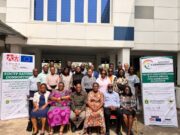
This year, WAIFEM extended its training footprint, reaching a record number of participants across ministries of finance, central banks, debt-management offices, and statistical agencies. The workshops were not mere academic exercises; they addressed real-time policy challenges confronting West African economies — from exchange-rate management in Ghana and Nigeria to debt sustainability in Sierra Leone and Liberia, and public-sector reform in The Gambia.
Dr. Musa’s emphasis on contextual learning ensured that capacity-building sessions were not abstract but tailored to the fiscal and monetary realities of each member state. Through these bespoke programmes, officials learned to design and implement Medium-Term Debt Strategies, refine Annual Borrowing Plans, and apply macroeconomic modelling tools that now inform real policy decisions.
By championing the shift to hybrid and e-learning formats, WAIFEM this year also deepened inclusivity, enabling smaller economies with lean budgets to participate fully in training programmes without prohibitive travel costs. This democratization of access has, in turn, strengthened the quality of regional economic coordination — a quiet but decisive force stabilizing the macroeconomic environment in the sub-region.
*From Classroom to Central Bank — A Tangible Impact*
The outcomes of these interventions are becoming visible.
In The Gambia, the Ministry of Finance has reported improved debt-recording accuracy and better fiscal forecasting — outcomes traceable to WAIFEM’s debt-management modules.
In Sierra Leone, WAIFEM-trained officials have contributed to streamlining government borrowing processes, reducing rollover risks.
In Nigeria, WAIFEM’s advisory sessions have supported conversations on broadening the tax base and strengthening subnational debt oversight.
And in Ghana, participants from recent fiscal-sustainability courses have begun integrating debt-service transparency frameworks into national budget planning.
Each of these improvements represents more than technical gains — they signal a growing regional convergence toward prudent economic governance, a hallmark of Dr. Musa’s stewardship.
*Why Continued Support Matters*
*
The economies of West Africa remain exposed to external shocks — commodity price fluctuations, global interest-rate shifts, and the persistent challenge of narrow revenue bases. Yet, in these uncertain times, WAIFEM has become a stabilizing force, equipping policymakers with the tools to anticipate, adapt, and act decisively.
The Institute’s programmes do not merely train individuals; they build institutions, enhance fiscal discipline, and cultivate a new generation of economic managers capable of steering the sub-region toward sustainable growth.
That is why the continued political and financial support of member states — The Gambia, Ghana, Liberia, Nigeria, and Sierra Leone — is not just desirable but indispensable. Supporting WAIFEM is not charity; it is an investment in regional stability. Each dollar contributed to the Institute returns many times over in the form of better fiscal management, debt transparency, and macroeconomic resilience.
*A Vision Beyond the Classroom*
Dr. Musa’s quiet revolution at WAIFEM goes beyond seminars and certificates. It is about transforming how the region thinks about economics — replacing reactive policy-making with analytical foresight; substituting dependency with capability. Under his leadership, WAIFEM is nurturing a generation of public-sector economists who can think regionally, act responsibly, and innovate sustainably.
As the year ends, the Institute’s record speaks clearly: the training of thousands, the professionalization of economic management, and the restoration of confidence in West African fiscal policy. WAIFEM today is not just a training hub — it is the intellectual backbone of West Africa’s quest for economic stability and prosperity.