
















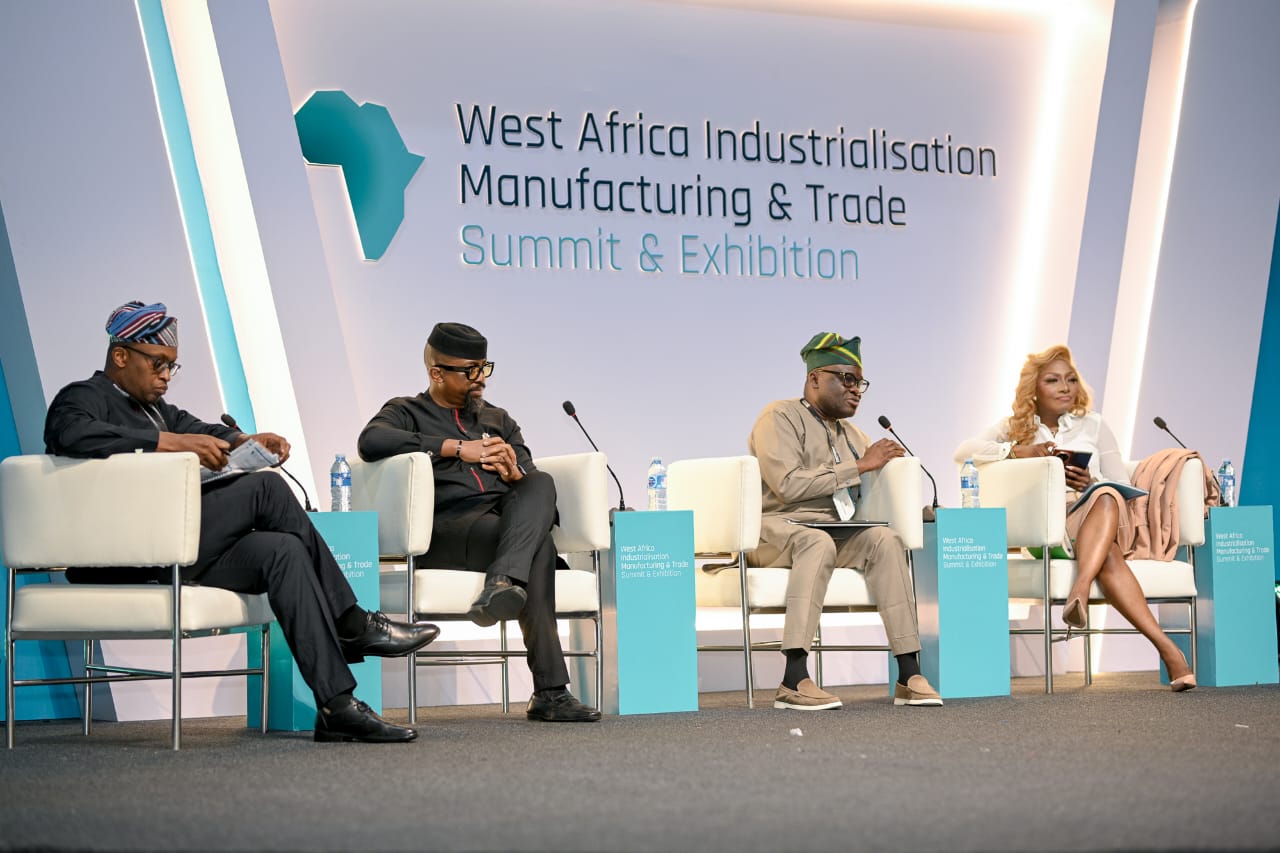
At the West Africa Industrialisation, Manufacturing and Trade (IMT) Summit 2026, policymakers, industry leaders, and energy experts gathered to examine the key drivers of industrial competitiveness across the region. Central to these discussions was the role of reliable and affordable energy in enabling factories to operate efficiently and scale production in an increasingly integrated West African market. Manufacturing competitiveness in West Africa is often discussed in terms of market access, capital availability, or trade policy.

In his keynote address, John Uwajumogu, Special Adviser to the President on Industry, Trade & Investment, noted that manufacturers across West Africa are forced to absorb costs that should not exist in a functional industrial ecosystem. These hidden costs, primarily from self-generating electricity and building parallel infrastructure, erode investment value and force many factories to operate significantly below installed capacity. To counter this, he outlined the government’s commitment to building an “architecture of scale” through the National Industrial Policy (NIP). This framework prioritizes Economic Clusters to provide immediate cost relief, alongside a three-pronged strategy: Demand-Side Industrialisation, Localising Supply Chains, and Accountable Industrial Financing.
The scale of the burden was further illustrated by Ajibola Akindele, Country President of Schneider Electric West Africa, who estimated that energy typically accounts for 30 to 40 percent of total operational costs for manufacturers in the region. For firms that must rely on a combination of grid electricity and diesel or gas generators to sustain operations, that additional premium severely undermines both competitiveness and margins.
Speakers at the summit pointed to a persistent structural paradox within the regional power landscape. According to Mohammed Mijindadi, President and Managing Director of GE Vernova for Anglo-West & Francophone Africa, the challenge is often not the absence of generation capacity, but the inefficiencies across the power value chain. While generation potential exists, the infrastructure linking generation to transmission and distribution does not function symmetrically. As a result, less than half of the region’s population currently has access to reliable electricity, creating a significant barrier to industrial readiness.
Chantelle Abdul, Group Managing Director/CEO of Mojec International, highlighted the depth of this disconnect, noting that only about one-third of transmitted electricity ultimately reaches end users. She proposed the adoption of Energy-as-a-Service models, which would allow manufacturers to pay for reliable power as a managed service rather than bearing the capital-intensive burden of building their own generation capacity. Abdul also emphasized that the electrification of 300 million Africans by 2030 represents a multi-billion-dollar opportunity across the power value chain, provided longstanding challenges around revenue collection and metering are resolved.
Beyond diagnosing the problem, industry leaders also outlined possible market and policy solutions. Four pillars emerged as essential to progress: regulatory consistency, sector bankability, physical security of infrastructure, and technical capacity development. Mijindadi argued that the greatest barrier to long-term investment is not the absence of policy frameworks, but the lack of consistent enforcement and transparency. He stressed the need for stronger sector bankability, where regulatory clarity allows investors to confidently negotiate long-term Power Purchase Agreements (PPAs). As he noted, private sector participation in the energy market requires long-term commitment but only in an environment where regulatory rules remain stable.
This call for stronger policy alignment was echoed by H.E. Sen. John Owan Enoh, Minister of State for Industry, who positioned Energy and Industrial Infrastructure as a central pillar of the newly launched National Industrial Policy (NIP). The Minister framed energy reliability not merely as an operational concern for manufacturers but as a strategic imperative for national competitiveness. According to him, the region can no longer afford to export its economic vulnerability by relying primarily on raw material extraction while domestic factories remain underutilized due to unreliable power supply.
The overarching takeaway from the West Africa IMT Summit is clear: the region’s industrial ambitions are inseparable from the stability of its energy infrastructure. Bridging the estimated 40 percent cost disadvantage faced by manufacturers will require deliberate efforts to develop industrial clusters and Special Economic Zones (SEZs) equipped with plug-and-play energy infrastructure. By de-risking capital deployment and ensuring that energy, trade, and industrial policies are more closely aligned, West Africa can begin the transition from a global feedstock provider to a competitive manufacturing hub.