




Circular Road: We are laying foundation for Oyo’s greatness- Makinde
Circular Road: I can take the bullet for those who’ll govern Oyo after me- Makinde
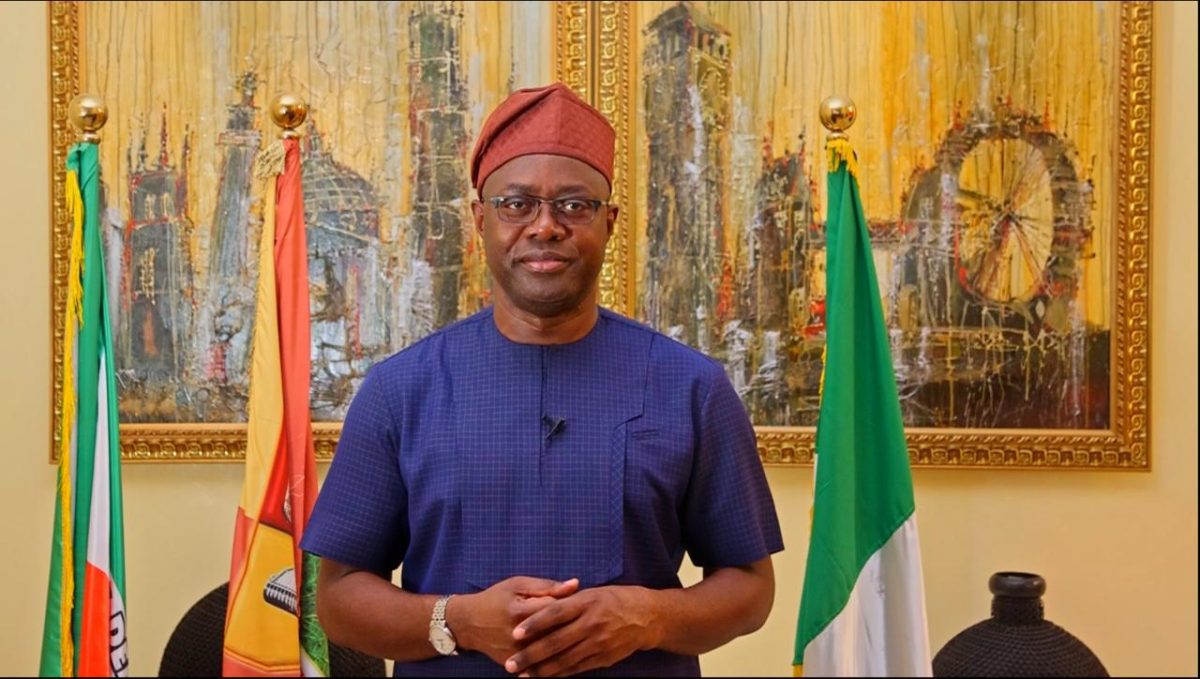
In this interview, Governor ‘Seyi Makinde speaks on some of the projects and initiatives of the administration and how his government is changing Oyo State from a consumptive state to a productive one.
Excerpts:
You must have a lot to tell the people of Oyo State and also the country at large. As a Christmas child, what special message do you have for the people of your state?
It’s Christmas time and also the end of the year. I want to use this opportunity to wish the people of Oyo State and all Nigerians a Merry Christmas and a happy, joyous and rewarding year 2026 ahead of us.
You recently signed the 2026 Appropriation Bill into Law with a Budget figure of N892 billion.
Your administration is focusing on key areas such as infrastructure development, agribusiness, health, education and all that. A look at your state’s allocations from the Federal Government shows that about N240 billion will accrue to the state by the end of the year. The question is how do you intend to fund this Budget?
We have our Internally-Generated Revenue (IGR). It has gone up to about N8 billion roughly per month. When you multiply that by 12 months, that’s N96 billion, almost N100 billion. You add that together with the N240 billion; that’s almost N340 billion. Then, we have receipts from other sources. We also have investment in the state. And then, we in Oyo State try to de-emphasise going cap in hand on a monthly basis to Abuja and start talking about federal allocation and things like that. So, for us, from the outset we said, look, our infrastructure must drive our economy. So, if for instance a road doesn’t make a sense economically, we’re not going to construct it.
As this point, what we are trying to do is expand our economy. Under Omituntun 2.0, we said, look, the expansion of our economy will go through agribusiness, solid minerals, tourism and infrastructure. You have been to the Circular Road. The idea was, look, this circular road, give it to a concessionaire. Let them raise the money and then recover their money over maybe 25 to 30 years. But we were looking for a concessionaire and we couldn’t get one. We said okay, we have to chest it. So, for the first phase, we put in the resources of the state. So, in the course of the year, we spent close to $200 million on the first phase, the 32-kilometer stretch and it is almost completed now.
We will commission it in the first quarter of 2026. With that, if we get a concessionaire, we have capital receipt of almost $200 million, which we can put in the budget. So, budgets are estimates that we hope we’ll get this in and this is how we will apply it. I remember that in my first year in office, I came in May 2019 and the budget for 2019 was prepared by the previous administration. So, we had to run it to the end. We reduced it. We came out and looked at the receipts. I think the budget then was about N240 billion. We reduced it by 25 per cent. So, if you check the budget performance for Oyo State through the last six years, we have been at about 70-75 per cent. So, this one is not going to be any different.
Looking at the available data from different websites, especially BudgIt, Oyo State has done well in some areas. But Oyo’s IGR is calculated as being relatively low. One is wondering whether there is a problem with tax collection or generation of revenue by the state. Are there challenges in that area over the last six years?
First, we made up our minds that we would not increase the tax burden on our people. So, we didn’t introduce new taxes. In the past six plus years, you won’t hear of new taxes in Oyo State. What we did was to bring in more people into the tax net. It’s a chicken and egg type of situation. What do you do first? Do you tax the people first or do you create an enabling environment where they can expand production? When you expand production and you have a productive economy instead of a consumptive economy, then you are in a position to tax more and raise your IGR. That is a less traveled road, but that is the road that we, as a government, decided to take.
I will tell you what we’ve done. This year that is closing, we looked at the landscape in Nigeria. We looked at schemes that other African countries have been able to take advantage of to expand their economy. Let’s take AGOA for instance, African Growth and Opportunity Act. What is the data for Nigeria? Countries like Mauritius, Rwanda and Kenya took advantage of AGOA. They expanded their productive base. But we are still talking about FAAC and all of that. So, we said no. Now, we looked at the African Continental Free Trade Agreement (AfCFTA). There’s a provision in there that you don’t necessarily have to operate at the national level. The sub-national can also go out there, get their deals and then fulfill it. So, Oyo State in the entire continent of Africa became the first sub-national to sign the agreement. Any day there is an AfCFTA event, Oyo State will be at the table with other heads of government from other African countries. Why did we do that? We didn’t want to wait for the Federal Government. We want to broaden our productive base and we want to be able to, under that protocol, expand our own economy and sell to other African countries.
Let us go back to the Circular Road Project you mentioned earlier. Your government has invested heavily on building infrastructure. The road project has been generating some issues, especially about the 500 meters corridor on either side. What is the philosophy behind it? Then, what is the state doing to ensure that those who have genuine claims on owning properties there are adequately compensated?
For the Senator Rashidi Ladoja Circular Road, the concept is, look, we need rapid transfer around Ibadan; we should have a road that can encircle the city because it’s a growing city. If you go around Ibadan today, there is no gridlock, the type that you experience in Lagos. And, we don’t want that to happen, because you have to learn from the experience of others. The circular road corridor, the acquisition was done before I even became governor. It was gazetted and published in the Nigerian Tribune of November 19, 2018.
The project idea was mooted by Baba Lam Adesina but it was brought out as a project and the first real attempt to execute it was made by the current Olubadan of Ibadanland, Oba Rashidi Ladoja. And that is why we named the entire 110 kilometre as the Rashidi Ladoja Circular Road, because he set aside the first seed money. Of course, it wasn’t done from records available to us. When Governor Adebayo Alao-Akala came in, priorities changed. He would rather use that money for other roads. So, the Circular Road is not about Seyi Makinde or this administration grabbing people’s land.
When we came in, there had been encroachments on the corridor. So, what should we do? We decided to go on with the project. Where we can get the 500 meters on both sides, we will take it. Where we cannot, because of development, we’ll look at it. But for a highway like that, you have a minimum standard that you have to maintain for the highway. This will be the first proper motorway in Nigeria, simply because it is in the mode of M25 in London, London Orbital Motorway. For people who are used to Houston in America, it is like the Beltway 8 that goes around Houston.
Talking about what we have done or we intend to do about the property owners on the Circular Road axis, we know that government exists to look after the people. So, most of these people, we asked them for their documents and some had no document. But we still did not say, ‘Okay, no document and you must go outside and be homeless.’ We said, ‘Okay, look, even with no document, if you can prove that you are the one living in those houses, we will compensate you so that you can go elsewhere, settle in.’ And the corridor is not just as if people want to build estates. No. It is for industrial and commercial concerns as well, because if we have to move from a consumptive economy to a productive one, we must have industrial corridors. Our children will have to work somehow; they have to work somewhere. And, for me, it is easier to take the bullet for the next administration, because Oyo State people have gotten used to me. They can vouch for me; they know what I stand for. So, if I come in and say, look, this is what we’re doing, they believe me, because we’ve been able to reduce the trust deficit between the government and the people to the barest minimum, at least here in Oyo State.
After I went to address the people in that corridor, they told me that, ‘Can you sign for us that successive administrations will not bother us again?’ I said, ‘So you trust me to that extent that you want me to sign for you?’ I said, ‘Well, I will sign. But when the time comes also, I will introduce people that will not bother you and then you can rest assured that the principle of government being a continuum will apply.’
Going around the state, one can see noticeable infrastructure development projects that your government has been executing. Driving from Ring Road towards the Government House, the smoothness of the road speaks to how you have really done well on intra-city roads in Ibadan. However, the central thing in government happens to be the people. How have you ensured that poverty is tackled, particularly in the last six years that you have been in government?
For me as a person and for this administration, when people tell us, oh, we have driven around Ibadan, no potholes or we drove on a state road almost 160 kilometers from Ibadan to Ogbomoso, there is no pothole, I always tell them that I don’t want to be remembered for building roads, infrastructure and all that. No. I would love to be remembered for the institutions that we are creating that will ensure that there is good governance and sustainable development and growth long after we have left this place. That Ring Road that you mentioned just now, if I ask a lot of people who constructed that ring road, they won’t know it. I went to search for the history of that road and I found out that when it was constructed, it was the most expensive road per kilometer that was ever constructed in Nigeria at the time. But if you ask people who constructed that road now, I can tell you, they wouldn’t know. That is what you get. The only way they will know who started the road will be if the road is not finished; if the project becomes abandoned, then they will tell you, ah, this road was started by X, Y, Z. Then that’s it.
So for us in Oyo State, we don’t believe in giving people handouts. We want to create conducive environment for people and we have been creating that for people to come in, have opportunities and they take themselves out of poverty.
I was working at the Shell’s Bonny Terminal when they were sand-filling for the entire Nigeria LNG project, and then, they built decent houses for all the fishermen. It didn’t take five years before the whole place was turned into a shanty town. Again, I argued this with the World Bank, when they said their preference is conditional cash transfer, giving people money. I said, no; in Oyo State, what we did was to rather subsidise the productive efforts of the people. When we hit this economic headwind, a lot of state governments were bringing out palliatives and distributing to people. They said they have palliatives and that they would give food to people. But in Oyo State, what we did was that we created what we called the Sustainable Action for Economic Recovery (SAfER) programme and part of what we did was in the transportation sector. What we said was that our Pacesetter Transport Company should transport close to 20,000 people every day and we said, for those 20,000 people, the vulnerable ones in there, including students, elderly and the physically challenged should pay half the price, while the others paid far lesser than they used to pay before the economic challenge.
We subsidised public transportation within Ibadan and from Ibadan to other zones of the state with N100 million every month. That N100 million is subsidising productivity. You’re not going to just get on the bus for a ride because it is half price; you get on the bus for a ride because you’re going somewhere that is important to you, that is likely going to yield something productive, for you. That is our approach here.
Many people have described your administration as good, inclusive and people-oriented. But with leadership, no matter what you do; people will have an issue as we have seen in the case of the Circular Road. The question is, how do you balance compromise and conviction? How do you determine what to go ahead with, no matter what people think or say and what to compromise?
I believe that the government should look after the people as I said earlier. I also always tell my people that we are not the most brilliant around; that we are not infallible. It is only God who cannot make mistakes. So, we may take decisions that may be wrong.
I told Oyo State people when I was asking for their votes that I might not be right all the time but I would be honest all the time with the people. So, if we did anything that, in the end, we had to adjust because new facts became available to us, we are not too proud to say, look, we won’t do that. That is really the way we’ve operated and it has connected us more to the people because they know I go around them, I stay with them, I listen to them.
Another daring project you have embarked upon is the upgrade of the Samuel Ladoke Akintola Airport to an international airport. What informed that decision?
The Ibadan Airport has been in existence for over 40 years. We looked at the economy of Oyo State and we looked elsewhere around the world. The best example I can give to you is to just look at Dubai and Abu Dhabi; they are just like Lagos to Ibadan, maybe slightly farther. I think it’s about 154 kilometres. Lagos is 135 kilometres to Ibadan, if you start from Ojoo. But between Dubai and Abu Dhabi, they not only have two international airports, they have Emirates Airline in one, they have Etihad Airline in the other. You decide, oh, okay, I’m flying Emirates or I’m flying Etihad and you would land only 150 kilometres apart and they are both doing well.
I mentioned those sub-pillars that we felt we can use to expand our economy. When we were given the opportunity to serve the people of Oyo State for the second term, we added tourism to it.
We have five major zones; Ibadan, Oyo, Ogbomoso, Oke-Ogun and Ibarapa. We have a state road linking Ibadan Zone to Oke-Ogun, which is 65 kilometres. We built it. That was the very first project this administration awarded, because Oke-Ogun is the food basket of Oyo State and Ibadan is the consumption centre. So, we needed that link. Then, we linked Oke-Ogun Zone to Oyo Zone through 37 kilometres from Iseyin. We also linked Oke-Ogun to Ogbomoso Zone through the 77 kilometres from Iseyin to Ogbomoso. When we came in, it was a footpath; there was no road at all. So, we constructed it brand new, 77 km. I remember when I invited the chairman of the Nigerian Governors’ Forum to come and flag off the road for me, because we had constructed about maybe five or six kilometres before he came in to flag it off, he said, ‘Ah, Seyi, this is a federal project that you are doing here, because it is a solid road.’
Currently, we are linking Ibarapa Zone to Ibadan through Ido-Eruwa Road. So, we have done all of that work. We have tourist centres, tourist attractions within Oyo State and we have done the heavy lifting by connecting all the zones in Oyo State. If we have the airport in Ibadan as a gateway for people, we can really be on our own. We can do things that are suitable to our own state and our own environment.
Health is one of the service point agenda of your administration. Going by the popular saying that health is wealth, how far have you gone in this area?
We came in and looked at the Primary Health Care sector of the state, the diseases and ailments that are common in the state and we decided that, look, we must have Category 3 Primary Health Centres in every of our electoral ward in Oyo State; about 351 of them. We are working on the remaining 66 PHCs out of those 351 right now and I believe they will be done before the middle of next year.
We have also employed healthcare workers. We have upgraded our institute of technology. Also, the French Government was going to give a concessionary loan around 100 Million Euros to the continent of Africa and Oyo State got 55m Euros. We just had it signed off, though it took some time to get through. We will use that to fix selected secondary healthcare facilities in every zone of the state.
One is worried about the post- Seyi Makinde years, your legacy projects and all of that. How are you going to ensure that whoever succeeds you sustains these projects and legacy?
We have changed the culture in Oyo State; if you see any project started by any of my predecessors, which I have not completed, please bring it up to the table and we will deal with it. But it is not only me but the team. You have watched Omituntun 1.0 and Omituntun 2.0, which is my second tenure. What we are cooking is Omituntun 3.0 and it may get to 4.0 and all of that because it is a team. We will just get someone else to lead the team and we should be able to solve that problem.
What I heard from the people is that, they are saying they don’t want this music to stop. You know, paying salary every month amounts to about N20 billion for the state and 13bn for the local government. That is N33 billion being injected in to the Oyo State economy every four weeks. The carpenters, traders, market women and men are enjoying the administration and the economic activities going on in there are booming. They want continuity.
Advertisement