








By Rotimi Agboluaje
The transformation of the erstwhile Osun State College of Education, Ilesa, into the University of Ilesa marks a historic milestone in the educational landscape of Osun State and Nigeria at large. Established on 27th September 2022, the university gained approval from the National Universities Commission (NUC) on 10th November 2022, officially becoming the 60th state-owned university and the 220th university in the Nigerian University System. In less than four years, the university has not only established itself as a fully functional institution but has also distinguished itself as a centre for academic excellence, research, and societal impact.

The appointment of Professor Taiwo Olufemi Asaolu, FCA, as the pioneer Vice-Chancellor on 12th April 2023, was pivotal in shaping the direction of the university. Under his stewardship, the institution has implemented a clear vision and strategy for growth. Key initiatives have included the development of robust academic programmes, infrastructural upgrades, staff re-orientation, and the establishment of a structured administrative framework. These steps have ensured that the university is not merely an administrative entity but a living, breathing academic ecosystem committed to producing competent graduates equipped for both local and global challenges.
Perhaps the most striking feature of the University of Ilesa is the breadth of its academic offerings. With NUC approval to run 97 academic programmes, the university covers virtually all major disciplines, ranging from Medicine and Health Sciences, including Nursing Sciences, Medical Laboratory Science, Physiotherapy, Optometry, Anatomy, Health Information Management, Physiology, Public Health, MBBS, Pharmacology, Dental Therapy, and Dental Technology, to Technology and Applied Sciences such as Computer Science, Cybersecurity, Data Science, Brewing Science and Technology, Geology, and Mining Sciences.
The Humanities, Social Sciences, and Arts are also strongly represented with programmes in History and International Studies, English, Linguistics, Chinese Studies, French Language, Theatre Arts, Music, Social Work, Islamic Studies, Arabic, and various Education programmes including Special Education and Early Childhood Education. Professional courses such as Law, Accounting, Business Administration, and Human Resource Management further enhance the university’s capacity to produce graduates who are not only academically competent but also industry-ready.
This diversity reflects a deliberate commitment to interdisciplinary education, enabling students to engage in a broad spectrum of learning while equipping them to navigate the complexities of Nigeria’s evolving socio-economic landscape. It also ensures that the university is a hub for research and knowledge creation across multiple fields, promoting innovation and societal development.
Besides the impressive academic framework, the University of Ilesa stands out for its infrastructure and unique facilities. The campus boasts a well-equipped Central Science Laboratory, a specialized Nursing Laboratory, and even an 18-hole Golf Course, underscoring the institution’s focus on both academic and holistic student development. These facilities are not merely cosmetic; they serve as essential platforms for practical learning, research, and the cultivation of skills relevant to the workplace.
Infrastructure development has been supported robustly by the Osun State Government, under the leadership of Governor Senator Ademola Adeleke. The government has ensured regular staff salary payments, converted over 500 temporary staff appointments into full-time positions, funded campus road construction, and provided tuition-free education for students in Education and Agriculture courses. These initiatives have alleviated some of the financial burdens often associated with higher education, making learning accessible and sustainable.
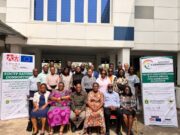
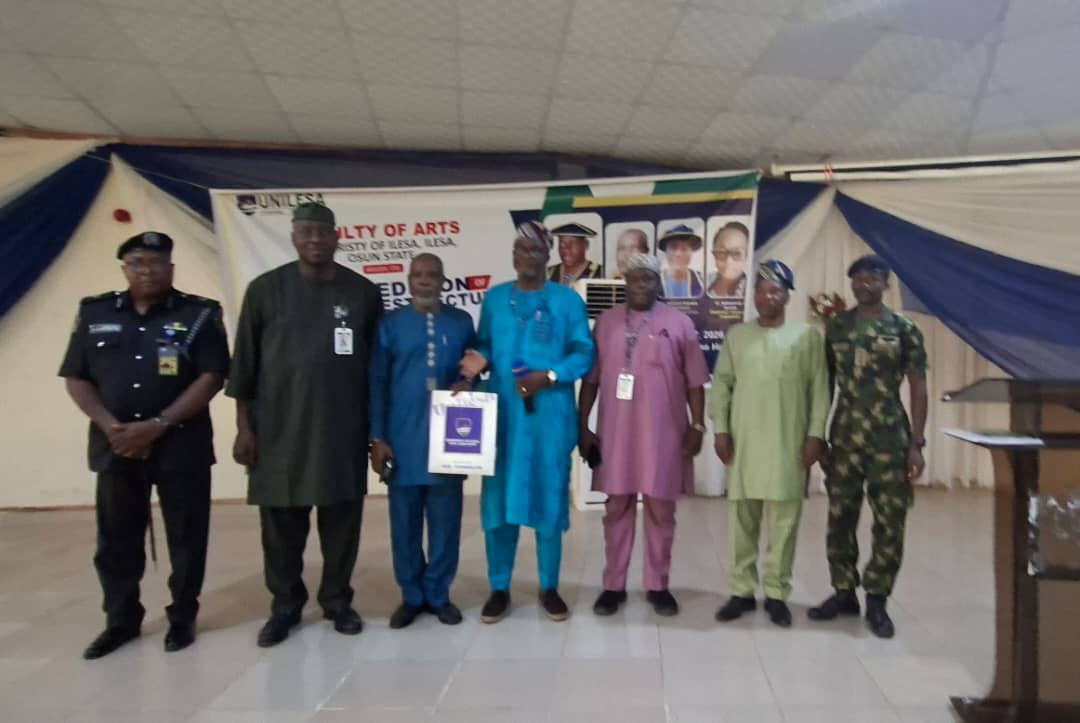
The University of Ilesa is not only a site for academic excellence; it is also a platform for societal transformation. During the maiden annual guest lecture of the Faculty of Arts, scholars highlighted the critical role universities can play in addressing Nigeria’s security crisis. The event, themed: “The Nigerian Security Quagmire and External Intervention: Implications, Lessons and the Way Forward”, brought together academics, security experts, and students to interrogate the root causes of insecurity in the country.
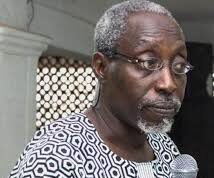
Delivering the keynote address, Professor Alade Fawole, a leading expert in International Relations, emphasised that sustainable peace cannot be imported. He argued that internal reforms, institutional strengthening, and strategic investment in education are essential for achieving long-term security.
Expanding on this theme, Vice-Chancellor Professor Taiwo Asaolu contextualised insecurity within broader governance and socio-economic failures. He argued that unemployment, corruption, weak institutions, and erosion of public trust are fundamental drivers of the country’s security challenges. For Asaolu, the solution lies not solely in military strategies but in cultivating ethical, socially responsible, and critically minded graduates capable of contributing to national development.
Highlighting incidents such as the 2014 Chibok schoolgirls’ abduction by Boko Haram, Asaolu pointed to systemic weaknesses in governance, intelligence, and policy coordination. While acknowledging the contributions of regional cooperation under ECOWAS and humanitarian support from UN agencies, he questioned the long-term implications of foreign interventions. “How do we balance sovereignty with collaboration? At what point does assistance become dependency?” he asked, stressing the importance of intellectual independence in policymaking.
Asaolu’s message resonates beyond the classroom. It reinforces the idea that universities must serve as platforms for evidence-based solutions to national challenges. Higher institutions, he argues, must produce research that informs public policy while maintaining independence, intellectual rigor, and ethical standards. The University of Ilesa has embraced this vision, committing to interdisciplinary research in peace, conflict resolution, governance, and security studies. By doing so, it is training a generation of graduates capable of contributing meaningfully to Nigeria’s socio-political and economic development.
The University’s faculty has demonstrated a proactive approach to addressing national challenges. Acting Dean of the Faculty of Arts, Dr. Rahman Adewale Abdul-Azeez, emphasized that security is not just about weapons or military might; it is also about history, identity, and social cohesion. The faculty remains committed to sustained intellectual engagement with pressing national issues, fostering dialogue and critical inquiry among students.
Similarly, Acting Head of the Department of History and International Relations, Dr. Adebukola Ayoola, commended the keynote speaker for offering practical recommendations and a framework for knowledge-based solutions. The faculty’s engagement illustrates the University of Ilesa’s broader mission: to create an academic environment where ideas translate into actionable solutions for societal challenges.
The University of Ilesa’s vision extends beyond short-term academic achievement. By offering 97 programmes, the university caters to diverse student interests while ensuring that graduates are prepared for Nigeria’s evolving labor market. Its curriculum spans traditional academic disciplines, professional training, technical courses, and emerging fields such as Data Science, Cybersecurity, and Health Information Management. This comprehensive approach positions the university as a model for multi-disciplinary higher education in Nigeria.
State support has been instrumental in realising this vision. Beyond funding infrastructure and ensuring staff welfare, the government has prioritized access to education through initiatives such as tuition-free programmes for Education and Agriculture students. These policies reinforce the institution’s commitment to inclusive education and highlight the critical role of government in sustaining quality higher education.
The university’s infrastructure and facilities also reflect a commitment to holistic development. From the 18-hole golf course to cutting-edge science and nursing laboratories, students are provided with opportunities to develop both academically and personally. These facilities not only enhance learning but also foster teamwork, leadership, and professional skills, ensuring that graduates leave the university as well-rounded individuals ready to contribute to society.
The University of Ilesa is a microcosm of the potential of Nigerian higher education. Its focus on academic excellence, interdisciplinary research, societal relevance, and ethical leadership illustrates how universities can contribute to national development. By prioritizing education as a tool for addressing societal challenges, including insecurity, governance deficits, and economic underdevelopment, the institution is redefining what it means to be a 21st-century Nigerian university.
Scholars at the maiden guest lecture made it clear that education-driven solutions are central to addressing Nigeria’s protracted security crises. The consensus was that military intervention alone is insufficient. Intellectual engagement, civic education, youth empowerment, and institutional reform are equally critical. By embedding these values into its programmes, research, and culture, the University of Ilesa is taking a proactive stance on national challenges, demonstrating that higher education is both a right and a responsibility.
The University of Ilesa is more than a newly minted institution. It is a symbol of Osun State’s commitment to quality education, research excellence, and societal transformation. With 97 programmes spanning every major academic field, modern facilities, state support, and a focus on ethical leadership, the university is rapidly taking shape as a hub of knowledge, innovation, and societal impact.
Governor Adeleke’s investment in education, coupled with Professor Asaolu’s visionary leadership, has created a blueprint for how Nigerian universities can thrive while remaining relevant to national development. The institution’s commitment to tackling issues such as security, governance, and socio-economic inequality through research and interdisciplinary education positions it as a model for other emerging universities in the country.
In a nation grappling with multifaceted challenges, the University of Ilesa offers a beacon of hope, an institution where academic rigor meets social responsibility, and where the next generation of Nigerian leaders and innovators are being nurtured. It is clear that this university is not only taking shape but also shaping the future of education, research, and national development in Nigeria.