














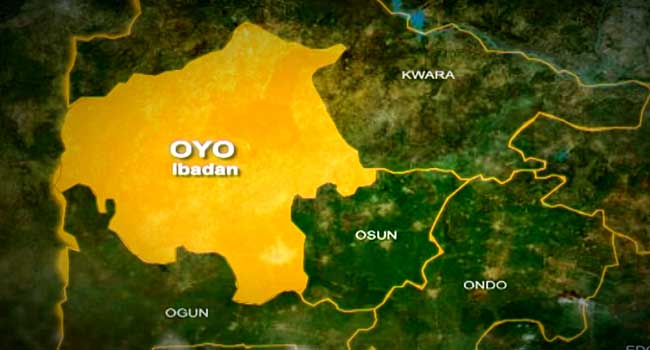
A fresh row has erupted between the Federal Government and the Oyo State House of Assembly over the lingering electricity crisis in the Ibarapa zone, with both sides trading blame over responsibility for the protracted outages in the area.


The controversy followed a motion moved on the floor of the Assembly urging the Federal Government to restore stable electricity to Ibarapaland. Speaker of the House, Rt. Hon. Adebo Ogundoyin, lamented that residents of the zone had endured erratic power supply and, in many instances, total blackout for over 15 years. He described the situation as unacceptable and called for urgent federal intervention.
But the Minister of Power, Chief Adebayo Adelabu, in a statement issued by his media aide, Bolaji Tunji, cautioned against the politicisation of what he described as largely technical challenges. He maintained that the transmission problems affecting Ibarapa predated the current administration and were rooted in funding shortfalls and unresolved compensation issues tied to critical infrastructure belonging to the Transmission Company of Nigeria (TCN).
Adelabu argued that the Court of Appeal had earlier directed consolidation of related matters in similar disputes nationwide, suggesting that premature political reactions could be misleading. He urged lawmakers to prioritise constructive engagement rather than public recriminations.
“The State Assembly should focus on its constitutional responsibilities, particularly in light of recent amendments placing electricity on the Concurrent Legislative List,” the statement said, noting that states are now empowered to generate, transmit and distribute power within their jurisdictions. He added that while several states had leveraged this opportunity to establish independent power initiatives, Oyo had yet to fully maximise such provisions.
The minister also questioned why the Assembly had not held the state government accountable over the stalled Independent Power Project undertaken with Elektron Energy, which reportedly suffered setbacks following persistent non-payment to contractors. He described the timing of the Assembly’s resolution—nearly seven years into its tenure and less than a year to the next general elections—as politically motivated.
Despite the back-and-forth, Adelabu confirmed that steps were being taken to address the transmission bottlenecks in Ibarapa. He disclosed that contractors were currently assessing affected properties for compensation payments, a major hurdle that had delayed the project before his assumption of office. According to him, essential equipment for the project had already been procured, while vandalised TCN facilities were undergoing rehabilitation. Electricity supply, he said, had been restored to parts of Ibarapa Central after prolonged outages.
The ministry further clarified that last-mile distribution in Oyo State falls under the Ibadan Electricity Distribution Company (IBEDC), which oversees feeders, transformers, metering and billing. It said engagements were ongoing with the distribution firm to improve service delivery and address complaints of estimated billing.
Highlighting federal interventions in Oyo, the minister listed completed and ongoing projects, including new substations, upgrades under the Presidential Power Initiative, solar mini-grids in rural communities, and rehabilitation of abandoned facilities in Igbo-Ora and Lanlate.
He urged the state government and lawmakers to complement federal efforts, insisting that sustainable electricity supply in Ibarapa would require collaboration rather than confrontation.