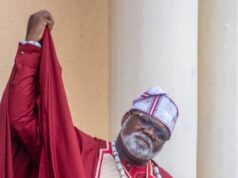












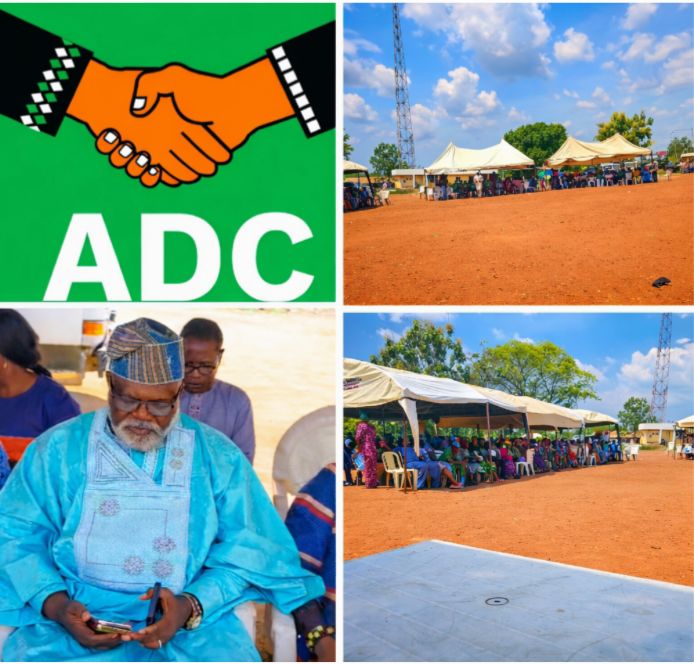
Chief Niyi Aborisade is a human rights lawyer, poet, and historian. He is a governorship aspirant in Oyo State for the 2027 election on the platform of the African Democratic Congress (ADC). In this interview by JANET OLUWATUNBI , he speaks about the state of the ADC, court cases involving political parties, the electoral institution, and urges President Bola Tinubu to give Nigerians credible elections in 2027.
What is the state of the African Democratic Congress (ADC) today?
The African Democratic Congress (ADC) is growing stronger by the day. Across Oyo State and in many parts of the country, we are witnessing a steady influx of new members. What is particularly encouraging is that this growth is organic. People are not being coerced or induced to join. They are joining out of conviction. They are dissatisfied with the current political direction of the country and are searching for a credible alternative. The ADC is increasingly becoming that alternative.
There is a general sense of frustration among Nigerians. The economic hardship is biting hard. Many citizens feel disconnected from governance and alienated from the political process. This disillusionment is reflected in declining voter turnout, even in major urban centres. When people believe their votes do not count or that governance does not improve their lives, apathy sets in.
However, that disappointment is not permanent. What we are witnessing is not the death of democratic participation but a temporary withdrawal born out of frustration. Our task as a party is to re-engage citizens, restore confidence, and convince them that meaningful change is still possible through the ballot.
In Oyo State, apart from the ruling party, the All Progressives Congress (APC), the ADC stands as a formidable force ahead of the next election. We are building structures, strengthening our grassroots base, and positioning ourselves strategically. The momentum is real, and the feedback from communities across the state is positive.
How stable is the ADC internally?
The ADC is part of a broader coalition movement aimed at strengthening democratic alternatives. As with any political coalition, disagreements are not unusual. What matters is how those disagreements are managed.
We are currently conducting internal processes, including congresses, to strengthen unity and consolidate structures. Where concerns have arisen in certain regions, mechanisms are in place to address them through dialogue and consensus.
By the time the general election arrives, the party will be fully stabilised and even stronger. We are committed to presenting a united front and harmonising interests for the greater good.
How would you react to the conflicting court judgments within parties?
The recent wave of conflicting court judgments involving factions within the PDP is deeply troubling. When courts of coordinate jurisdiction deliver contradictory rulings on related matters, it creates confusion and weakens public confidence in the judicial system. The Court of Appeal has rightly directed that such matters be consolidated for proper determination. Until the appellate court delivers its final pronouncement, any celebration of interim victories by factions within the party is premature. The substantive issues remain unresolved.
This is where the National Judicial Council (NJC) must demonstrate firm leadership. The judiciary is regarded as the last hope of the common man. When conflicting judgments emerge, especially in politically sensitive cases, Nigerians begin to question the integrity of the system. That is dangerous for democracy. The NJC should review these developments thoroughly. Where necessary, judges involved should be called to order to ensure discipline and consistency within the judiciary. Judicial independence must be protected, but accountability must also be enforced.
Also, political parties must learn from this situation. Internal crises should be resolved through transparent and lawful processes rather than through judicial manoeuvring that further complicates matters. Parties that fail to manage internal democracy risk weakening themselves before elections even begin.
Is your party prepared in terms of grassroots mobilisation and election funding?
Yes, we are preparing seriously and deliberately. Mobilisation is ongoing at the ward and local government levels. Politics is not just about high-profile rallies or social media presence; it is about building trust at the grassroots. We are strengthening our ward structures, recruiting coordinators, and training agents. From March onward, we will witness an even greater influx of members from various political parties into the ADC. What we are seeing on the ground is encouraging.
We are not limiting ourselves to urban centres. Our strategy extends to villages and remote communities across Oyo State. I have personally toured many parts of the state, and I can attest to the growing support base. From discussions with colleagues in other states, I can confidently say that the party is also preparing seriously nationwide.
This is not about noise. It is about building a solid foundation ahead of the general election. We are positioning ourselves not merely to participate but to compete effectively and, ultimately, to take over governance.
How do you plan to compete financially with bigger parties?
We cannot deny that money plays a role in Nigerian politics. Campaign logistics, mobilisation efforts, and media engagements require resources. However, money alone does not win elections. You can deploy enormous financial resources and still lose if the people are not with you. Nigerians are currently facing hunger, unemployment, inflation, and economic uncertainty. These realities cannot be erased with campaign spending alone.
What matters most is credibility and trust. When citizens believe in a candidate or a party, they become willing advocates. They mobilise others voluntarily. That type of organic support cannot be bought. The last elections demonstrated that heavy financial deployment does not automatically translate into victory. Ultimately, elections are decided by votes, not by noise or spending power.
We are building a people-driven movement. Yes, we will raise funds responsibly and transparently, but our primary asset is public trust.
How would you react to the outing of the ADC in the last Federal Capital Territory (FCT) local government election?
We have seen evidence of irregularities in previous elections. There were instances where figures on official forms appeared altered, and where discrepancies created suspicion. Such developments undermine public confidence in the electoral process.
In the next general election, we will insist on transparency at every stage. The will of the people must prevail. We will mobilise citizens not only to vote but to remain vigilant and ensure that results are not tampered with. Our agents will be properly trained. Our supporters will be educated on lawful monitoring procedures. We believe in peaceful and lawful engagement, but we also believe in protecting the sanctity of the ballot.
What is your take on electoral reforms and the 2027 election?
The Electoral Act contains commendable provisions, particularly regarding electronic accreditation and electronic transmission of results. These reforms were designed to enhance transparency. However, laws alone do not guarantee credibility. The problem is often not the framework but the individuals implementing it. Even the most robust legal provisions can be undermined if there is a deliberate attempt to manipulate the process.
Electronic transmission of results must function transparently. Where technical failures occur, manual processes must not become an avenue for alteration. Safeguards must be respected strictly. Citizens also have a responsibility. Voter education and lawful participation are critical. Democracy is not sustained by institutions alone; it requires active civic engagement.
Can free and fair elections be possible in Nigeria?
Yes, Nigeria can conduct free and fair elections. History proves this. The June 12, 1993, presidential election remains widely regarded as one of the freest and fairest in our history. There have also been credible gubernatorial elections in different states over the years. The key ingredient is political will. When institutions are allowed to function independently and when political actors respect the rules, credible elections are achievable.
Nigerias size and complexity present logistical challenges, but those challenges are not insurmountable. What is required is sincerity, preparation, and commitment to neutrality.
What is your message to President Bola Tinubu?
The president has a historic opportunity. He can write his name in gold by overseeing the freest and fairest election in Nigerias history.
If the administration has performed well, it should not fear the will of the people. Democracy thrives when leaders subject themselves to transparent judgment at the polls. The government must ensure that there is no rigging, no intimidation, and no interference. The best legacy any administration can leave is the strengthening of democratic institutions.
Nigerians are tired of electoral manipulation. They want their votes to count. If the 2027 election is conducted freely and fairly, the outcome, whatever it may be, will be accepted. The credibility of that election will determine not just who governs, but how confident citizens feel about the future of democracy in Nigeria. The will of the people must stand.
Advertisement