















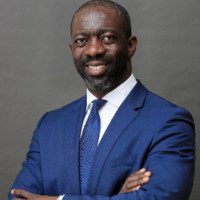
As Oyo State gradually approaches the 2027 governorship election, early signals from the political landscape suggest a subtle but consequential shift. Beyond familiar party calculations and elite bargaining, a more serious debate is emerging, one increasingly centred on competence, administrative depth, and continuity in governance. Within this evolving conversation, Abimbola Adekanmbi is steadily gaining attention as a candidate whose profile invites policy-level scrutiny rather than routine political speculation.
Adekanmbi’s rising visibility reflects a broader recalibration in voter expectations. Across Oyo State, particularly in Ibadan, Oyo town, and Ogbomoso, there is growing impatience with political rhetoric unaccompanied by measurable governance outcomes. Infrastructure delivery, fiscal stability, and job creation are now the benchmarks by which aspirants are being quietly assessed, replacing the older currency of loyalty networks and elite endorsement.
With over two decades of experience spanning banking, financial consulting, and public-sector advisory work, Adekanmbi presents a firmly technocratic profile. His career cuts across Nigeria and international professional environments, including exposure to governance and policy advisory frameworks in the United Kingdom. This dual exposure, local grounding and global systems thinking, places him within a category of aspirants whose appeal rests more on administrative competence than political theatrics.
His academic and professional credentials reinforce this positioning. Trained in accounting, finance, and strategic management, and recognised as a Fellow of the Association of Chartered Certified Accountants (FCCA), Adekanmbi embodies the kind of fiscal discipline and institutional literacy increasingly demanded of subnational governments operating under constrained revenues and rising public expectations. In today’s Oyo State, where budgetary efficiency and capital project execution remain recurring governance concerns, such grounding is not decorative; it is foundational.
For Oyo State, the 2027 question is no longer about initiating development narratives, but about sustaining and deepening existing ones while addressing inefficiencies that slow implementation. Recent administrations have made visible investments in infrastructure, agribusiness expansion, and digital reforms, particularly in Ibadan and key regional corridors. The challenge ahead is consolidation, ensuring that policy continuity is matched with improved delivery speed and institutional coherence. It is within this context that Adekanmbi’s supporters situate his relevance, arguing that continuity now requires technocratic reinforcement rather than political reinvention.
His engagement with policy discourse, especially around digital economy frameworks and governance reform, further strengthens this argument. As sub-national governments increasingly depend on data systems, digital revenue platforms, and innovation ecosystems, leadership capacity is no longer defined solely by political experience but by administrative adaptability. Adekanmbi’s exposure to these domains suggests familiarity with the direction in which modern governance is evolving.
Yet, as with many technocratic aspirants in Nigeria’s political space, the decisive challenge is not competence alone but political translation. Governance remains a hybrid exercise, part technical, part political. It requires negotiation with party structures, coalition-building across factions, and sustained engagement with grassroots constituencies where elections are ultimately decided.
In Oyo’s competitive political environment, where incumbency advantage, party machinery, and regional alignments remain decisive, institutional credibility must still be converted into political legitimacy.
Still, the emergence of Adekanmbi introduces a distinct argument into the 2027 discourse. It is an argument that privileges systems over sentiments, preparation over improvisation, and institutional logic over transactional politics. In a political environment often shaped by personality contests and shifting alliances, this represents a notable departure from convention.
The broader political context in Oyo State reinforces the significance of this shift. The state remains a competitive electoral theatre where party strength, zoning considerations, elite bargaining, and grassroots mobilisation intersect in unpredictable ways. From internal party restructuring debates to unresolved factional alignments within major political blocs, the terrain remains fluid.
Against this backdrop, the central question is not merely who is popular, but who is structurally prepared to govern a complex and economically demanding state.
On the whole, Adekanmbi’s proposition rests on three interlocking pillars: competence in financial and institutional management, capacity to navigate complex governance systems, and continuity in consolidating developmental reforms. These are not abstract attributes; they are practical requirements for statecraft in an era defined by fiscal pressure, infrastructural demands, and heightened public scrutiny.
The 2027 governorship election in Oyo State is therefore shaping up as more than a contest of ambition. It is increasingly a referendum on governance philosophy, between political improvisation and technocratic planning, between transactional politics and institutional thinking. What is ultimately at stake is not just who governs, but whether governance itself will remain an extension of political patronage or evolve into a disciplined system of measurable public service.
Within that emerging contest of ideas, Adekanmbi represents a structured, systems-oriented option. Yet the real test is not the elegance of his proposition, but whether Oyo’s political establishment is prepared to privilege competence over convenience and institutional discipline over loyalty networks. If the state again chooses comfort over capacity, it will not be for lack of alternatives, it will be a deliberate political decision, with consequences that will define the trajectory of governance for years to come.
Okon is a political analyst based in Ibadan.
Advertisement