









Global health experts, policymakers and development partners have called for the urgent scaling of hearing and vision care reforms across Nigeria and the African continent, warning that gaps in early detection, specialist manpower and primary healthcare systems continue to worsen preventable sensory impairments.
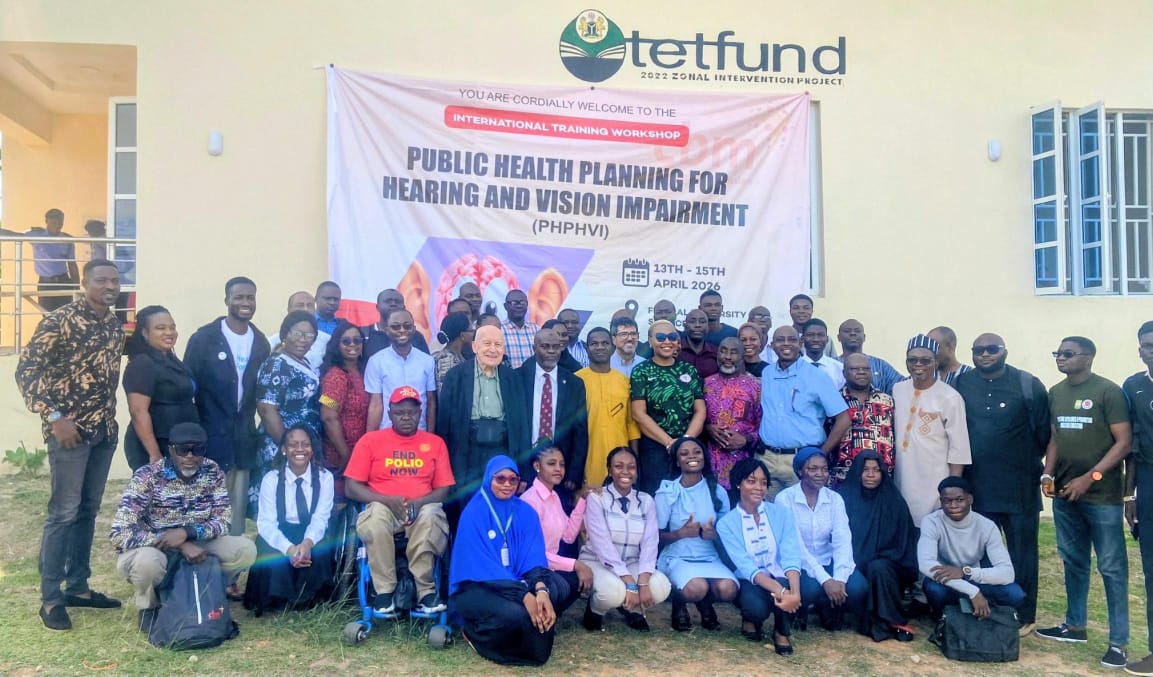
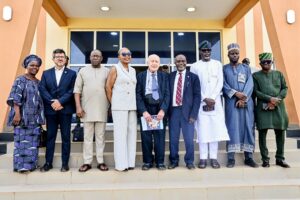
The call was made at a high-level international workshop on Public Health Planning for Hearing and Vision Impairment (PHPHVI), held at the Federal University of Health Sciences, Ila-Orangun (FUHSI), Osun State, where stakeholders converged to design sustainable, scalable interventions for low-resource settings.


The three-day training brought together participants from across Africa and Europe, alongside Nigerian health authorities, including officials of the Federal Ministry of Health and Social Welfare, representatives of the World Health Organisation (WHO) network, CBM Global, and academic experts in audiology, ophthalmology and public health.
The forum was convened amid growing concern over the rising burden of hearing and vision loss in developing countries, where limited access to early diagnosis and treatment continues to deepen inequalities, particularly in rural and underserved communities.
Declaring the workshop open, the Vice-Chancellor of FUHSI, Prof. Akeem Lasisi, said sensory health must be fully integrated into national health systems if Nigeria is to achieve equitable healthcare outcomes.
Prof. Lasisi noted that untreated hearing and vision impairments have far-reaching consequences on education, productivity and social inclusion, stressing that universities must play a central role in generating evidence-based solutions that can inform national policy.
“We must move beyond fragmented interventions to a coordinated, scalable and sustainable system that ensures no child or adult is left behind because of hearing or vision impairment,” Lasisi said.
The opening session featured technical presentations on global frameworks for sensory health, led by Prof. Andrew Smith of the London School of Hygiene and Tropical Medicine, who outlined public health approaches to addressing hearing impairment globally.
A key highlight was an experiential learning session, where participants used simulation tools such as earplugs and low-vision glasses to better understand the lived realities of persons with sensory disabilities.
Facilitators said the exercise was designed to shift the focus from theory to empathy-driven policy design, ensuring that interventions are informed by real-life challenges faced by affected persons.
Discussions also centred on global policy alignment, training frameworks and the integration of sensory health into primary healthcare systems.
On the second day, attention shifted to implementation strategies, particularly in low-resource contexts.
Experts reviewed global progress in hearing and vision care, drawing insights from Dr. Carolina Der and Dr. Stuart Keel, who highlighted World Health Organisation (WHO)-supported initiatives and global action plans aimed at reducing avoidable sensory impairment.
Participants also examined Nigeria-specific interventions, with the Federal Ministry of Health presenting ongoing efforts to integrate sensory healthcare into primary healthcare delivery.
A major highlight was the introduction of the Primary Ear and Hearing Care (PEHC) model, described as a cost-effective, scalable intervention designed to empower frontline health workers to detect and manage hearing impairments at community level.
According to facilitators, the model strengthens early identification, improves referral systems and expands access to care in underserved communities.
Group-based sessions also enabled participants to design context-specific proposals aimed at improving service delivery across their respective regions.
By the third day, focus shifted to innovation, evaluation and actionable outcomes, with participants presenting refined proposals for expert assessment.
Sessions examined screening strategies across age groups, newborns, children, adults and the elderly, alongside data collection systems and monitoring frameworks for sensory health programmes.
The experts also raised concern over the growing prevalence of conditions such as otitis media and trachoma, calling for stronger preventive care, early intervention and community awareness campaigns.
A significant segment of the closing discussions focused on inclusive education, with stakeholders emphasising the need for integrated health and education systems to support children with hearing and vision impairments.
Presenters called for assistive technologies, inclusive learning frameworks and teacher training programmes to ensure full participation of affected children in mainstream education.
There was presentation of certificates to participants and a renewed commitment by stakeholders to advance inclusive, scalable and sustainable sensory healthcare systems across Nigeria and Africa.