















The Alaafin of Oyo, Oba Abimbola Akeem Owoade I, has called on Yoruba people at home and in the Diaspora to forge stronger partnerships to preserve their cultural heritage and accelerate the socio-economic development of the Yoruba nation.


Oba Owoade made the call during his historic visit to the Bamgbose family in Salvador, Bahia, Brazil, where elders of the revered Terreiro Pilão de Prata, one of Bahia’s oldest Candomblé temples, affirmed that their ancestry traces back to the ancient Oyo Kingdom.
The visit formed part of the Alaafin’s cultural tour of Brazil aimed at strengthening historical and cultural ties between the Oyo Kingdom and Afro-Brazilian communities that have preserved Yoruba traditions for generations.
Addressing traditional rulers, Ifa priests, Ìyálórìṣà, Babalórìṣà, scholars and members of the Afro-Brazilian community, Oba Owoade lamented what he described as the gradual erosion of Yoruba cultural and religious identity in the homeland.
He noted that many Yoruba had abandoned their traditional beliefs and values in favour of foreign religions, warning that such a trend could weaken the political, cultural and spiritual development of the race.
“As a people, our culture, politics and religious experience have been extremely unfulfilled. The universalist inspiration that came through Christianity and Islam has reduced the Yoruba’s allegiance to their own gods and, by extension, their nationality,” the monarch said.
According to him, Yoruba communities in the Diaspora have demonstrated remarkable commitment to preserving the language, customs, spirituality and cultural identity inherited from their ancestors despite centuries of separation from their homeland.
The Alaafin urged both groups to work together in rebuilding and promoting Yoruba civilisation through strategic partnerships in education, technology, culture and economic development.
“Without doubt, we can find strength in unity. Whenever our brothers and sisters in the Diaspora come home, they should see themselves not as visitors but as partners in the development of their ancestral homeland,” he said.
He stressed that meaningful collaboration between Yoruba at home and abroad would facilitate intellectual exchange, technological innovation, improved communication and investment capable of transforming the region.
Earlier, elders of Terreiro Pilão de Prata publicly affirmed that the Bamgbose family descended from the ancient Oyo Kingdom, relying on oral traditions preserved across generations despite the transatlantic slave trade.
The declaration drew emotional reactions from participants, many of whom described the event as a symbolic reunion between descendants of enslaved Africans and one of Africa’s oldest traditional institutions.
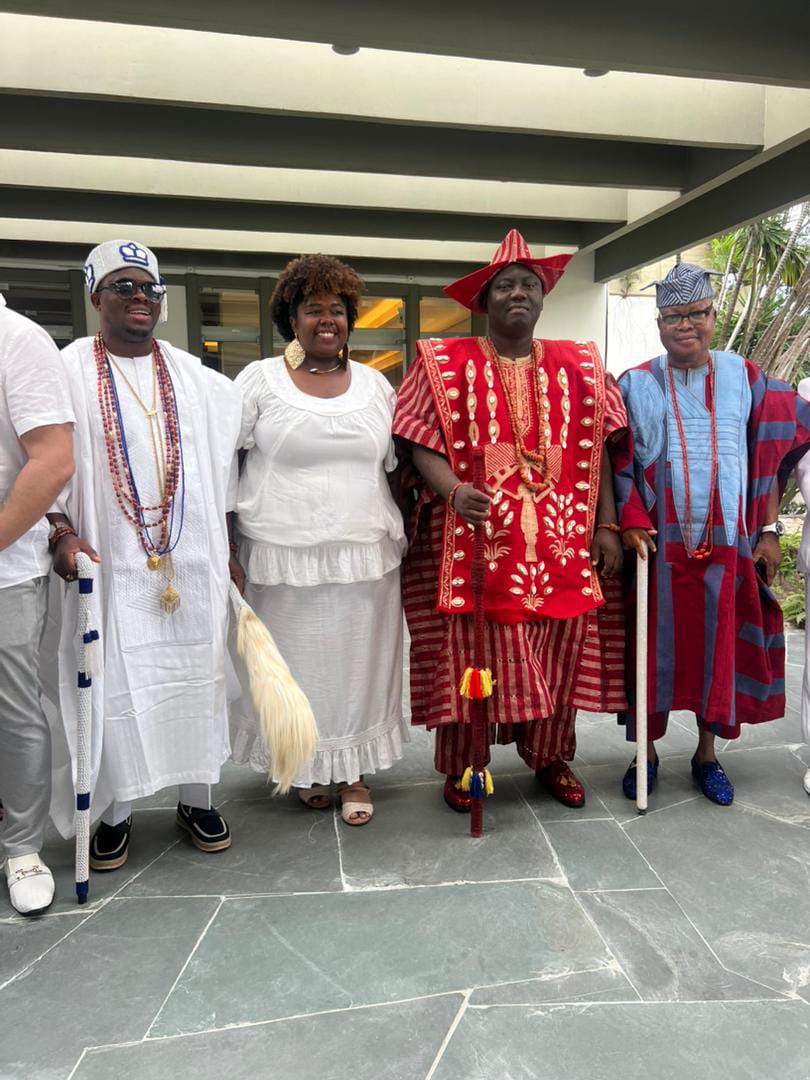
Clad in crimson royal regalia associated with the legendary Alaafin Sango, Oba Owoade received a rousing welcome as chants of “Kabiyesi” and “Sango Olukoso” echoed through the gathering, reflecting the enduring reverence for the Oyo monarchy among Afro-Brazilian communities.
The monarch also performed a traditional royal dance inspired by the warrior heritage of Sango, attracting prolonged applause from participants who described the performance as a living expression of Yoruba royal culture.
The reception reinforced growing cultural ties between Nigeria and Brazil, with community leaders expressing optimism that the Alaafin’s visit would deepen academic collaboration, cultural exchange and heritage preservation between the two countries.
During the tour, the Alaafin also visited the oldest Òrìṣà worship centre in Salvador and the 130-year-old Ilé-Àṣẹ Kálẹ̀ Òbòkún-Ìjèṣà, where descendants of Ijesa ancestry celebrated their enduring Yoruba heritage.