












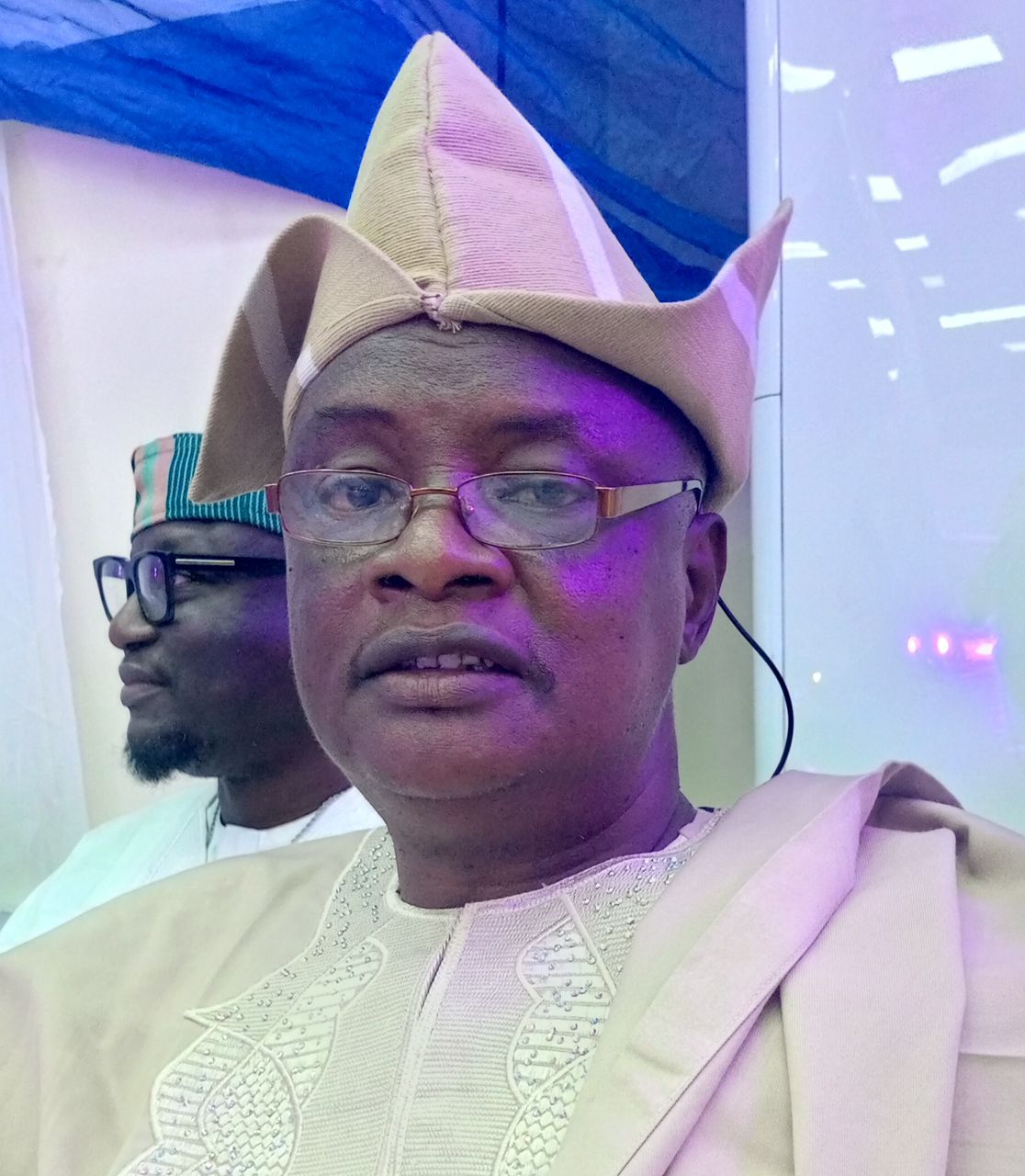
On May 5, 1965, in Ibadan, where ideas are inherited as much as they are spoken, a child was born who would quietly shape the story of Nigerian journalism.
Today, as Amb. Olayinka Ayobami Agboola clocks 61, his story reads less like a conventional biography and more like a carefully curated chronicle of influence, discipline, and enduring relevance within the shifting architecture of media.

To understand Amb. Agboola is to understand a man who did not merely enter journalism; he approached it as an intellectual vocation.
From Lagelu Grammar School, Ibadan, to the University of Ibadan, where he earned a B.A. in Archaeology and later an M.A. in History, his early formation was shaped by a deep engagement with time, memory, and human civilisation. He would later refine this foundation at the Nigerian Institute of Journalism, Lagos, obtaining a Postgraduate Diploma in Journalism and a Certificate in Public Relations, further strengthened by training in computer operations. These were not credentials of convenience, but tools that sharpened an already disciplined mind toward structure, narrative, and meaning.
What followed was a career that moved with rare fluidity across the most demanding terrains of media practice.
From the editorial rooms of Fame Weekly Magazine, where he rose from writer to Assistant Editor, Agboola distinguished himself through a calm, precise, and intentional storytelling style. His professional footprint expanded across ThisDay, Sketch, and Tribune Newspapers, where he contributed to public discourse during a period of democratic and institutional transition in Nigeria.
At Ovation International Magazine, he was part of the pioneering team that established its Nigerian operational presence, an assignment that demanded both journalistic competence and diplomatic sensitivity in balancing global media ambition with local narrative identity.
Yet Agboola’s professional identity was never confined to print.
On radio, he demonstrated a more immediate craft. Through Press Galley on Eko 89.75 FM, which he independently produced and co-presented, he helped transform journalism into conversation, bringing public engagement closer to media practice long before it became a digital convention. His work within the advertising and entertainment ecosystem at BMG Nigeria Ltd further revealed a professional comfortable at the intersection of journalism, branding, and cultural visibility, particularly in amplifying the presence of leading Nigerian artistes.
A defining pivot came with his entry into public communications at the highest level of statecraft. Between 2000 and 2003, as Deputy Chief Press Secretary and later Acting Chief Press Secretary to the Oyo State Governor, Agboola operated at the delicate intersection of power and perception. The role demanded discretion, precision, and strategic clarity in moments when information was not only reported but carefully managed.
However, his most enduring contribution lies beyond institutional appointments, in what he built independently.
In 2004, he founded Parrot Xtra Media Network, a media ecosystem that has since grown into a respected multi-platform voice through Parrot Xtra Magazine, PMParrot.com, and the widely followed ParrotXtra Hour on Splash 105.5 FM, Ibadan. Through this platform, Agboola has moved beyond reportage to curation, sustaining conversations on public accountability, governance, and cultural life.
Here, journalism assumes its deeper civic function: not merely as information delivery, but as public interrogation and social memory.
Needless to say, Agboola occupies a strategic position within Nigeria’s media governance landscape. As Chairman of the South West Group of Online Publishers (SWEGOP), and a long-standing member of both the Nigeria Union of Journalists (NUJ) and the Nigerian Institute of Public Relations (NIPR) since 1992, he continues to influence conversations around ethics, professionalism, and the sustainability of journalism in a rapidly digitising environment where speed often competes with depth.
His recognition by the Nigeria Media Merit Awards and other honours across his career reflects institutional acknowledgment of sustained service to media development and public enlightenment.
Yet beyond titles and institutional roles lies the more enduring dimension of his story, the human presence behind the work.
In professional engagements and personal encounters, he often reflects steadiness rather than spectacle: a practitioner who understands journalism not as performance, but as responsibility. Over time, he has become part of the quiet infrastructure of Nigerian journalism, less visible as a symbol, but consistently present as a stabilising influence.
At 61, Amb. Olayinka Ayobami Agboola belongs to a generation that witnessed journalism’s analogue discipline and participated in its digital reinvention without losing its ethical centre.
In him, one finds not a figure of media virtue, but a practitioner whose career has been defined by consistency, institutional memory, and civic responsibility, qualities increasingly rare in a fast-shifting media economy.
As colleagues, associates, and the wider media community reflect on his journey, what stands out is not celebration alone, but recognition: of a life built deliberately, sustained carefully, and still actively engaged in shaping the public conversation.
Happy 61st Birthday, Amb. Agboola.
Rotimi Agboluaje is an Ibadan-based journalist, public affairs analyst, Associate of the Nigerian Institute of Public Relations (ANIPR), Associate Registered Practitioner in Advertising (ARPA), member of the Association of Communication Scholars and Professionals of Nigeria (ACSPN), and Oyo State Public Relations Officer of the Nigerian Economic Society (NES).