















By Isaac Oluyi
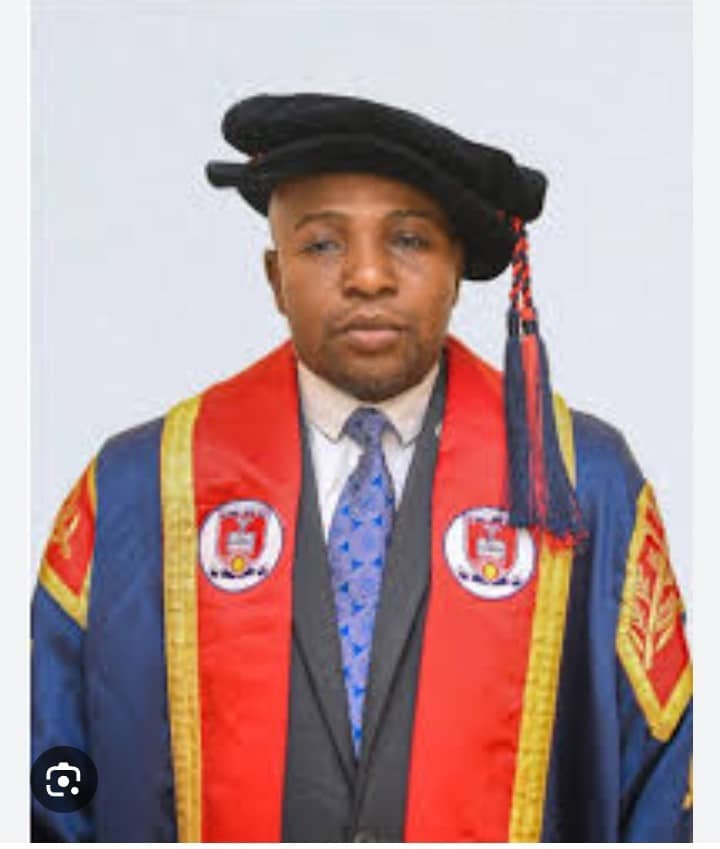
There are deaths that announce themselves with quiet sorrow, and there are those that leave behind a deafening silence. The passing of Imoleayo Ezekiel Adeniran on 17 July 2025, at the tender age of 42, belongs to the latter. It was one of those moments that compel an institution to pause, colleagues to search for words, and friends to grapple with the unbearable question: How could a life so full of promise end so suddenly?
Like a gifted conductor whose baton slips from his hand before the symphony reaches its crescendo, Imoleayo departed while the music of his life’s work was still gathering strength. The concert was interrupted, but not the melody. The singer exited the stage, but the lyrics continue to echo through the halls he once walked, the people he inspired, and the institution he served with uncommon devotion.
Life has an uncanny way of reminding humanity that tomorrow is never guaranteed. Yet there are some departures that seem especially cruel because they interrupt dreams still unfolding. Imoleayo’s was one of them. His death, occurring under circumstances that remain deeply painful to those who knew and loved him, robbed the University of Medical Sciences, Ondo, of one of its brightest administrative minds at the very moment his vision was beginning to blossom.
Not every career climbs steadily toward significance. Some are marked by mediocrity, while others rise with remarkable purpose. Imoleayo’s journey belonged to the latter. His ascent through the demanding corridors of university administration was neither accidental nor ornamental. It was built upon discipline, competence, integrity, and an unwavering belief that institutions are strengthened when those entrusted with leadership choose service above self.
By the time he was appointed Registrar of the University of Medical Sciences, Ondo, many saw the appointment not merely as a promotion but as destiny meeting preparation. Those who had watched him over the years understood that the office had found a worthy occupant—a man whose quiet brilliance often spoke louder than grand declarations.
Then came six months that would redefine what purposeful leadership could accomplish.
In a society where many public officers spend months studying files and postponing action, Imoleayo chose movement over inertia. He understood that leadership is not measured by the comfort of occupying an office but by the courage to transform it.
One of his earliest and most enduring legacies was the establishment of the SERVICOM Unit within the Registry. To some, it was simply another administrative initiative. To those who understood institutional governance, it represented something much deeper—a declaration that public service exists first for the people it serves. It was his way of reminding the university community that efficiency, transparency, responsiveness, and accountability should never be optional virtues but daily habits.
Yet he did not stop there.
Believing that institutions can never outgrow the quality of their people, he introduced the Registry In-House Training Programme, creating a culture where learning did not end with appointment and experience did not become an excuse for stagnation. He envisioned a Registry where administrators constantly sharpened their skills, embraced innovation, and measured themselves against global best practices.
In many organisations, capacity building is treated as an event. For Imoleayo, it was a culture.
His reforms extended beyond policies and programmes. He sought to build an administrative family bound together by professionalism, mutual respect, accountability, and excellence. He inspired colleagues not through intimidation but through example. He demanded high standards because he first demanded them of himself.
The true measure of leadership is often revealed not in speeches but in footprints. Imoleayo left many within a remarkably short journey.
It is difficult to reflect on his life without dwelling on the painful irony. Here was a man whose administrative philosophy was taking root; whose ideas had begun to reshape institutional culture; whose vision had only started to unfold. Six months was all history gave him. Yet within those brief months, he achieved what some fail to accomplish over many years.
Perhaps this is why his absence feels unusually heavy.
The corridors of the Registry still remember the sound of his footsteps. The conference rooms remember his thoughtful contributions. His colleagues remember the encouraging smile that often accompanied difficult assignments. His subordinates remember a leader who believed in developing people rather than merely directing them. Those privileged to encounter him remember not simply a Registrar, but a gentleman whose humility softened authority and whose humanity dignified leadership.
Death often concludes a biography, but it cannot erase influence.
Every institution has defining moments shaped by defining people. Though his chapter was painfully brief, it has become inseparable from the unfolding story of the University of Medical Sciences, Ondo. Every efficient process inspired by his reforms, every staff member empowered through continuous learning, every commitment to better service delivery bears silent testimony to a man who believed that excellence was not an aspiration but an obligation.
There is something profoundly instructive about lives like his. They remind us that greatness is not always counted in decades but in impact. Some people live long enough to grow old; others live well enough to become unforgettable.
Imoleayo Ezekiel Adeniran belonged to the latter.
His story now joins that timeless fellowship of men and women whose earthly race ended before their dreams were exhausted, yet whose ideals refused to die with them. Though his chair became vacant, his values remain occupied. Though his voice has fallen silent, his convictions continue to speak.
For the University of Medical Sciences, Ondo, the most fitting monument will not be marble or bronze. It will be the preservation of the standards he championed, the strengthening of the reforms he initiated, the flourishing of the SERVICOM Unit he established, the continuity of the Registry In-House Training Programme he envisioned, and the steadfast pursuit of administrative excellence that defined his brief but luminous stewardship.
Indeed, some songs never truly end. The musicians may leave the stage, but their melodies linger in the hearts of those who listened. Some candles burn only for a short while, yet illuminate an entire room. Some stars disappear from the night sky, yet sailors continue to navigate by the light they left behind.
So it is with Imoleayo Ezekiel Adeniran.
He was gone in the middle of the concert.
But the lyrics play on.
Oluyi is the Head, Directorate of Public Relations and Corporate Affairs, University of Medical Sciences, Ondo.
Advertisement