















In the rural communities of Oriire Local Government Area in Oyo State, Nigeria, the promise of education as a pathway out of poverty and underdevelopment is under severe threat. What was once a story of incremental progress in access to schooling is now overshadowed by fear, closure, and disruption.


The coordinated abduction of dozens of schoolchildren and teachers on May 15, 2026, from schools like Baptist Nursery and Primary School in Yawota, Community Grammar School, and L.A. Primary School in Ahoro-Esinle has not only shattered lives but also locked the gates of learning, eroding hard-won gains in education development.
A Shocking Attack and Immediate Fallout
On that fateful Friday morning, armed gunmen stormed the schools, abducting over 40 individuals—including young pupils as young as two and several teachers. One teacher was killed during the attack, and another was later beheaded in captivity, as evidenced by a disturbing video circulated by the captors.
The incident, described as one of the first major school-targeted abductions in Southwest Nigeria, triggered an immediate response from authorities: the Oyo State Universal Basic Education Board (OYOSUBEB) ordered the closure of schools in Oriire and neighboring LGAs such as Surulere, Oyo East, and Olorunsogo.
The Nigeria Union of Teachers (NUT) in Oyo State escalated the crisis by directing an indefinite strike, keeping public schools shuttered across the state. Teachers demanded enhanced security measures, the safe rescue of victims, and assurances against future attacks before resuming duties.
As of late June 2026, many schools remained closed or sparsely attended, with parents, teachers, and students gripped by fear.
Eroding Years of Progress
Oyo State has invested significantly in education, allocating over ₦459 billion in the past decade, often exceeding 20% of the annual budget. Initiatives have included expanding access, modernizing classrooms, and efforts to reduce the number of out-of-school children (estimated at over 670,000 in the state).
Pre-primary sections were introduced in public primary schools, and interventions like procuring teaching materials worth billions have been announced.
Yet, these gains are ebbing away in Oriire and similar vulnerable areas. Prolonged closures disrupt the academic calendar, particularly affecting students writing examinations like the West African Senior School Certificate Examination (WASSCE) and National Examination Council (NECO)’s SSCE.
Now, children miss foundational instruction, revision, and critical assessments. Teachers, already strained, face demoralization, while private schools sometimes remain open, potentially widening inequality between public and private education.
The human and economic toll is profound. Communities have become ghost towns, with residents fleeing for safety, farms abandoned, markets disrupted, and local economies stalled. Cattle markets like Ibudo-Musa and Ago-Are are shut to nip attacks in the bud.
Parents grapple with anxiety over abducted children while worrying about the futures of those left behind. Girls from poor homes, already facing barriers like poverty, distance to school, and cultural norms, are disproportionately affected, risking higher dropout rates.
This situation mirrors broader challenges in Nigeria, where insecurity has turned schools into targets, exacerbating the national out-of-school children crisis and undermining Sustainable Development Goal 4 on quality education.
Oriire’s ordeal highlights deeper issues: inadequate security information sharing in rural areas, porous borders with forested areas like the Old Oyo National Park, that aid banditry.
While the state government has appealed for schools to reopen, approved funds for learning materials, and intensified security efforts, stakeholders emphasize the need for sustainable solutions: fortified school perimeters, community vigilance, better teacher welfare, and addressing underlying drivers like poverty and banditry.
The locks on Oriire’s schools symbolize a broader regression. Education development gains—improved enrollment, infrastructure investments, and policy commitments—are being undone by insecurity and its ripple effects.
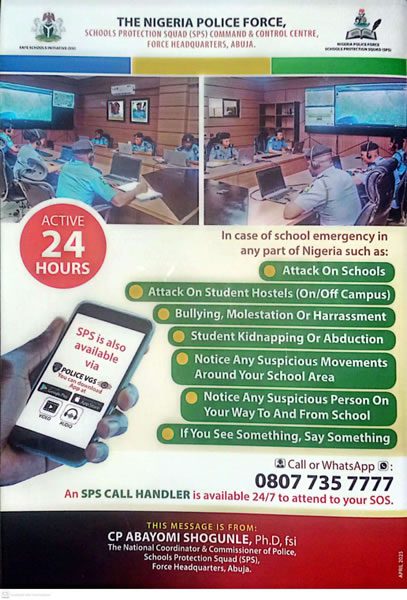
To reverse this, we have to prioritize School Safety, implement minimum standards like fencing, CCTV, and rapid-response protocols, treating schools as protected spaces like many private schools operate.
It is important that we find means to secure the release of remaining hostages and provide psychosocial support to affected families and learners.
Government should direct resources to rural areas, improve teacher deployment and training, and tackle hidden costs that keep children, especially girls, out of school.
Also, Federal and State governments should involve parents, NUT, traditional leaders, and security agencies in long-term planning to restore confidence.
The children of Oriire once wrote and recited “I will be great” on their blackboards. That aspiration must not be locked away by fear.
Reopening schools safely and rebuilding resilience is not just an education imperative—it is essential for community survival, state development, and Nigeria’s future human capital.
The gains of the past must not ebb away; they must be protected and amplified for generations to come.
The time to act is now—before more destinies are truncated and entire communities are left behind.
–Alhazan Abiodun Rilwan is the Deputy Director, Information Archives, Oyo State Ministry of Information.