











Power, Legacy and the Burden of the Documentary Record

By Lanre Ogundipe
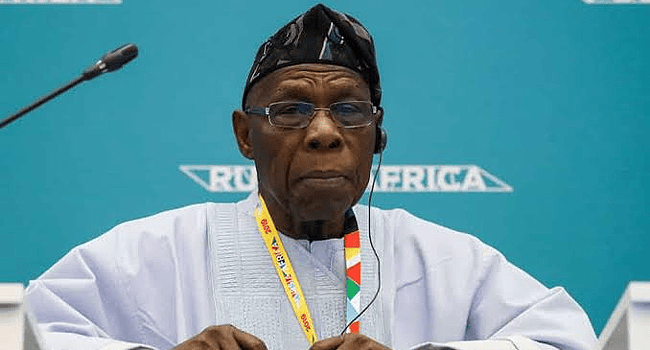
History is often kinder to the dead than to the living. It sands away rough edges, softens harsh judgments and, over time, transforms flawed leaders into national icons. Yet there are rare public figures whose lives stubbornly resist simplification. They remain objects of admiration and controversy in equal measure long after they have left office. Nigeria’s former President, General Olusegun Aremu Obasanjo, belongs unmistakably to that exclusive class.
For more than six decades, Obasanjo has stood at the crossroads of Nigeria’s political evolution. Soldier. Civil War commander. Military Head of State. Prisoner. Democratically elected President. International statesman. Farmer. Author. Relentless commentator on national affairs. Few Nigerians have occupied so many defining moments in the nation’s history. Fewer still have continued to shape national conversations long after leaving office.
His admirers celebrate him as the statesman who voluntarily handed power to an elected civilian government in 1979, returned from prison to rescue Nigeria’s battered international image in 1999, secured historic debt relief, pursued economic reforms and refused the comfort of retirement whenever he believed the nation was drifting from the path of responsible governance.
His critics tell another story. They see a leader who often presented himself as the nation’s moral compass while leaving behind an extraordinary trail of disputes with military colleagues, political associates, intellectuals, party leaders, business interests and even long-standing friends. They ask whether history is dealing with a succession of isolated disagreements or confronting a recurring pattern in the exercise of power.
That question—not praise or condemnation—is the purpose of this commentary.
History is rarely interested in isolated incidents. One controversy may be dismissed as misunderstanding. Two may be explained away as coincidence. But when controversies recur across military service, civilian governance, party politics, intellectual engagement and public policy over more than half a century, history acquires a responsibility to ask whether they disclose a discernible pattern. That obligation is not an act of hostility. It is the highest compliment history pays to those who profoundly influence the destiny of a nation.
The Nigerian Civil War offers an early illustration. General Benjamin Adekunle, the legendary “Black Scorpion”, remains one of Nigeria’s most celebrated field commanders. Yet debates over military strategy, recognition and the ownership of wartime narratives have persisted for decades. Obasanjo’s role in the closing stages of the war and his subsequent writings ensured that he became one of the principal custodians—and contestants—of that history. Competing memoirs and testimonies have kept alive legitimate questions about military leadership and historical memory. Such questions deserve careful examination, not emotional verdicts.
The June 12 crisis presents another enduring chapter. Chief M.K.O. Abiola’s annulled mandate remains perhaps the deepest scar on Nigeria’s democratic conscience. Obasanjo did not create that tragedy, yet his eventual emergence as the civilian President in 1999 inevitably placed him within its larger historical narrative. To many, his presidency symbolised national reconciliation after years of military dictatorship. To others, it represented an incomplete resolution of the June 12 struggle. Those contrasting interpretations continue to demand sober historical reflection rather than partisan certainty.
Obasanjo’s encounters with Professor Wole Soyinka equally transcend personal disagreement. They were not routine exchanges between politician and critic. They reflected a larger contest over democratic accountability, public morality and the limits of executive authority. When two towering national figures repeatedly challenge each other in the public square, historians must ask what those encounters reveal about the nature of leadership in a democratic society.
Within the People’s Democratic Party, the pattern became even more pronounced. Audu Ogbeh’s resignation as National Chairman was more than an internal party affair. His resignation letter entered Nigeria’s political literature because it raised profound questions about presidential influence and the independence of party institutions. Chuba Okadigbo’s turbulent removal as Senate President and Evan Enwerem’s earlier experience similarly exposed the difficult relationship between executive power and legislative autonomy during the formative years of the Fourth Republic. Atiku Abubakar’s transformation from trusted deputy to principal political rival completed one of the most consequential political ruptures in contemporary Nigeria.
Beyond personalities lay policy controversies that have equally become part of the national archive. The Sagem national identity card project generated years of public scrutiny. The Mambilla power project has remained entangled in litigation, official inquiries and competing claims involving former public officials, including Olu Agunloye. Whether every allegation ultimately survives legal and historical scrutiny is not the immediate issue. The issue is that decisions taken at the highest levels of government continue to invite documentary examination because they affected national institutions and public confidence.
The Olusegun Obasanjo Presidential Library presents another revealing example. Across the world, presidential libraries preserve historical records and celebrate public service. In Nigeria, however, the funding model adopted for the project generated sustained public debate over the relationship between political influence, private donations and public perception. Admirers regarded it as a visionary national institution. Critics questioned whether the distinction between voluntary support and official influence was always sufficiently clear. Whatever one’s position, the controversy itself has become part of Nigeria’s historical record.
Then came the famous declaration that the 2007 election would be a “do-or-die affair.” Supporters have argued that the statement merely expressed political determination. Critics regarded it as an unfortunate metaphor capable of encouraging excesses in an already fragile democratic environment. Presidents are judged not only by their decisions but also by their words. Public language often acquires an independent life, shaping perceptions long after the moment has passed.
Nor did the controversies end with the conclusion of his presidency. His often difficult relationships with political leaders across successive administrations—including Bola Ahmed Tinubu—have demonstrated that retirement has not diminished either his influence or his willingness to intervene in national affairs. Whether through books, interviews, public lectures or his now-famous open letters, Obasanjo has remained an active participant in Nigeria’s democratic conversation. That continued engagement has ensured that he is never merely a subject of history; he remains one of its active participants.
Ironically, one of the richest sources for understanding Obasanjo is Obasanjo himself. Through My Command, Not My Will, This Animal Called Man and My Watch, he has offered an extensive account of his philosophy of leadership, public duty, faith and national service. Those works are invaluable contributions to Nigeria’s political literature. Yet memoirs, however illuminating, remain personal narratives. They explain; they do not conclude. They must therefore be read alongside official documents, judicial findings, parliamentary records, the memoirs of contemporaries and independent historical scholarship. That is how mature societies distinguish memory from evidence.
None of this should obscure Obasanjo’s undeniable achievements. He supervised Nigeria’s return to civilian rule in 1979 and honoured the transition by handing over power to an elected government. Two decades later, he assumed office under perhaps the most difficult circumstances in Nigeria’s democratic history, restoring international confidence after years of military isolation. His administration secured debt relief, pursued significant economic reforms and repositioned Nigeria within regional and global diplomacy. Those accomplishments deserve their rightful place in the nation’s historical ledger.
But mature democracies do not honour great leaders by placing them beyond scrutiny. They honour them by examining them honestly. Greatness should never confer immunity from historical inquiry. If anything, it imposes a greater obligation to evaluate the exercise of power with fairness, rigour and documentary discipline.
This is why any assessment of Olusegun Obasanjo must resist two temptations. The first is uncritical adulation that converts every decision into unquestionable wisdom. The second is reflexive hostility that dismisses every accomplishment because of political disagreement. Neither approach serves history. Neither serves Nigeria.
The responsibility of historians, journalists and public intellectuals is both simpler and more demanding: to follow the evidence wherever it leads. Where the documentary record supports praise, let praise be offered without hesitation. Where it justifies criticism, let criticism be expressed without malice. Where the evidence remains incomplete or contested, let honest questions remain open until stronger facts emerge.
For that is ultimately why Obasanjo continues to fascinate the Nigerian imagination. He has not merely witnessed history; he has shaped it, narrated it, contested it and, increasingly, become one of its principal subjects. Few leaders have occupied so many defining moments in the life of a nation. Fewer still have inspired such enduring admiration and such persistent debate.
History has not finished writing the Obasanjo story. Perhaps it never will. But it has reached the point where celebration alone is no longer sufficient and condemnation alone is no longer adequate.
In the end, history is indifferent to reputations carefully cultivated or criticisms passionately advanced. It recognises neither political loyalties nor personal animosities.
History asks only one question:
What does the evidence reveal?
Ogundipe, Public Affairs Analyst, former President Nigeria and Africa Union of Journalists writes from Abuja