















Agricultural policy and development experts have called on researchers across Africa to embrace co-creation with policymakers, farmers, the private sector and other stakeholders to ensure that research addresses real societal challenges and contributes to evidence-informed policymaking.


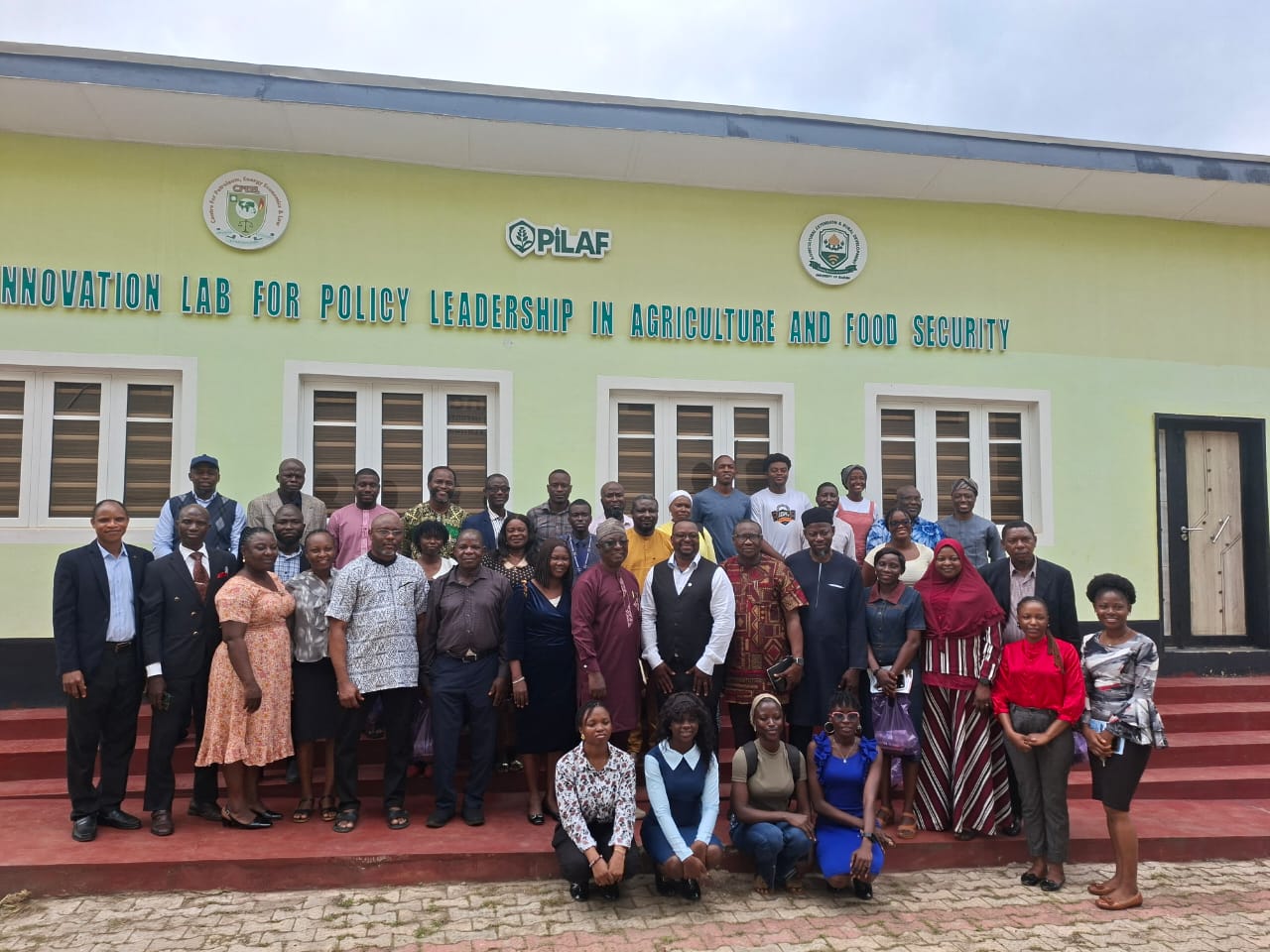
The call was made during the PiLAF Seminar Series organised by the Policy Innovation Lab for Policy Leadership in Agriculture and Food Security (PiLAF) in collaboration with the Faculty of Agriculture, University of Ibadan, on the theme, “Strengthening the Role of Research and Evidence in Agricultural Policy and Development in Africa.”
The seminar, held physically and virtually at the PiLAF Building, University of Ibadan, brought together academics, policymakers, government officials, researchers, students and actors across the agrifood system to discuss how research and evidence can better inform agricultural policies and sustainable development across Africa.
Delivering the keynote lecture, Executive Director of the Africa Network of Agricultural Policy Research Institutes (ANAPRI), Dr Antony Chapoto, urged academics to align their research with national, regional and global development priorities, stressing that universities have a critical role in generating timely, policy-relevant evidence capable of driving agricultural transformation.
 According to him, research should not be conducted merely for academic purposes but should provide practical solutions to pressing development challenges.
“We cannot conduct research simply for the sake of research. Researchers must engage in the co-creation of development programmes with governments, the private sector, farmers and their representative organisations from the beginning,” Chapoto said.
He explained that involving stakeholders throughout the research process would ensure that research responds to real-world challenges and produces evidence that is timely, relevant and more likely to influence policy decisions.
Chapoto also noted that research influence is rarely a linear process. Rather, evidence shapes policy through relationships, trust, timing and sustained engagement. He therefore encouraged researchers to engage with policymakers early and throughout the policy cycle to maximise the impact of their work.
“The problems we are trying to solve require multidisciplinary approaches. By collaborating with governments, the private sector and farming communities, researchers can produce practical solutions that improve people’s lives and strengthen agricultural transformation across Africa,” he added.
Speaking during the seminar, the immediate past President of the Nigerian Economic Society (NES), Professor Adeola Adenikinju, charged young academics to build strong professional reputations by conducting quality, policy-relevant research and engaging consistently with government institutions and development partners.
The former Head of the Department of Economics, University of Ibadan, lamented that many academics remain disconnected from policymakers, thereby limiting the influence of their research on public policy.
“As young academics, we must build our reputation through quality publications, meaningful engagement and active participation in professional associations. People should know your area of expertise so that when they need evidence on a policy issue, they know where to find you,” Adenikinju said.
He urged postgraduate researchers to carefully select research topics capable of addressing pressing policy challenges rather than focusing solely on theoretical academic interests.
“If you want your work to influence policy and society, you must deliberately identify issues confronting government ministries, agencies and development institutions. Your research should provide solutions to those challenges,” he said.
In his remarks, Senior Research Fellow and Administrative Manager at PiLAF, Dr Iredele Ogunbayo, said the seminar was organised to bridge the gap between research and policymaking by bringing together critical stakeholders in the agricultural sector.
According to him, the event provided a platform for policymakers, academics, researchers, students and practitioners across the agrifood system to exchange ideas on how research and evidence can better inform agricultural policy and development.
Ogunbayo explained that PiLAF, a member institution of ANAPRI in Nigeria, believes that co-creation remains one of the most effective ways of ensuring that research responds to the actual needs of society.
“Co-creation means involving beneficiaries, policymakers, researchers and other stakeholders right from the beginning of the research process. Researchers need to conduct needs assessments by listening to those directly affected so that research becomes demand-driven and addresses practical problems,” Ogunbayo said.
He added that stakeholder engagement through workshops and consultations enables researchers to identify priority issues and develop solutions that are relevant to communities.
Also speaking, the Dean of the Faculty of Agriculture, University of Ibadan, Professor Tolu Ososanya, urged academics to strengthen collaboration between universities and society.
“Let us mingle with the people in town so that our research can make more impact. We need stronger collaboration between the town and the gown. Through such interaction, we can influence government policies, improve food security and contribute meaningfully to national development,” he said.