











EwaOluwa Orowale is the Executive Director of Mentoring Assistance for Youth and Entrepreneurs Initiative (MAYEIN), an indigenous non-profit organisation promoting positive youth development. In this interview, with ESTHER SANGODELE, she speaks on the outcomes of the Girls in Education Dialogues project, barriers to girls’ education, the need for safer and more inclusive schools, education funding, digital literacy and MAYEIN’s expansion plans for 2027.
How many schools have benefited from MAYEIN’s Girls in Education Dialogues project, and what are the latest outcomes of the initiative?


When we started the Girls in Education Dialogues project in 2022, our goal was to help schoolgirls understand their rights and become self-advocates. We wanted them not only to know their rights but also to speak up for themselves, participate in decision-making and exercise their agency in matters affecting their education.
We also wanted to encourage girls to contribute to education policies and programmes. We believe that girls should have a voice in decisions that directly affect their lives. We started with 100 schoolgirls across 10 schools in Oyo State. Between 2022 and 2025, we reached 300 schoolgirls and 50 schoolboys across the state.
With support from the AU-EU Youth Action Lab, we also expanded our advocacy by engaging education stakeholders and drawing attention to the challenges girls face in schools.
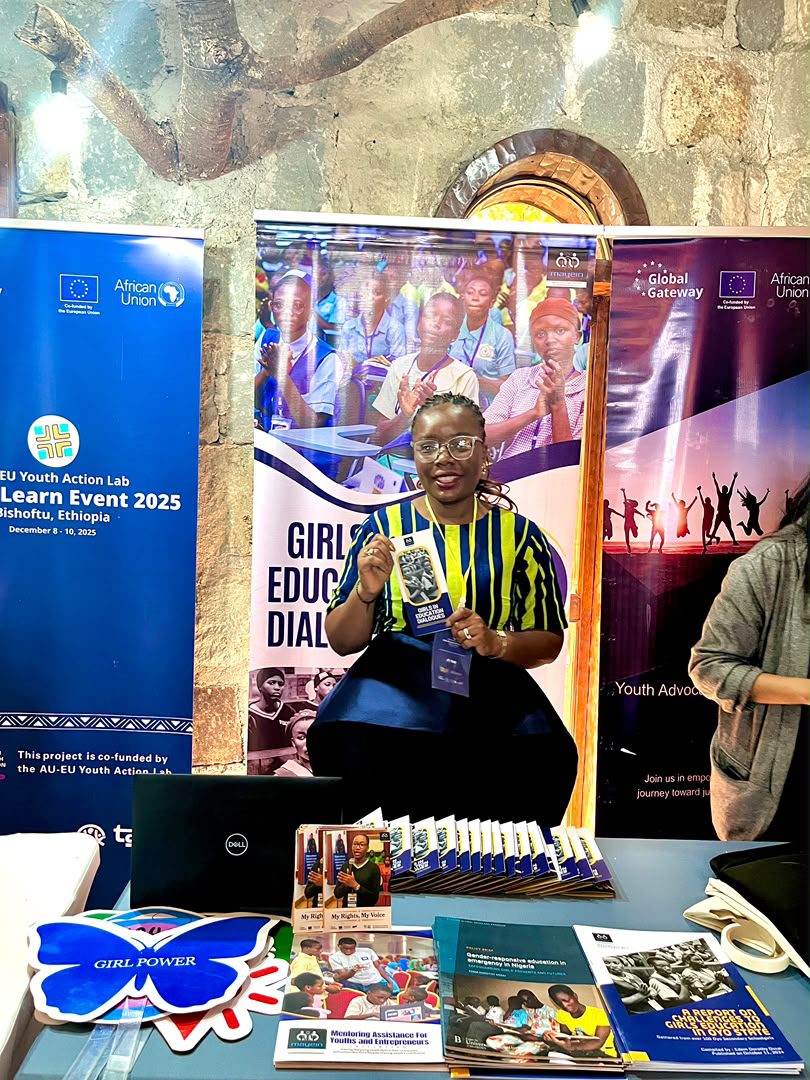
One of our major achievements was the production of the Girls in Education documentary, in which schoolgirls shared their experiences and highlighted the problems affecting their education. The documentary was screened at the AU-EU Link and Learn event in Ethiopia in December 2025, which brought together delegates from about 21 countries.
We have also realised that empowering girls alone is not enough. Many of the challenges they face are systemic and require changes in school structures, teaching practices and government policies.
Over the past year, we have trained teachers and guidance counsellors in social and emotional learning, improved pedagogy and psychosocial support. Guidance counsellors play a crucial role in students’ learning outcomes, and we want them to be better equipped to support both boys and girls, particularly girls facing difficult circumstances.
Following your advocacy visit to the Oyo State Ministry of Education, what commitments has the government made towards implementing your proposals on girls’ education?
Earlier this year, we visited the Commissioner for Education and other key stakeholders at the Oyo State Ministry of Education. The commissioner expressed support for our work in public schools and reaffirmed the state government’s commitment to inclusive and quality education for boys, girls and persons with disabilities.
One of the concerns raised was the need to strike a balance between empowering girls and ensuring that boys are not left behind. We welcomed this feedback because we had already incorporated boys into the Girls in Education Dialogues project. We see boys as allies in promoting gender equality and inclusive education. Empowering girls should not mean excluding boys.
However, we also emphasised the need for stronger systems, particularly in the provision of psychosocial support and the maintenance of school infrastructure. Guidance counsellors should operate under clear ethical standards and be equipped to provide appropriate support to children dealing with challenges at school and at home.
Another major concern is inadequate toilet infrastructure and Water Sanitation and Hygiene [WASH]. Many girls miss school or risk dropping out because of period poverty, a lack of sanitary materials and poor sanitation infrastructure. Building toilets is not enough. Government must put sustainable maintenance systems in place, ensure a steady water supply and monitor the condition of the facilities. These facilities must also be accessible to students with disabilities. We need to move beyond policy statements and ensure that government commitments translate into practical improvements in schools.
What concrete changes should schools make following the dialogues and workshops?
One important change is the introduction of safe feedback and reporting mechanisms. Many schoolchildren experience bullying, gender-based violence and other forms of abuse but are unwilling to report them because they do not trust existing reporting structures.
Schools must establish confidential, accessible and safe channels through which students can report their concerns without fear of intimidation or victimisation.
Another priority is strengthening student leadership. It is not enough to appoint head boys and head girls. Schools must involve student leaders meaningfully in decisions about school policies, welfare and the learning environment. We must also promote gender-responsive education. School leaders and teachers should understand the different experiences and needs of boys and girls and ensure that neither group is disadvantaged by gender bias.
We have advocated improved water, sanitation and hygiene facilities, stronger reporting channels for gender-based violence and inclusive sports policies that accommodate all students, including those living with disabilities.
However, our focus is shifting from advocacy to implementation. We need to ensure that the government, schools and school leaders translate the policies into action and implementation. We have seen some progress. In 2025, nine out of the 10 schools participating in our project had girls taking part in sports. When we began in 2022, participation was more limited. This shows that sustained engagement can produce positive changes.
What are MAYEIN’s major priorities for 2027, and how do you intend to expand your programmes across Oyo State?
In 2027, we want to move beyond advocacy and focus more on implementation, accountability and direct community engagement.
One of our major initiatives is the MAYEIN SMART Libraries programme, through which we establish small, mobile, internet-enabled libraries in underserved communities. We currently have four centres in Ibadan. Our ambition is to expand beyond these locations and reach more local governments across Oyo State.
We are exploring partnerships with Community Development Associations and Community Development Council across local governments to establish SMART and safe learning spaces for young people to learn and grow.
We are also working on a new SMART Library in Ibadan North Local Government. Our target for 2027 is to establish at least 10 new SMART Libraries across Nigeria in addition to our existing facilities.
We cannot achieve this alone. Partnerships with local, state and federal government agencies, as well as community stakeholders, will be essential. Through the expansion of the programme, we hope to address literacy challenges and provide young people in underserved communities with safe spaces to read, learn and develop their potential.
The Federal Government announced a $552m HOPE-EDU programme in July 2026 to improve access to education and learning outcomes. What indicators should Nigerians monitor to determine whether it is delivering results?
The most important question is whether children are actually learning. We often focus on enrolment figures and the number of children brought into the education system. While these are important, they do not tell the whole story. Children may be in school without acquiring the basic skills they need.
We must therefore monitor literacy and numeracy outcomes. Can children read, write and understand simple texts? Can they perform basic mathematical operations?
A 2025 World Bank report cited during our discussion estimated that about 37 million Nigerian children aged seven to 14 could not read and comprehend a simple sentence. That is a major concern that education interventions must address.
Teacher quality is another important indicator. The programme is expected to support teacher training, but we must determine whether that training is improving classroom delivery.
Are trained teachers applying what they have learnt? Are teaching methods improving? Are students receiving better social and emotional support? These are the questions that should guide assessments of teacher development.
Infrastructure is equally important. We need to monitor how many schools have perimeter fencing, functional toilets, water, adequate furniture and accessible facilities for children living with disabilities. On the whole, the success of the programme should be measured by improvements in learning, teaching quality, school safety and access to essential facilities, rather than funding figures and enrolment statistics alone.
UNICEF’s report on public financing for basic education highlights persistent funding and learning challenges. What reforms are needed to ensure that increased education spending improves literacy and numeracy?
First, we must prioritise foundational literacy and numeracy, particularly in early childhood education. Children should acquire the ability to read, write and perform basic calculations from the earliest stages of their education. We also need conducive learning environments. Classrooms, teaching materials, textbooks and an appropriate curriculum are essential, but we must continually ask whether these resources are improving learning outcomes.
Another important reform is accountability in education financing. Increased funding must be supported by transparent processes and effective monitoring, evaluation and learning systems.
We need to know how public funds are being spent, what outcomes they are producing and whether the interventions are effective. Monitoring should not end with tracking expenditure; it must also assess the impact of spending on children’s learning.
Teacher development is another critical area. Teachers need continuous professional development, access to learning resources and opportunities to improve their teaching methods.
Education funding should therefore be linked to measurable improvements in foundational learning, teacher effectiveness, infrastructure and student welfare.
How would you assess the balance between expanding school enrolment and ensuring that children acquire foundational reading, writing and numeracy skills?
Both are important, but enrolment without learning is not enough. We must continue efforts to reduce the number of out-of-school children and ensure that more children enrol in and remain in school. However, we must also consider retention, completion and actual learning outcomes.
How many children who enrol remain in school? How many complete their education? And among those who complete, how many have acquired the knowledge and skills they need? These questions should shape education planning and assessment. It is pointless to celebrate increased enrolment if children are not learning. We must strike a balance between access, retention, completion and learning outcomes.
What are the most pressing barriers keeping Nigerian girls out of school or forcing them to drop out, particularly in underserved communities?
Access and safety are two major challenges. Many girls in underserved communities travel long distances to attend school. Transportation costs, poverty and insecurity can make their journeys difficult and unsafe.
Although education may be described as free, there are hidden costs. Families still have to provide uniforms, shoes, books, school supplies and, in some cases, furniture. They also have to meet other expenses associated with keeping their children in school.
For families facing financial hardship, these costs can be overwhelming. Some girls are forced to stay at home or engage in economic activities, such as hawking, to support their families. Child marriage is another significant barrier. Cultural practices, social expectations and other community factors can contribute to early marriage and interrupt girls’ education.
Period poverty is also a serious concern. Some girls lack access to sanitary products, clean toilets, water and adequate wash facilities. As a result, they miss school during their menstrual periods. When girls repeatedly miss school, they fall behind academically and may struggle to catch up.
Insecurity, inadequate school fencing, gender-based violence and teenage pregnancy also contribute to school dropout. Girls who become pregnant may face difficulties returning to school after childbirth, particularly where there are no flexible learning arrangements or reintegration policies.
These challenges are interconnected. Addressing them requires interventions that consider the economic, social, cultural and institutional realities affecting girls and their families.
How can schools effectively prevent sexual harassment, gender-based violence and other forms of abuse while ensuring that students can report incidents safely?
Every school should have a functional safeguarding system supported by a clear policy. Safeguarding must go beyond documents and become part of the school’s everyday operations. Schools need safe reporting systems, designated safeguarding officers and clear procedures for responding to complaints. Students should know where to report abuse and be confident that their concerns will be handled confidentially and appropriately.
The Ministry of Education and the Ministry of Women Affairs and Social Inclusion should also establish or strengthen gender and safeguarding desks to address cases affecting schoolchildren.
Accessible hotlines could provide additional channels for children who cannot safely report incidents within their schools.
Teachers, school administrators and all personnel who interact with students must receive safeguarding training. Government and school authorities should also conduct appropriate background checks during recruitment and ensure that safeguarding is included in staff induction programmes.
Students themselves should be educated about safeguarding, their rights and the channels available to them when they experience or witness abuse. A safe school environment requires clear policies, trained personnel, effective reporting structures and accountability.
What practical measures should government take to provide functional toilets, menstrual hygiene facilities and safe learning environments for girls in public schools?
Toilets and wash facilities are not luxuries. They are basic necessities, particularly for schoolchildren and adolescent girls.
Government should allocate dedicated funding for the construction, maintenance and monitoring of school sanitation facilities. Building toilets without providing water or a maintenance plan will not solve the problem.
Schools need reliable water supplies, whether through public water systems, boreholes or other suitable arrangements. They also need adequate resources to keep toilets clean and functional.
Maintenance should be treated as a continuing responsibility. Facilities deteriorate, equipment breaks down and sanitation systems require regular attention. Government must establish monitoring structures to ensure that maintenance budgets are properly used.
Beyond sanitation, schools must provide safe learning environments. Perimeter fencing, adequate lighting, regular clearing of overgrown vegetation and appropriate security arrangements can help protect students.
These measures should be integrated into education budgets and infrastructure planning at both state and national levels.
How can adolescent girls be given meaningful roles in decisions affecting school policies, teaching practices and their welfare?
We must move beyond tokenism and give girls a genuine seat at the table. Girls should be involved in identifying the challenges they face, discussing possible solutions and contributing to decisions that affect their education and welfare.
They are the ones experiencing many of these problems directly. Their perspectives should therefore inform school policies, teaching practices and welfare programmes.
It is not enough to invite girls to meetings after decisions have already been made. They must be involved from the beginning and given opportunities to contribute meaningfully.
Schools should establish participatory structures through which students can express their views and influence decisions. This will help ensure that policies are more inclusive, practical and responsive to students’ actual needs.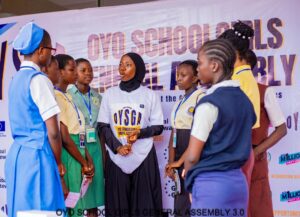
What support systems are needed to help girls who have dropped out because of poverty, early marriage, pregnancy or displacement return to education?
Flexible learning arrangements and second-chance education programmes are important. Government should partner with non-profit organisations, civil society groups and education networks to create pathways for girls who have interrupted their education to return to learning.
For example, girls who dropped out because of early marriage or teenage pregnancy should have opportunities to resume their education after childbirth. Their circumstances should not permanently deny them access to learning.
Flexible learning programmes can also support girls affected by poverty, displacement and other difficult circumstances.
MAYEIN SMART Libraries initiative is another intervention that can help. By establishing safe and accessible learning spaces in underserved communities, we provide young people, especially girls in marginalised settings, with opportunities to read, learn and develop their skills.
These spaces can complement formal education and provide additional support for children who may otherwise have limited access to learning resources.
With artificial intelligence changing education and employment, how can Nigerian schools prepare students for the digital economy when many still lack electricity, internet access and basic digital skills?
We must be realistic about the digital divide. Many children and young people, particularly those in underserved communities, are still excluded from the digital world.
Before introducing advanced artificial intelligence training, we must prioritise basic digital literacy. How many students can operate a computer? How many can use a laptop confidently? These are fundamental questions.
Some students struggle with computer-based examinations partly because they have limited experience using digital devices. This shows why basic computer skills must be taught and practised.
Technology is here to stay, and we must prepare young people to participate in the digital economy. However, digital education should be introduced progressively, beginning with basic computer literacy before advancing to artificial intelligence and other emerging technologies.
At MAYEIN, our Oyo Literacy Programme provides basic digital literacy training to students and young people through schools and community centres. We also introduce them to artificial intelligence.
Government should leverage initiatives such as ours and invest in accessible digital learning resources, including offline devices and materials for communities with limited electricity and internet connectivity. The objective should be to ensure that children in underserved communities are not excluded from the opportunities created by technological change.
How can technology improve learning without widening the gap between children from wealthy households and those in rural or low-income communities?
We must recognise that access is unequal. Not every child has a smartphone, a computer or a reliable internet connection. When designing education and technology policies, government should prioritise children with the least access, particularly those in rural, underserved and marginalised communities.
It is important that we do not design interventions only for children who already have access to technology. We must consider those who have been left behind.
Schools and communities need accessible technology centres where children can acquire digital skills and use learning resources.
Government agencies, including the National Information Technology Development Agency and relevant ministries, should support the provision of devices, infrastructure and digital learning opportunities across communities.
Technology should reduce educational inequalities, not deepen them.
Is Nigeria’s current education system adequately equipping young people with the practical entrepreneurial and digital skills required by employers?
Government has introduced several interventions, including the Technical and Vocational Education and Training programme and the Nigerian Jubilee Fellows Programme, which connects young graduates with employment opportunities and provides participating fellows with a monthly allowance.
These are important efforts, but significant gaps remain.
Much of the education system is still focused on theoretical learning. In many cases, what students learn in school does not adequately reflect the practical skills and workplace expectations they encounter after graduation.
We need to revise curricula across secondary and tertiary institutions to incorporate more practical, technical and entrepreneurial learning.
Practical skills should not be restricted to technical colleges or science-related disciplines. Students across different fields need opportunities to develop competencies that prepare them for employment, entrepreneurship and changing workplace demands.
Digital literacy should also become a basic requirement. Young people need the skills to use technology effectively, regardless of their chosen profession.
What policies would help young people transition from school into decent employment, particularly in a challenging economic environment?
Internships and work experience should be expanded across disciplines and levels of education.
Industrial training opportunities are more common in some science and technology-related fields, but students in other disciplines also need structured exposure to workplaces.
Government and educational institutions could introduce internship or work-experience programmes for senior secondary school students and make internships more widely available across tertiary institutions.
Such programmes would help students understand workplace culture, develop practical skills and gain experience before graduation.
We must also promote digital skills and strengthen career guidance in schools. Guidance counsellors should be equipped to help students identify their interests, understand career opportunities and make informed educational choices.
Another important issue is the experience requirement that many employers impose on entry-level applicants. Young people are often told they need work experience to secure employment, yet they have limited opportunities to acquire that experience.
Government should encourage organisations across different sectors to introduce graduate training schemes, entry-level programmes and structured opportunities for young school leavers.
These measures would help more young people enter the labour market and build sustainable careers.
What is your message to government and other stakeholders on improving girls’ education and youth development?
Access and participation are critical. Giving girls a voice is not enough if we do not provide platforms through which they can use that voice. Girls must have a seat at the table and be able to contribute meaningfully to decisions about their education and future.
Government should also deepen partnerships with non-profit organisations, civil society groups, individuals and corporate organisations to promote inclusive and quality education for all children, including boys, girls and persons with disabilities.
We must recognise the potential of young people and create opportunities for them to participate, develop their skills and contribute to society.
Nigerian youth make up a significant proportion of the population. We should give them the platforms and support they need to grow, lead and shape the future.