














By Esther Sangodele
Former Vice-Chancellor of the University of Ibadan, Prof. Abel Idowu Olayinka, and other academics and research experts have urged researchers to strengthen innovation, collaboration and the application of scientific discoveries to promote sustainable development.


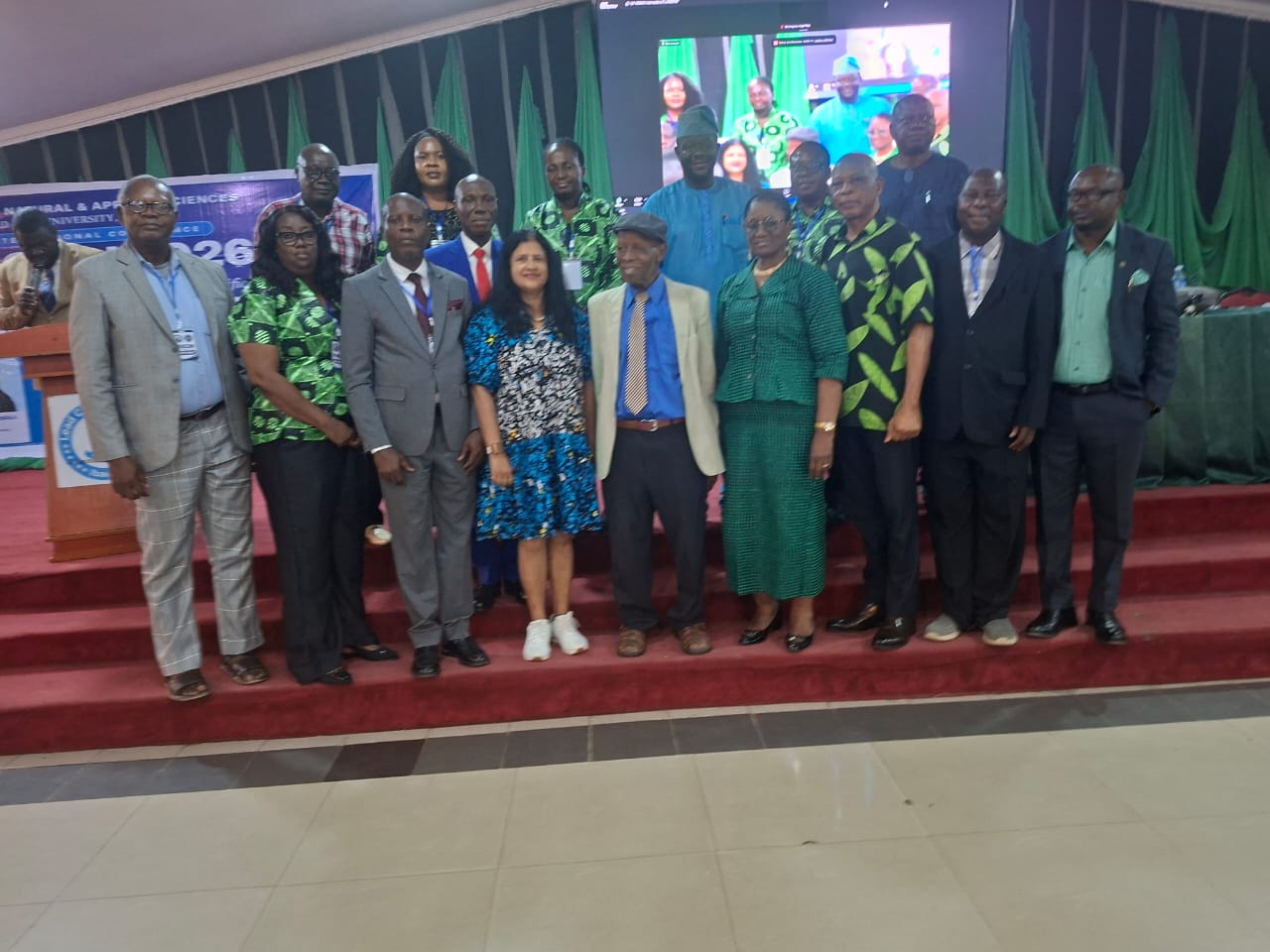
They made the call at the fifth International Conference of the Faculty of Natural and Applied Sciences (FASCON 2026), held at Lead City University, Ibadan, with the theme, “Frontiers in Multidisciplinary Science and Artificial Intelligence: Innovations for Global Sustainability and a Secured Future.”
Olayinka, who spoke on “Frontiers in Science and Technology: Innovations for Sustainable Development in a Dynamic World,” urged Nigerian universities to deepen research partnerships with government and industry to generate more patents and translate academic findings into commercially viable products.
He described university research as a critical component of the national innovation system, noting that collaboration would provide researchers with access to specialist expertise, sophisticated equipment, funding opportunities and international research networks.
The former UI vice-chancellor lamented that Nigerian universities were not generating enough patents, adding that more innovations could emerge from academic research if scholars were provided with the necessary incentives and an enabling environment.
“There ought to be more patents coming out of our universities. This is doable if researchers are provided with the necessary incentives and an enabling environment,” he said.
Olayinka also emphasised the importance of international research collaboration and researcher mobility, noting that global partnerships could strengthen the capacity of developing countries to contribute to scientific advancement.
On entrepreneurship, he advised startup founders to develop strategies to survive the early-stage financial difficulties, commonly described as the “valley of death”, when businesses struggle with negative cash flow before generating revenue.
He urged entrepreneurs to build resources before launching their ventures, retain their regular jobs until their businesses became financially viable and explore funding opportunities such as crowdfunding, grants, business competitions, loans, incubators and strategic partnerships.
Also speaking, the Dean of the Faculty of Natural and Applied Sciences, Lead City University, Prof. Babatunde Adebo, urged researchers to translate scientific discoveries into practical solutions capable of addressing societal challenges.
Adebo said the complex problems confronting humanity could no longer be tackled through isolated academic disciplines but required interdisciplinary thinking, creativity, collaboration and the application of science and technology.
He described FASCON as a platform for researchers to share knowledge, challenge existing ideas and develop solutions to pressing global challenges.
The dean noted that the conference marked a decade of scientific inquiry, intellectual exchange, innovation and collaboration, urging participants to go beyond paper presentations by building research partnerships and developing innovations that would benefit society.
In her welcome address, the conference chairperson, Prof. Bukola A. Bamkefa, called on researchers, academics and industry professionals to harness multidisciplinary science and artificial intelligence (AI) to address challenges such as environmental degradation, energy shortages, technological disruptions and security threats.
She said AI was creating opportunities for smarter and more sustainable solutions in critical sectors, including healthcare, agriculture and environmental management.
Bamkefa, however, stressed that technological advancement must be guided by responsibility, ethical considerations and inclusiveness to ensure that innovations protected human dignity, preserved the environment and promoted equity.
She described the conference as an opportunity for researchers, policymakers, students and industry professionals to exchange ideas, share findings and explore innovative approaches to building a sustainable and secure future.
The keynote speaker, Dr. Lava Kumar, Head of the Germplasm Health Unit and Virology and Molecular Diagnostics Unit at the International Institute of Tropical Agriculture (IITA), Ibadan, also highlighted the potential of young people to contribute to agricultural development through digital innovation, entrepreneurship and agribusiness.
Kumar, who was represented by Dr. Ranjana Bhattacharjee, a molecular geneticist specialising in molecular breeding at IITA’s Bioscience Centre, urged youths to see agriculture as a viable business rather than a dirty and labour-intensive occupation.
Bhattacharjee said young people could play significant roles across the agricultural value chain, including food production, cash crops, industrial crops, processing, marketing and policymaking.
She added that greater youth participation in agribusiness would promote innovation and productivity while strengthening farmers’ bargaining power and helping them secure better prices for their produce.
Meanwhile, the Deputy Vice-Chancellor (Science, Technology and Innovation) of Lead City University, Prof. Olusola Ladokun, cautioned researchers, academics and students against allowing AI to replace human reasoning.
Ladokun, a former dean of the Faculty of Natural and Applied Sciences, said although AI had become an integral part of modern society, its application should complement human intelligence rather than undermine independent thinking and creativity.
He disclosed that he was instrumental in drafting the university’s AI policy, stressing the need for responsible application of the technology in teaching, research and everyday activities.
He urged academics and students to acknowledge the use of AI in their research and teaching, noting that transparency was essential to maintaining academic integrity.
“The major thing is that the origin of every knowledge must be from the human and not from the machine,” Adebo added.
The Chairman of the Technical Committee of the conference, Prof. Onasanya Amos, disclosed that more than 400 participants attended the event, with about 180 research presentations scheduled.
He said the conference provided participants with opportunities to showcase their research, exchange ideas and establish partnerships with scholars within and outside Nigeria.
Amos expressed optimism that the next edition, scheduled for two years’ time, would build on the achievements of the 2026 conference and improve its effectiveness.