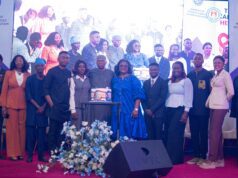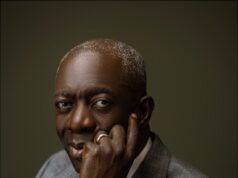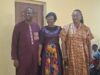


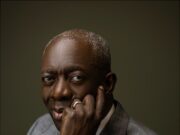
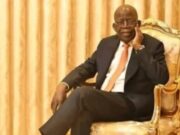









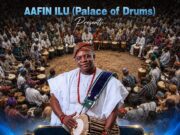
While watching the video of disgraced actor Olarenwaju Omiyinka (popularly known as Baba Ijesha) with the Ooni of Ife, Oba Adeyeye Ogunwusi, it occurred to me that his conviction in the first place must be a unique triumph. If a whole Ooni of Ife could not contain his royal self and could give an ex-convict an audience so soon after returning from prison, then one can only imagine the incredible pressure influential leaders would have mounted on Lagos State judiciary to prevent his conviction in the first place. Remarkably, he was not only jailed but also lost his appeal and had to eventually serve out his full sentence. However, since he returned from prison, there seems to have been a concerted effort to lessen the weight of his grievous crime and make those who stood on the side of truth and justice look like maniac caterwaulers. What I never expected was that even the Ooni would become a part of this conspiracy against virtue.
Last week, it turned out that Baba Ijesha had visited the Ooni. In his own reporting of his visit to the palace, he claimed the Ooni gave him a car and a traditional title. Seeing the blowback, the palace tried to minimise the scandal by claiming the Ooni routinely gives out car gifts and that was all that happened. The question of whether Baba Ijesha was given a car or a chieftaincy title is not as consequential as the question of why he was allowed an audience with a prominent leader who is supposed to be an embodiment of the moral values that define Yoruba identity. What, in the name of the 401 òrìshàs that uphold the essence of Yorubaland, was a convicted paedophile doing in the palace in the first place? How did he get there, and what exactly was his visit supposed to achieve? If it were a traditional leader like the ever-eccentric Oluwo that hosted a paedophile, I do not think it would warrant any outrage. But the Ooni deploying the gravitas of his office to restore a man who should remain socially ostracised for now is curious. Why even risk your reputation for a pervert who can repeat the offence of sexual violation? Was it a (momentary) lapse of judgment or an over-estimation of the legitimising force of sovereign royal power?
The indiscretion displayed by the Ooni’s palace in hosting Baba Ijesha is inextricably linked to our cultural attitude, which is generally reluctant to hold people accountable for their sins. Some of it has to do with the anyhowness of our society that treats rules and ethics as suggestions subject to contingent factors. The rest concerns our leaders themselves. Many of them climb into power despite their moral turpitude and therefore lack the necessary confidence to insist that certain standards be maintained. When you have a case where the president has a history of being a bagman for drug dealers, the Senate president has a long rap sheet of corruption crimes, and they are surrounded by associates who have various records of ethical infractions in their professional and public lives, who can muster the courage to call out what is rotten in the state of the nation? They would rather preside over a polity where social trust breaks down and deviance is regulated by their whims than over one grounded in a universal idea of right and wrong.
It is for that moral cowardice that Nigeria constantly sets up schemes to rehabilitate the so-called repentant terrorists rather than punish them. Right from the days of Dr. Goodluck Jonathan who infamously said in 2012 that “They (Boko Haram) are our siblings and you cannot send the army to wipe out your family….We are handling them with a soft approach” to Muhammadu Buhari who would have people vacate their lands for the terrorists and bandits, up till this present administration whose National Security Adviser Nuhu Ribadu referred to terrorists as his “brothers,” our leaders have always shown interests in reforming the unreformable. Also, for all the noise Muhammadu Buhari made about fighting corruption, he was also the one who pardoned two convicted former governors, Joshua Dariye (Plateau State) and Jolly Nyame (Taraba State), who were serving jail terms for corruption and stealing public funds. Their conviction was the few instances where public officials were sent to jail for stealing, and it took the famed anti-corruption president to overturn that
The Ooni hosting a convicted paedophile implies that he sticks a middle finger up to the justice system that investigated Baba Ijesha, prosecuted him diligently enough to send him to prison, and still showed up to the appeal court hearing to ensure he stayed in jail and served out his sentence. By injudiciously staking the weight of your office as a traditional ruler on his behalf, the Ooni tells the world that his crime does not matter. He also tells potential child violators that if they commit the crime, they need not fear social ostracism because they can be cheaply redeemed. Yes, Baba Ijesha has paid his debts to society, but it is not the business of a leadership institution such as the Ooni represents to rehabilitate him (and so hastily too).
What makes this even more infuriating is the nature of the offence. The crime of child sexual assault is serious; societies that take themselves seriously do not joke with it. That was how the English royal family could excommunicate one of their own, Prince Andrew, due to the allegations (not even a conviction!) of child molestation. Some societies take child assault so seriously that you could be tried and jailed for merely trying to have intercourse with a child. That is how the police regularly bait many potential child abusers on the internet. It is a victimless crime, but the fact that you tried is good enough to send you to jail and put you on the sex offenders’ register for life. And going to prison for the crime of violating a child puts you at risk among your fellow inmates. How does it make sense that even convicted criminals have enough ethical impulse to be intolerant of a child molester but not a traditional ruler?
The Ooni is a symbolic father to all of us, but he is also a biological father to his young daughters. If someone had done what Baba Ijesha did to any of his daughters, would he have gifted that person a car? I doubt it. What message was the Ooni passing to the child involved in the case that sent Baba Ijesha to prison? That her violation does not matter, and that the society that made him the Ooni gives no thought to protecting the most vulnerable among us? Baba Ijesha’s conviction bent the arc of justice in the direction of the child who was violated, but the Ooni’s imprudence robbed her of that dignity.
We say—and rather axiomatically too—that traditional rulers like the Ooni are custodians of our culture/tradition. Just so everyone knows, I am not a starry-eyed royalist who concedes that Obas somehow maintain the custody of culture/traditions any more than the rest of us who live and breathe the culture/tradition in our everyday life. But I do understand the symbolism of traditional stools and what they mean for our cultural identity. That is why traditional rulers must take some time to reflect on the aspects of our tradition they should maintain. Do you want to be the custodian of the retrogressive and unethical parts of our culture/tradition that protect violators from the social ostracism they deserve? Or do you project the progressive part of us that stands for truth, justice, honour, and the dignity of everyone, from the mightiest to the humblest?