















Politics often thrives on sharp contrasts. Every election season presents voters with competing narratives, rival personalities and conflicting visions of the future. Yet governance itself is rarely advanced by permanent political divisions. The most successful societies are those that preserve what works, improve what requires reform and build on institutional successes rather than dismantle them for partisan advantage.


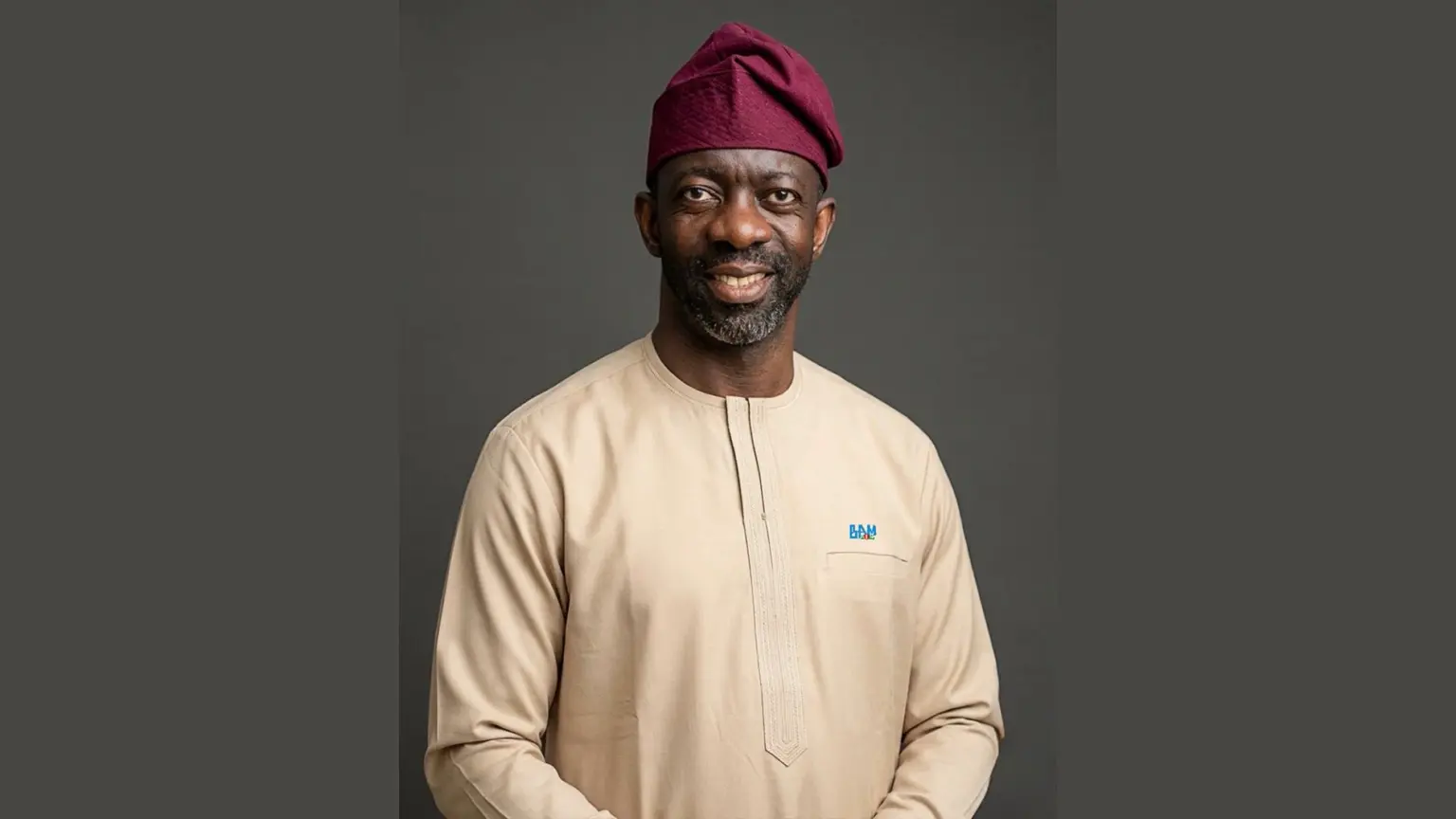
As Oyo State gradually shifts its attention towards the 2027 governorship election, Hon. Bimbo Adekanmbi, the governorship candidate of the Allied Peoples’ Movement (APM), has introduced an interesting proposition into the political discourse. Rather than presenting himself as a candidate of rupture, he has positioned his ambition around continuity. Specifically, the continuity of effective governance by combining the strengths of the administrations of the late Governor Abiola Ajimobi and Governor Seyi Makinde.
Whether that proposition convinces the electorate is a matter for democratic choice. Yet it raises an important question that deserves thoughtful consideration. The question is – should governance be defined by political labels or by the ability to identify successful policies and improve upon them?
Adekanmbi’s public service journey offers one possible answer. Unlike many politicians whose experience is confined largely to electoral contests, his career has been shaped by years within government institutions, development agencies and international public administration. It is this breadth of exposure that forms the foundation of this argument that Oyo State requires competence before charisma and delivery before declarations.
His years under the Ajimobi administration coincided with one of the most difficult periods in Nigeria’s recent economic history. The collapse in global oil prices and the recession of 2016 placed enormous pressure on state governments, forcing difficult fiscal decisions and exposing weaknesses in public finance management across the federation.
Serving during that period meant confronting governance under severe economic constraints rather than abundant resources.
It was also during this period that Adekanmbi became closely associated with several strategic interventions, including the Community and Social Development Agency (CSDA), Sustainable Development Goals (SDGs) programmes, the Youth Employment and Social Support Operation (YESSO), and the Ibadan Urban Flood Management Project (IUFMP).
Perhaps most significantly, his role in helping Oyo State secure grants that had previously remained beyond the state’s reach despite initial eligibility challenges illustrates this statement. In an era when external development financing increasingly determines the pace of infrastructure delivery, institutional competence is no longer optional; it is indispensable.
His involvement in the Ibadan Urban Flood Management Project further illustrates this capacity.
The World Bank-backed project, valued at approximately $200 million, represented one of the largest urban resilience initiatives in southwestern Nigeria. According to Adekanmbi, the project reached a point where international support appeared uncertain before renewed efforts restored confidence and implementation. The subsequent commendation received from the World Bank has since become one of the reference points in demonstrating administrative effectiveness under pressure.
Such experiences matter because governance is not measured solely by initiating projects. It is equally measured by the ability to rescue struggling initiatives, manage complex institutional relationships and ensure that development programmes achieve their intended outcomes.
Yet Adekanmbi’s profile extends beyond his years in Oyo State. His professional experience with Birmingham City Council in the United Kingdom, the largest local authority in Europe, alongside turnaround assignments involving Middlesbrough Borough Council and policing institutions, exposed him to governance systems where technology, accountability and data drive decision-making.
That international exposure is reflected in his recurring emphasis on Artificial Intelligence [AI], digital governance and evidence-based policymaking.
For him, technology is not merely a campaign slogan but a governance tool capable of improving internally generated revenue, reducing financial leakages, strengthening service delivery and preparing young people for an increasingly digital economy.
This is particularly relevant for Oyo State. As one of Nigeria’s leading educational centres, the state possesses enormous human capital. Harnessing technology to expand economic opportunities is therefore not simply desirable, it is becoming an economic necessity.
Adekanmbi’s long-standing commitment to youth development reinforces this perspective. His contributions to youth employment programmes, ICT capacity-building, entrepreneurship support, scholarships, technical education and vocational training reflect a consistent belief that sustainable development begins with investing in people.
His support for students through payment of WAEC and JAMB examination fees, sponsorship of technical training and empowerment of young entrepreneurs suggests an understanding that education alone is insufficient unless linked to economic opportunity.
Equally noteworthy is his grassroots engagement. From community roads and boreholes to electricity transformers, support for market women, artisans and small businesses, his interventions have consistently focused on improving the everyday realities of ordinary citizens. These are the kinds of projects that rarely dominate national headlines but often have the greatest direct impact on communities.
His response during periods of crisis, including the COVID-19 pandemic and the Bodija explosion, also reflects a leadership style that extends beyond policy discussions to practical humanitarian intervention.
Another defining feature of Adekanmbi’s political message is his insistence on data-driven governance. Increasingly, public policy should be informed by measurable evidence rather than political assumptions and that every naira generated by the government must be transparently accounted for. At a time when citizens demand greater accountability and prudent resource management, such emphasis aligns with contemporary expectations of public leadership.
Perhaps his most significant political message, however, lies in his rejection of governance built around personality cults. Instead of presenting the achievements of the Ajimobi and Makinde administrations as mutually exclusive, Oyo State should preserve institutional successes wherever they exist. The administrative discipline, reform agenda and fiscal prudence associated with the Ajimobi years can coexist with the infrastructure expansion and developmental momentum witnessed under Governor Makinde.
This is not merely a political slogan. It is an argument for governance as a continuum rather than a cycle of policy reversals. History demonstrates that societies make the greatest progress when successive governments strengthen institutions instead of dismantling them. Roads, schools, hospitals, investment policies, technology initiatives and development programmes should, in the long run, belong to the people, not to political parties.
As Oyo State prepares for another defining electoral season, debates will naturally focus on personalities, political alliances and campaign strategies. Yet beneath those debates lies a more fundamental issue: which leadership model is best equipped to address the state’s evolving economic, technological and social challenges?
For Adekanmbi, the answer lies in combining administrative experience with technological innovation, grassroots engagement with institutional competence, and continuity with reform.
Whether voters at the end of the day endorse that vision remains entirely their democratic prerogative. What cannot be ignored, however, is that Oyo’s future will demand more than political popularity. It will require leaders who understand public finance, appreciate the transformative power of technology, value institutional continuity and possess the capacity to convert ideas into measurable outcomes.
In the final analysis, elections should reward ideas, competence and measurable performance rather than political nostalgia or empty promises. As Oyo approaches another defining moment in its democratic journey, the question before voters is not simply who can win an election, but who possesses the experience, vision and administrative capacity to govern effectively. It is against that benchmark that every aspirant, including Hon. Bimbo Adekanmbi, should be assessed.
Whether voters accept that proposition remains to be seen. What is clear, however, is that his candidacy has introduced an important debate about continuity, competence and evidence-driven governance into Oyo’s political conversation
Okon is an Ibadan-based political analyst.