













Academics and industry leaders have urged Nigerian graduates to move beyond reliance on university certificates and acquire digital, entrepreneurial and employability skills needed to remain relevant in an increasingly competitive labour market.
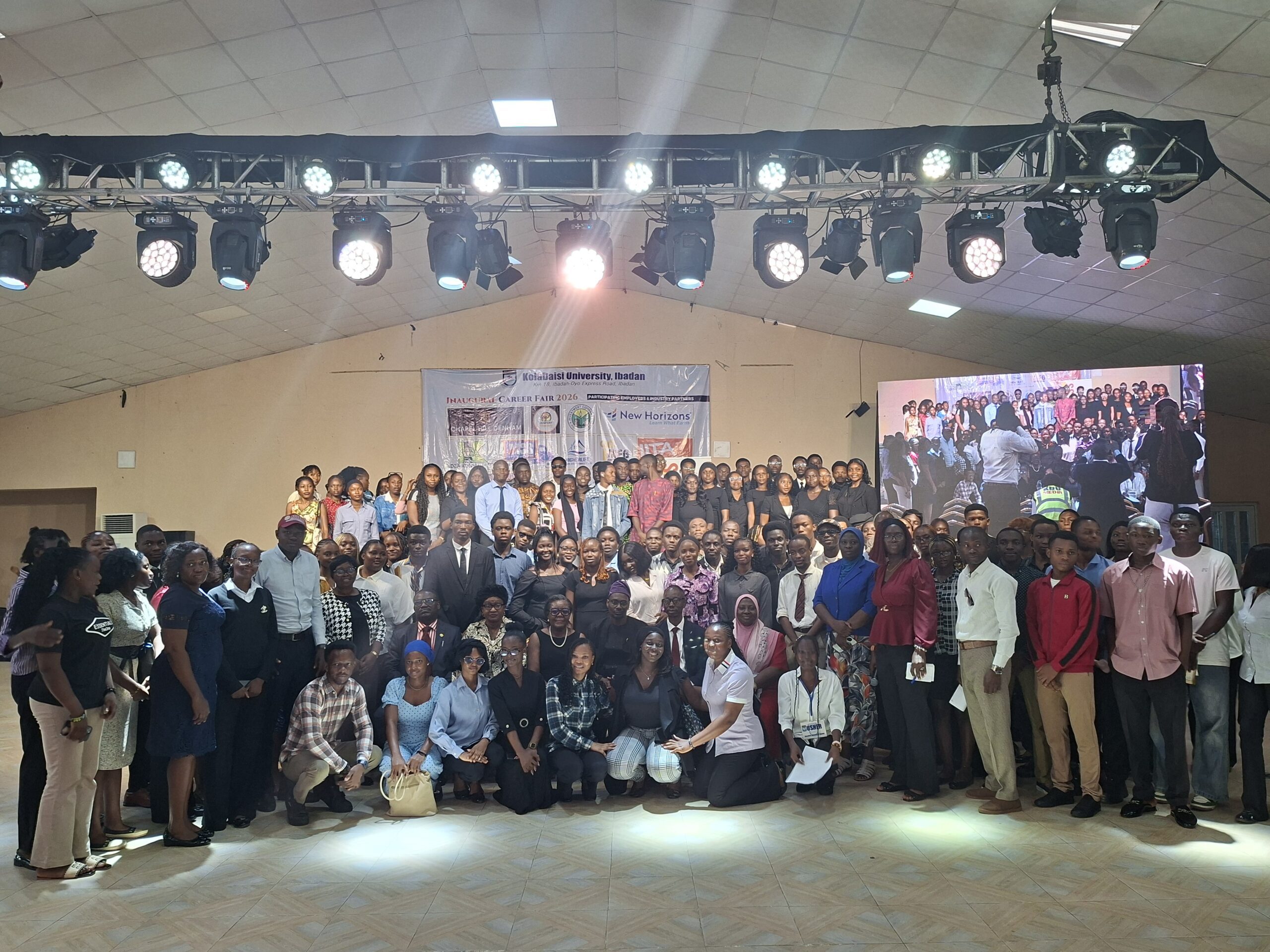
The call was made on the second day of the inaugural Career Fair 2026 organised by the Directorate of Advancement and Alumni Relations of KolaDaisi University, Ibadan, to prepare final-year students for life after graduation through industry exposure, practical knowledge and career development opportunities.
The experts noted that Nigeria’s youth unemployment rate, estimated at over 42 per cent, had altered the dynamics of the job market, making it imperative for graduates to complement academic qualifications with practical competencies and workplace skills.
They stressed that the era when a university degree alone could guarantee employment had passed, urging students to position themselves for opportunities in a technology-driven economy.
Speaking at the event, the Vice-Chancellor-Designate of KolaDaisi University, Prof. Olajumoke Morenikeji, said academic knowledge remains important but not sufficient to secure employment in an evolving global environment.
According to her, the widening gap between classroom learning and workplace expectations accounts for the growing number of unemployed and underemployed graduates across the country.
“The global job market is changing rapidly, and graduates must be prepared to adapt by acquiring practical skills that make them relevant and employable,” she said.
Morenikeji urged students to bridge the divide between academic theories and real-world practice, insisting that employers increasingly seek graduates who can demonstrate competence, innovation and adaptability.
In her remarks, the President of the Directorate of Advancement and Alumni Relations , Mrs. Olasumbo Obaseki, said the career fair was designed to expose students to industry realities and professional expectations before entering the labour market.
She explained that the initiative was part of the university’s commitment to producing graduates equipped not only with academic credentials but also with the skills required to thrive in their chosen careers.
Corporate leaders who participated in the programme also addressed concerns over the growing influence of Artificial Intelligence (AI) on the future of work, dismissing fears that emerging technologies would replace human labour entirely.
Rather, they urged young Nigerians to embrace AI and other digital tools as enablers of productivity, innovation and efficiency.
The speakers emphasised the need for critical thinking, digital literacy, effective communication and problem-solving skills, describing them as indispensable attributes for success in today’s workplace.
They also urged students to cultivate strong professional networks, noting that mentorship, relationships and strategic connections often play a significant role in career advancement.
The experts further advocated an entrepreneurial mindset among youths, arguing that sustainable economic growth would depend on graduates who can create value and generate employment opportunities rather than rely solely on scarce white-collar jobs.
They maintained that strengthening employability skills and fostering entrepreneurship remain the most effective response to the country’s youth unemployment challenge.
The event attracted senior university officials and representatives of leading organisations, including Chapel Hill Denham, Leadway Assurance, Odu’a Investment Company Limited, Idea Consult Ltd, International Institute of Tropical Agriculture, Abbey Mortgage Bank, Stanbic IBTC, First City Monument Bank and Evans Industries Limited.
Other participating organisations were New Horizons Nigeria, Skot Communications, Higherlife Properties Consult Ltd, Olusegun Obasanjo Presidential Library, Mobile Screens and Sound Ltd, Innovation Microfinance Bank and Access to Basic Medical Care Foundation.
Many students at the fair secured internship placements, industrial attachments and employment opportunities through engagements with recruiters and participating organisations.
Advertisement