











Kabiru Adeniyi ADISA
By the year 2050, Nigeria will no longer be judged by promise or projection but by performance and outcomes. The world will not ask what Nigeria could become. It will ask what Nigeria chose to become when opportunity met time.
Nigeria stands today as Africa’s most populous nation and one of its most resource-endowed economies. Yet, beneath this greatness lies a persistent contradiction. A nation richly blessed, yet structurally constrained. A giant in geography, but still searching for full economic maturity.
The future is therefore not a mystery. It is a test.
Nigeria’s greatest economic weapon is not oil, gas, or mineral wealth. It is its people. A youthful population that is expanding rapidly and expected to place Nigeria among the most populous nations on earth by 2050. This demographic reality is both a blessing and a warning.
If properly educated, skilled, and productively engaged, this population becomes an unstoppable economic force. A workforce capable of powering factories, driving innovation, expanding digital industries, and creating one of the largest consumer markets in the world. A nation where youth becomes production capital rather than social pressure.
But if mismanaged, the same demographic strength becomes economic strain. Unemployment grows. Migration increases. Social tension rises. The difference is not in numbers. The difference is in preparation.
For decades, Nigeria has depended heavily on crude oil as the backbone of its economy. Oil built budgets. Oil sustained foreign exchange. Oil defined national revenue cycles. But oil has also exposed vulnerability. It is a resource controlled by global price shocks and shifting energy transitions.
The world is moving. Electric vehicles are rising. Renewable energy is expanding. Fossil fuel dependency is shrinking. By 2050, oil will no longer carry the same economic influence it once did.
Nigeria must therefore transition from extraction to production. From consumption to value creation. From dependency to diversification. Agriculture must move beyond subsistence into agro-industrial processing. Manufacturing must shift from import dependence to export competitiveness. The digital economy must become a national growth pillar, not a side conversation.
The creative industry already shows the path forward. Nigerian music, film, and fashion have become global cultural exports. Yet culture alone cannot carry an economy. It must be matched with industrial and technological strength.
Reform remains the bridge between potential and prosperity. No nation develops by accident. Every global economic power is built on deliberate reform choices. India did not become a global IT powerhouse by chance. It liberalized its economy, invested in education, and opened its digital sector to global integration. Indonesia stabilized its economy through consistent policy direction and infrastructure expansion. Brazil balanced resource wealth with social and industrial development programs.
Nigeria must learn from these paths without copying them blindly. Reform consistency is the true currency of development. Policies must outlive administrations. Institutions must be stronger than individuals. Systems must replace sentiment.
Power remains central. Without stable electricity, industrial growth remains limited. Without reliable transport networks, markets remain fragmented. Without efficient ports and logistics systems, trade remains expensive and uncompetitive. Infrastructure is not development decoration. It is development itself.
Education must also be reimagined. The future workforce will not be measured by certificates alone but by competence. Skills in technology, engineering, agriculture, artificial intelligence, and entrepreneurship will define national competitiveness. Nigeria must stop preparing students for jobs that no longer exist and start preparing them for industries that are emerging.
The private sector will carry the weight of transformation. Government must create the environment, not control the engine. Ease of doing business, access to capital, regulatory clarity, and judicial efficiency will determine how far private enterprise can expand.
By 2050, global economic rankings will not be determined by natural resources alone. They will be determined by productivity, innovation, and institutional strength. Nigeria has every ingredient required to join the global economic top tier. But ingredients do not make a meal without preparation.
Nigeria stands in the same historical position that India, Indonesia, and Brazil once occupied. Large populations. Strong domestic markets. Abundant natural resources. Strategic geopolitical relevance. The difference between those nations and Nigeria is not potential. It is execution.
If Nigeria gets it right, 2050 will mark the rise of an African economic giant that reshaped global trade, powered African industrialization, and transformed poverty into prosperity at scale. If it gets it wrong, it will remain a story of unrealized greatness.
History is already watching. The world is already adjusting. The only question left is whether Nigeria will move from possibility to performance.
ABOUT THE AUTHOR
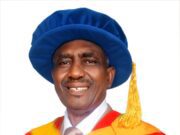
Mr Kabiru Adeniyi ADISA,FCA is a
Community Servant
Humanitarian and Development Advocate
President, Guildance Community Development Foundation (2000–Till Date)
Social Impact and Youth Empowerment Practitioner
Specialist in development strategy, policy design, grant writing, and community transformation initiatives across Nigeria.
Contact: +2348034978700 | WhatsApp: +2348057783260
Instagram: adisa.k.adeniyi | Twitter: adisakabiru | Facebook: Community Servant.
Advertisement