















By Gabriel O. Akinremi
Artificial Intelligence is rapidly transforming how governments deliver public services, how businesses make decisions, how universities conduct research, and how citizens interact with digital technologies. Across healthcare, finance, education, agriculture, and national security, AI is no longer a futuristic concept—it is becoming part of everyday life.
Nigeria is also embracing this transformation. Government agencies are adopting AI-enabled solutions, universities are integrating AI into teaching and research, and businesses are investing heavily in intelligent systems to improve productivity. While these developments create enormous opportunities, they also introduce significant ethical and governance challenges that require urgent attention.
Without proper safeguards, AI systems can unintentionally reinforce discrimination, violate privacy, spread misinformation, reduce accountability, and undermine public trust. As AI adoption accelerates, the question is no longer whether Nigeria should embrace AI, but how it can do so responsibly.
One practical solution gaining global attention is Artificial Intelligence Ethical Impact Assessment (AI-EIA).
Just as environmental projects undergo Environmental Impact Assessments before implementation, AI systems should undergo structured ethical assessments before deployment.
An AI Ethical Impact Assessment examines important questions such as:
• Could the AI system discriminate against certain groups?
• Does it protect citizens’ privacy?
• Can its decisions be explained?
• Who is accountable when mistakes occur?
• Does it respect human rights?
• Will it create unintended social consequences?
Answering these questions early allows organizations to prevent harm rather than respond after damage has already occurred.
International organizations are increasingly recognizing ethical assessment as an essential component of AI governance.
Frameworks developed by UNESCO, the OECD, the National Institute of Standards and Technology (NIST), and the European Union all emphasize responsible AI development built on transparency, accountability, fairness, and human oversight.
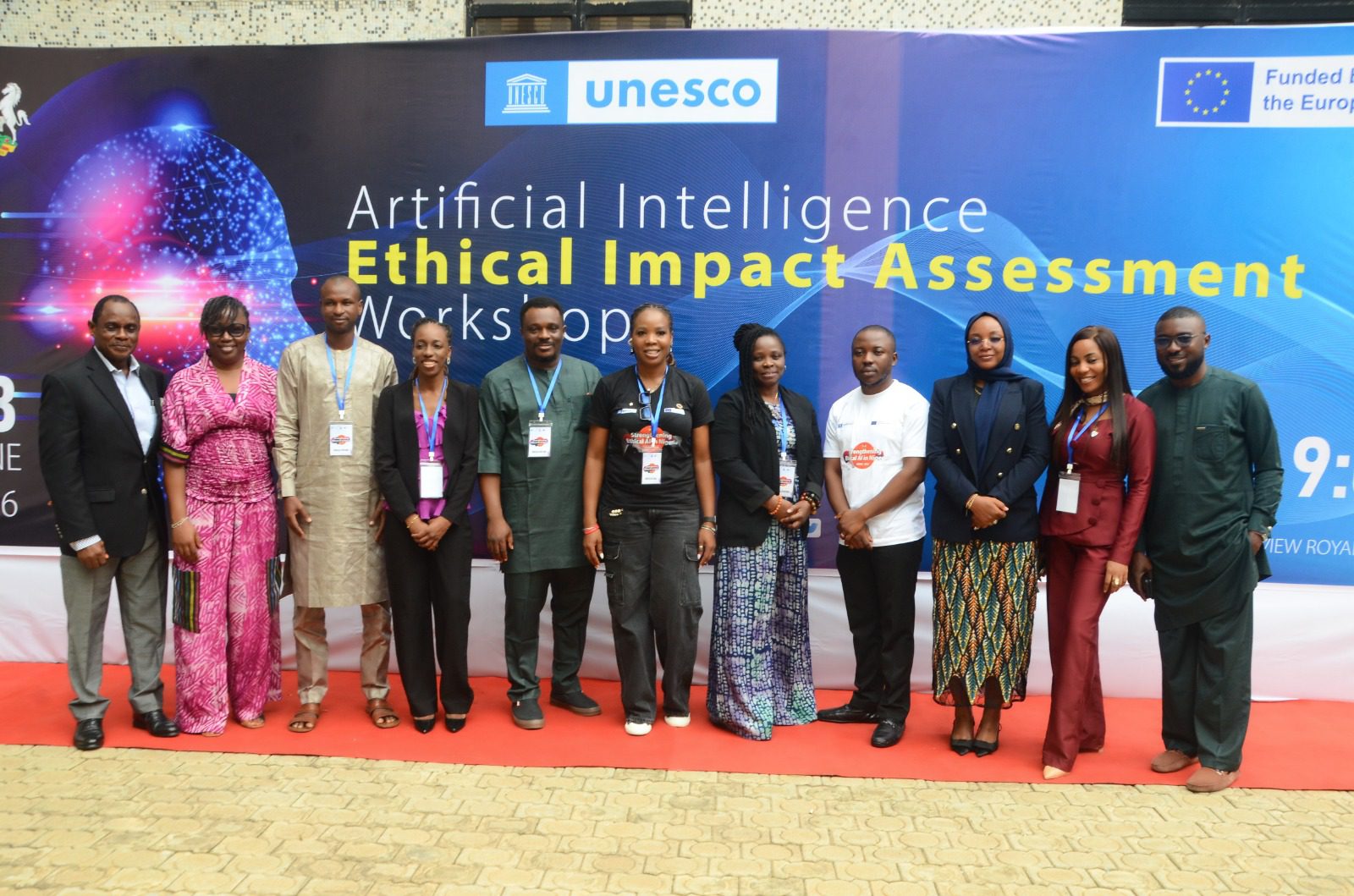
Having had the opportunity to facilitate UNESCO’s Artificial Intelligence Ethical Impact Assessment Workshop in Abuja, I witnessed firsthand how policymakers, researchers, educators, and technology professionals can collaborate to integrate ethical thinking into AI innovation. One key lesson from the workshop was that ethics should be embedded throughout the AI lifecycle—from problem definition and data collection to deployment and continuous monitoring—rather than treated as a compliance exercise at the end of development.
Universities must prepare graduates who are not only technically competent but also ethically responsible.
Students developing AI applications should evaluate the societal implications of their innovations alongside technical performance. Ethical considerations such as fairness, data governance, transparency, accountability, and inclusion should become standard components of AI project design.
Embedding AI Ethical Impact Assessment into higher education will help produce professionals capable of building technologies that are innovative, trustworthy, and aligned with societal values.
Nigeria has an opportunity to become a continental leader in responsible AI.
By integrating AI Ethical Impact Assessment into government digital transformation initiatives, university curricula, research programmes, and private-sector innovation, the country can strengthen public trust while fostering sustainable technological advancement.
Responsible AI is not about slowing innovation. Rather, it ensures that innovation benefits society, protects fundamental rights, and supports long-term national development.
Artificial Intelligence will shape the future of governance, education, healthcare, business, and security. The decisions made today will determine whether AI becomes a force for inclusive development or a source of unintended harm.
Nigeria should therefore move beyond conversations about AI adoption and begin institutionalizing AI Ethical Impact Assessment as a national best practice. Doing so will position the country to harness AI’s immense potential while safeguarding human dignity, promoting transparency, and building public confidence in emerging technologies.
As AI continues to evolve, ethical foresight must become an integral part of innovation—not an afterthought.
Gabriel O. Akinremi, PhD, is a digital transformation specialist, cybersecurity expert, researcher, and university lecturer. He has facilitated Artificial Intelligence Ethical Impact Assessment capacity-building initiatives and conducts research on Responsible AI, AI governance, digital transformation, and cybersecurity.
Advertisement